
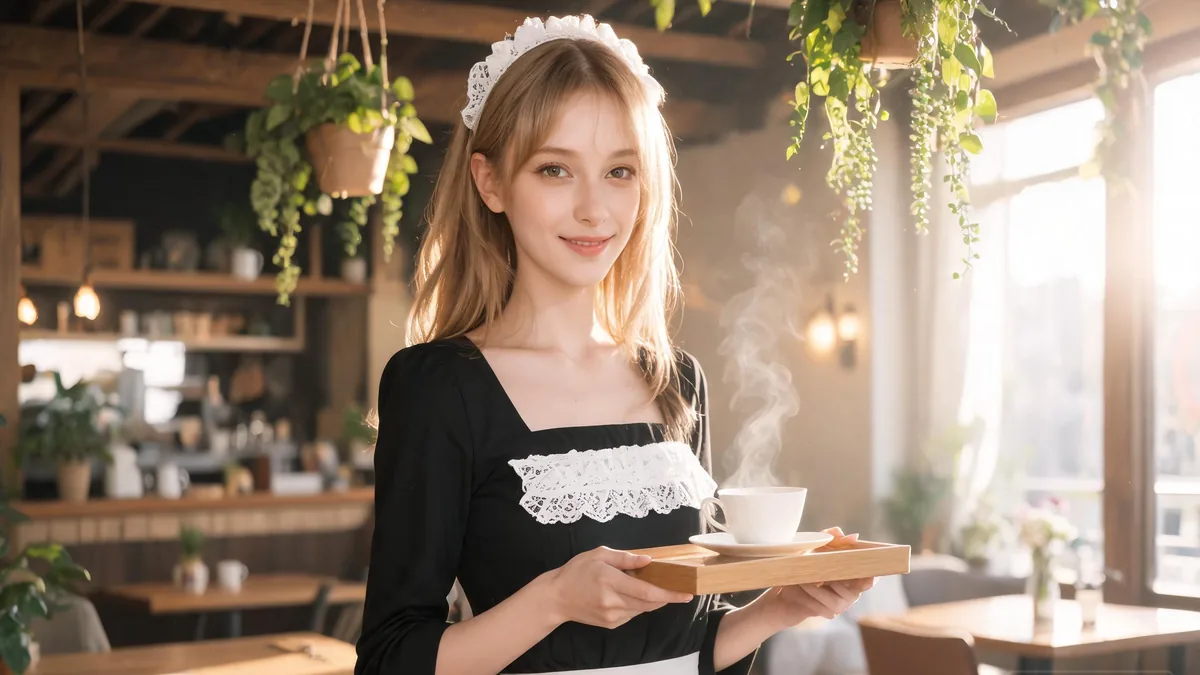
A maid is a sweet, attentive character in a recognizable uniform: black dress, white apron, and a ruffled headband. She's polite, devoted, and famous for the line "Welcome home, master!" The word itself is ancient English for "young woman." The modern maid look comes from 19th-century European household uniforms, and the cute anime version was made mainstream by Japan's maid cafe scene in the early 2000s.
Key Takeaways
- A maid character wears the classic uniform and plays a sweet, attentive, hospitality-focused role.
- The word comes from Old English mægden ("young woman"). The uniform look comes from 19th-century Europe.
- The Japanese maid cafe scene in Akihabara, starting around 2001, turned the maid into a pop-culture favorite.
- In fiction she's sweet and devoted. Sometimes she also hides surprising depths, like combat skills or a secret past.
| Pronunciation | mayd, noun (plural: maids) |
|---|---|
| Origin language | Old English (mægden, "young woman") |
| Literal sense | Originally "young unmarried woman"; later "household servant" |
| First popularized | Modern look from 19th-century Europe; anime maid cafe scene from early 2000s |
| Category | Character and style |
| Core trait | Iconic uniform, sweet attentive hospitality role |
| Related types | Cosplay, Butler, Nurse, Catgirl |
Etymology and Origin
The word maid is really old. It comes from Old English mægden, which just meant "young woman" or "girl." Think of Maid Marian from the Robin Hood stories: in the 12th century, "maid" simply meant she was a young unmarried woman, not that she had a job. The household-servant meaning grew in Middle English, when "maid" started to mean a young woman working in a noble's home.
The look we picture today, the black dress with the white apron and the ruffled headband, comes from 19th-century European household uniforms. Victorian and French households dressed their staff in something practical and crisp, and that outfit got burned into pop culture as the "maid uniform." The cute, anime-flavored version we know now took off thanks to Tokyo's Akihabara maid cafes, which started around 2001. From there the maid became a fixture of anime, manga, games, and global fan culture.
Defining Traits
- Iconic outfit: black dress, white apron, ruffled white headband. Instantly recognizable.
- Sweet and polite: warm, soft-spoken, and genuinely happy to look after you.
- Attentive: notices the little things, anticipates what you need, and brings the tea before you ask.
- Famous catchphrase: "Welcome home, master!" (from anime and real-life maid cafes).
- Devoted and hardworking: the type takes pride in caring for the people she serves.
- Hidden depths: in some stories she's also a skilled fighter, or has a quiet secret past.
How to Recognize a Maid Character (in Fiction)
Writers use a familiar set of cues to mark a character as a maid character. In a story, watch for:
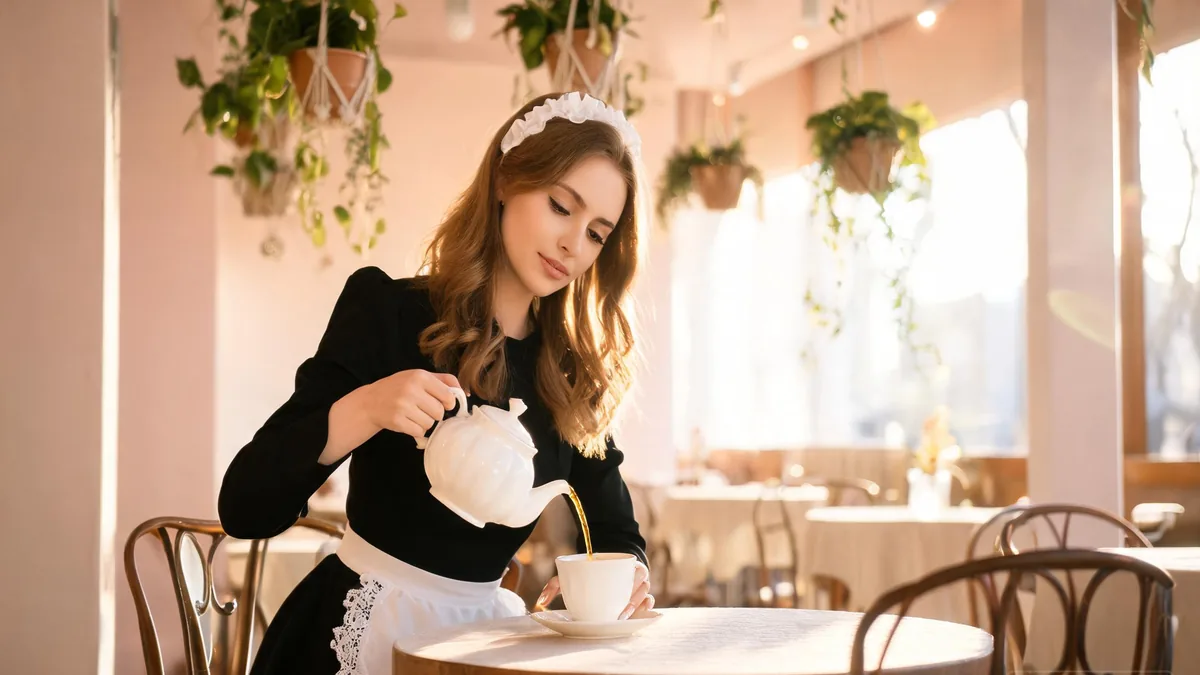
- The uniform: black dress, white apron, white frilled headband.
- A soft, polite way of speaking, with lots of "would you like" and "right away."
- The line "Welcome home, master!" or some warm variation of it.
- Serving tea, baking sweets, or running a cafe.
- Deep loyalty to one household, family, or person.
- A surprise twist: she's secretly a swordfighter, a noble in disguise, or hiding something big.
These are storytelling shortcuts, not a description of real-life domestic work. The fictional maid is a pop-culture character, and these are the cues that make her easy to spot.
How a Maid Character Talks
Dialogue is a big part of the type. Maid lines are warm, polite, and a little playful:
- "Welcome home, master! How was your day?"
- "Please, let me take care of that for you."
- "Your tea is ready. Would you like a little extra sugar today?"
- "I'll always be here when you come home."
The trick is the mix of formality and warmth. She speaks politely, but you can feel that she really cares. That cozy, looked-after feeling is the whole appeal of the type.
How It Changed Over Time
The maid started as a real job. In English fiction from the medieval period through the Victorian era, maids were just part of the household: side characters in big house dramas. The crisp 19th-century uniform locked in the look people still picture today. Then anime and manga turned the maid into a romantic-comedy character, and the rise of Tokyo's maid cafes in the early 2000s made the look mainstream pop culture. Today the maid character is its own thing: part nostalgia for vintage Europe, part anime sweetness, part fun cosplay favorite. Live-action dramas like Downton Abbey still play the classic version, while anime keeps inventing new ones, including the wildly popular "combat maid" who can serve tea and win a sword fight in the same scene.
Types of Maid
Fans and writers usually split maids into a few clear flavors. Knowing which one you're looking at is the difference between "a maid" and the specific kind of maid a story (or a companion) is built around.
By style
- French maid: short black dress, white apron, lace trim. The classic 19th-century-inspired look that became a cosplay staple.
- Victorian maid: longer dress, head-to-toe formal styling. The serious, period-drama version.
- Japanese cafe maid: the cute, pastel-tinted, ruffled style. Often paired with bows, cat ears, or other playful accessories.
- Combat maid: the anime favorite. She serves the tea, then she pulls a sword out of the apron.
By role
- Romantic-comedy maid: the lovable slice-of-life heroine. Sweet, awkward, and easy to root for.
- Devoted-servant maid: works for a noble family in a fantasy story. Loyal to the end.
- Modern cafe maid: the real-life Japanese hospitality version. She greets you, serves you, and makes the cafe feel like home.
Famous Examples
- Maid Marian (Robin Hood, 12th-century English folklore): the original "maid" in the older sense of "young unmarried woman." Not a uniform in sight.
- Misaki Ayuzawa (Maid Sama!, 2005): the codifying anime maid heroine. Tough at school, sweet at the cafe.
- Rem and Ram (Re:Zero, 2012): the most famous modern anime maids. Devoted, sharp, and unforgettable.
- Hayate Ayasaki (Hayate the Combat Butler, 2004): the male butler version of the same trope. A close cousin of the type.
- Anna (Downton Abbey, 2010): the live-action drama variant. Loyal, kind, and quietly central to the story.
Maid in Games and Wider Media
Anime and manga gave the modern maid character her shape, but she shows up all over the place now.
- Maid Sama! and Re:Zero: two of the anime series most people think of when they hear "maid character." Romance-comedy and fantasy, side by side.
- Hayate the Combat Butler: the male-butler take, which shares almost all the same hospitality and devotion cues.
- Downton Abbey: the live-action period drama that reminds you the maid was a real, serious job for a long time.
- Japanese maid cafe culture: the real-life Akihabara scene since the early 2000s. Cafes where the staff greet you in full uniform with "Welcome home, master!"
- Visual novels and dating sims: a maid love interest is a staple. The uniform alone tells you the kind of story you're getting.
Maid vs Related Types
| Type | Source | Core trait |
|---|---|---|
| Maid | English household word, anime pop culture | Iconic uniform, sweet attentive role |
| Butler | English household word | Male counterpart, often more formal |
| Nurse | English profession | Care-focused, uniform, healthcare role |
| Waitress | English profession | Hospitality role, no special uniform required |
Why Are Maid Characters So Popular in Anime?
A few reasons. The uniform is instantly recognizable, so a writer can set the tone with one image. The "welcome home" greeting plays on the comfort of being looked after at the end of a long day. The devoted, attentive personality is romantic in a clear, fun way. And the maid cafe scene in Japan made the look mainstream, so a whole generation of fans grew up associating the outfit with sweetness and hospitality. It's part nostalgia, part fantasy, part cozy hospitality fantasy. All three at once.
The Appeal (and the Nuance)
Why people love the type: it's cozy. The maid character offers a soft, attentive, "you're home now" feeling that's pure comfort. The outfit is iconic. The personality is warm. The whole package is a small, sweet fantasy of being taken care of by someone kind.
The nuance: the fictional maid is a pop-culture character, not a take on real domestic work. The fun lives in the uniform, the catchphrase, and the anime warmth. The best maid characters earn their charm with personality, not the apron alone.
The Maid in AI Companions
As an AI companion type, a maid is a partner who's warm, attentive, and a little playful with the classic styling. She greets you when you "come home," remembers what you like, and leans into the cozy hospitality fantasy. If a sweet, looked-after vibe sounds like your thing, browse our Maid AI girlfriend collection, or create an AI girlfriend from scratch with the look, voice, and personality that fit you.
Frequently Asked Questions
What is a maid character?▾
A sweet, attentive character in the classic uniform: black dress, white apron, and a ruffled white headband. In modern pop culture she's known for being polite, devoted, and famous for the line 'Welcome home, master!'
Where do maid characters come from?▾
The word is Old English for 'young woman.' The uniform look comes from 19th-century European household staff. The cute anime version was made mainstream by Tokyo's maid cafe scene, which started in Akihabara in the early 2000s.
What's a maid cafe?▾
A themed Japanese cafe where the staff dress as maids and greet customers with 'Welcome home, master!' The first ones opened in Akihabara around 2001, and they helped turn the maid character into a worldwide pop-culture favorite.
Are maid characters only in anime?▾
No. They show up in anime and manga, but also in video games, visual novels, cosplay, and live-action shows like Downton Abbey. The look has been a fixture of Western fiction for centuries too.
What's the difference between a maid and a butler?▾
Mostly the gender and the styling. A butler is the male counterpart and is usually a little more formal. A maid is sweet and attentive in the recognizable apron-and-headband look. The core hospitality role is similar.
Why do maid characters say 'Welcome home'?▾
It comes straight from the Japanese maid cafe scene. Staff greet customers as if they're returning home from a long day, with the line 'Okaerinasaimase, goshujin-sama!' ('Welcome home, master!'). Anime borrowed it, and it became the signature line of the type.
What's the most famous anime maid?▾
Rem from Re:Zero is the most common answer. Misaki Ayuzawa from Maid Sama! is the heroine who really codified the type. Both are go-to examples when people talk about the modern maid character.
What's a combat maid?▾
An anime favorite where the maid is also a skilled fighter. She'll serve you tea with a smile, then take down a small army before dessert. It's a fun twist on the sweet, attentive type.
Meet our maid AI girlfriends
Browse the companions on AIGirlfriends.ai who play this archetype with conviction.
Maid AI Girlfriend →