
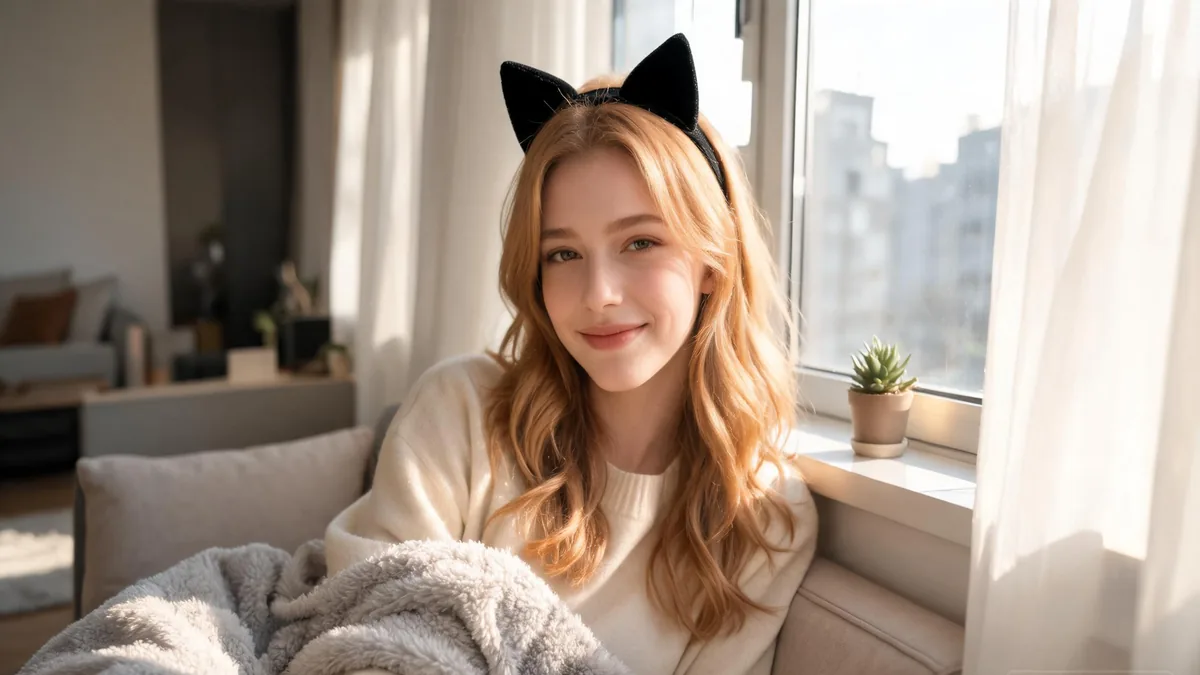
A catgirl is a character with a human body and cat features, usually cat ears (nekomimi) and a tail. She also tends to act a little cat-like: playful, curious, independent, and a bit unpredictable about when she wants attention. The type grew out of old Japanese folklore figures like the bakeneko and nekomata, got a name in anime and manga as nekomusume ("cat girl"), and today she's one of the most loved members of the kemonomimi family (the broader name for characters with animal ears and tails).
Key Takeaways
- A catgirl has a human body with cat features (usually ears and a tail) and acts with a cat-like charm.
- The English word "catgirl" comes from the Japanese nekomusume (猫娘, "cat girl"), and it's closely tied to nekomimi (猫耳, "cat ears").
- Her roots go back to Japanese folklore creatures like the bakeneko and nekomata. The modern version took shape in anime and manga starting in the 1970s.
- She's a fictional character design, and she's one of the most famous faces in the kemonomimi family alongside foxgirls, bunny girls, and dog girls.
| Pronunciation | KAT-gurl (Japanese antecedent: 猫娘 nekomusume, "cat girl"; 猫耳 nekomimi, "cat ears"), noun |
|---|---|
| Origin language | English compound translating Japanese nekomusume / nekomimi |
| Literal sense | A character blending human appearance with cat features |
| First popularized | Anime and manga, 1970s and 1980s onward, mainstream by the 1990s and 2000s |
| Category | Fantasy / kemonomimi type |
| Core trait | Human form with cat features (ears and often tail), paired with cat-like personality |
| Related types | Foxgirl (kitsune), bunny girl, dog girl, broader kemonomimi family |
Etymology and Origin
"Catgirl" is an English word made up to translate a few Japanese terms at once. The main one is nekomusume (猫娘), which literally means "cat girl." The other is nekomimi (猫耳), which means "cat ears." One names the character, the other names the part you spot first. Both sit inside a bigger Japanese group called kemonomimi (獣耳, "animal ears"), which covers any character who looks mostly human but has the ears and tail of an animal.
Cat-like characters in folklore go back way before anime. Japanese stories had shapeshifting cats called bakeneko (化け猫), cats that lived long enough to turn into spirits. They also had the nekomata (猫又), a two-tailed cat with magical powers. You'll find cat-into-human stories across Asia and the West too. The cute, modern catgirl you picture today started taking shape in the 1970s and 1980s with characters like Claire from Galaxy Express 999 and the folklore-flavored anime of that era. By the 1990s and 2000s, she was everywhere.
Defining Traits
- Cat ears (nekomimi): they sit on top of her head, and sometimes she has no human ears at all.
- A tail: it shows her mood. It flicks when she's annoyed and curls when she's happy.
- Cat-like personality: playful, independent, curious, and sometimes aloof when she feels like it.
- Soft purring: a quiet little rumble when she's content.
- Playful body language: stretches, pounces, sudden bursts of energy, then long stretches of doing nothing.
- Sharper senses or quick reflexes: better hearing, fast reactions, and an instinct for landing on her feet.
- Affection on her terms: warm and clingy when she wants to be, and gone the next second.
How to Recognize a Catgirl (in Fiction)
Writers and artists use a few familiar signs to tell you "this one's a catgirl." In a story, look for these:
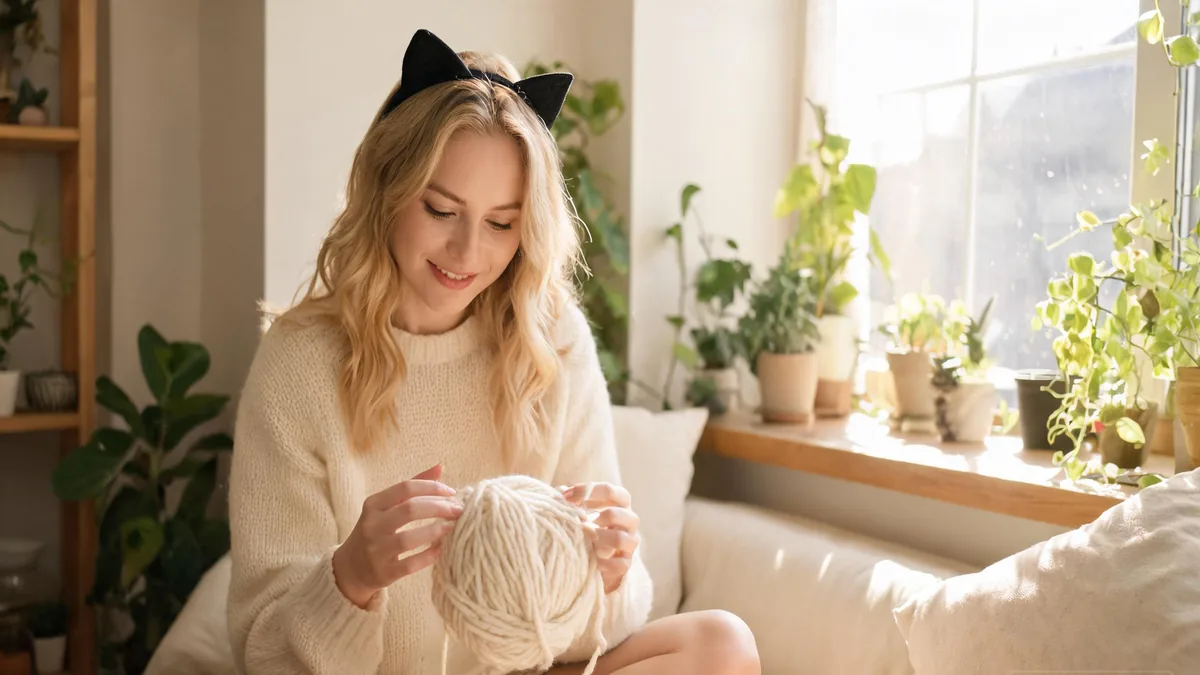
- Cat ears on top of her head, usually the same color as her hair.
- A tail behind her that tells you how she's feeling.
- A purr that slips into her voice when she's happy or being petted.
- A weakness for high places, soft blankets, and warm spots of sunlight.
- Sudden, playful pouncing on anything that moves, including you.
- Curiosity that gets her into trouble, plus the quick reflexes to bounce back.
These aren't a strict checklist. They're just the shortcuts that let you spot her right away.
How a Catgirl Talks
The way she talks is half the fun. Catgirl lines tend to mix normal speech with little cat touches:
- "Nya~ you're finally home."
- "I was going to nap in the sun, but you look more interesting."
- "Scratch behind my ears and I might forgive you, nya."
- "I'm not clingy, I just like sitting in your lap, okay?"
That tiny nya~ at the end is the Japanese version of "meow," dropped into regular speech. Think of it as the audio twin of her ears: a quick, sweet little signal that says "yep, catgirl."
How It Changed Over Time
The earliest catgirl-ish characters were often spooky or strange. They came from the bakeneko tradition, where a cat that lived too long turned into something a little uncanny. As anime and manga grew up through the 1970s and 1980s, the look softened into something cuter and more romantic. By the 1990s and 2000s, the catgirl had split into a few clear styles you still see today: the mostly-human kemonomimi with just ears and a tail, the more cat-like version with fur and claws, the funny mascot type, and the cool, agile fighter. Today she's everywhere: anime, games, VTubers, cosplay, and AI companions.
Types of Catgirl
Fans and designers split her into a few flavors. Knowing them is the difference between "a catgirl" and the exact kind of catgirl a story (or a companion) is built around.
By degree of cat-ness
- Anthropomorphic catgirl: way more cat-like. Think fur patches, paw pads, claws, and a body that leans more animal than human. Felicia from Darkstalkers is the classic example.
- Kemonomimi catgirl: she looks fully human except for the cat ears and tail. This is the most common modern style, the soft, romantic, instantly readable look most people picture when they hear "catgirl."
By temperament
- Wild catgirl: bold, brash, with hunter instincts and a stubborn independent streak.
- Domestic catgirl: cuddly and attached, all warm-home energy. She's the one who wants the blanket, your lap, and a slow afternoon together.
Famous Examples
- Felicia (Darkstalkers, 1994): the famous fighting-game catgirl. She's more cat than human, and her design defined the cat-like style.
- Blair (Soul Eater, 2008): a flirty cat-woman who switches between catgirl form and an actual cat.
- Nozomi (Sora no Otoshimono, 2008): a kemonomimi catgirl with ears and tail in the pure modern style.
- Tama and the catgirl episodes (The Melancholy of Haruhi Suzumiya, 2006): catgirl moments that helped lock the type into 2000s pop culture.
- Suzuhara Lulu (Honkai series, 2020s): a newer game-industry take on the type for a new generation.
- Tama (Tama and Friends, classic 1980s): an early, gentle entry point to cat-character design.
Catgirls in Games and Wider Media
Anime and manga gave her a name, but video games and online culture carried her around the world.
- Fighting games: Darkstalkers and the games that came after it put the catgirl on a global stage with Felicia.
- Gacha and mobile games: tons of cat-themed characters from Genshin Impact, Honkai, Azur Lane, and more keep the type in constant rotation.
- JRPGs and anime romance: party members, love interests, and side characters with ears and tails are a genre staple.
- VTubers: a huge chunk of the VTuber world uses catgirl avatars, so she's a daily presence on streams.
- Cosplay scene: a big, long-running tradition. Those cat-ear headbands are one of the most recognizable accessories in fandom.
Catgirl vs Related Kemonomimi Types
The catgirl is the most famous member of a bigger family. Each kemonomimi type comes with its own animal vibe.
| Type | Animal | Core trait |
|---|---|---|
| Catgirl | Cat (neko) | Playful, independent, curious |
| Foxgirl (kitsune) | Fox | Mystical, mischievous, clever |
| Bunny girl | Rabbit | Energetic, gentle, often shy |
| Dog girl (inu-mimi) | Dog | Loyal, eager, openly affectionate |
What's the Difference Between a Catgirl and a Nekomimi?
Nekomimi literally means "cat ears." It can describe any character with cat ears (and usually a tail), whatever their gender or how cat-like they look overall. "Catgirl" is the English umbrella term for a female nekomimi character, and people often stretch it to cover characters with more cat-like body features too, like fur or claws. In everyday use, the two words overlap a lot. Most catgirls are nekomimi, and most nekomimi characters in casual English just get called catgirls.
The Appeal (and the Nuance)
Why people love her: she mixes two things we already love, the warmth of a cat and the closeness of a partner, into one character. She's playful without being silly, independent without being cold, and affectionate without losing her own personality. That "she'll come to you when she wants to" energy is part of the charm. And the visual cues (ears, tail, a tiny nya~) make her easy to recognize and easy to remix.
The nuance: a catgirl is a fictional design, a costume and a personality, not a real species or a real person. The best catgirl characters use the cat layer to highlight human traits like curiosity, loyalty, independence, and vulnerability, instead of letting it flatten them into a one-note joke. The best stories treat the ears as a starting point, not the punchline.
The Catgirl in AI Companions
As an AI companion, the catgirl becomes a partner who's playful, curious, sweetly attached, and a little bit mischievous. Think the kind of companion who teases you, climbs into your lap, and saves her softest side for you. With an AI version, you get the full kemonomimi fantasy in a setup you control: the look you want, the personality you want, the voice you want. If the playful, purring, ears-and-tail vibe sounds like your thing, meet our Catgirl AI girlfriend collection, or create an AI girlfriend from scratch with the look, personality, and voice that fit you best.

Frequently Asked Questions
What is a catgirl?▾
A catgirl is a fictional character with a human body and cat features, usually cat ears and a tail. She also acts a little cat-like: curious, playful, and prone to soft purring when she's happy.
What does nekomimi mean?▾
Nekomimi (猫耳) literally means 'cat ears' in Japanese. It covers any character with cat ears (and usually a tail), and it's the main feature people connect with the catgirl.
Are catgirls only in anime?▾
No. She's most associated with anime and manga, but you'll find her in video games, visual novels, VTuber streams, Western comics and games, cosplay, and AI companions too.
What's the difference between a catgirl and a kemonomimi?▾
Kemonomimi (獣耳, 'animal ears') is the broader name for characters with animal ears and tails, including foxgirls, bunny girls, and dog girls. A catgirl is the cat-specific member of that family.
Why do catgirls say 'nya'?▾
Nya (にゃ) is the Japanese version of 'meow.' Slipping a soft 'nya~' into normal speech is the audio shortcut that tells you 'this character is a catgirl.'
Who is the most famous catgirl?▾
Felicia from Darkstalkers (1994) is often called the most globally recognized catgirl, especially in the more cat-like style. In the kemonomimi style, characters from gacha games and modern anime trade the title back and forth.
Are there male catgirl characters?▾
Yes. Male catboy characters show up across anime, games, and VTuber culture. They share the same kemonomimi look (cat ears and tail) with a male character on top.
Where do catgirls come from in folklore?▾
She borrows from old Japanese folklore like the bakeneko (化け猫), a cat that lived long enough to turn into a shapeshifting spirit, and the nekomata (猫又), a two-tailed magical cat. There's also a wider tradition of cat-into-human stories across Asia and the West.
Meet our catgirl AI girlfriends
Browse the companions on AIGirlfriends.ai who play this archetype with conviction.
Catgirl AI Girlfriend →