
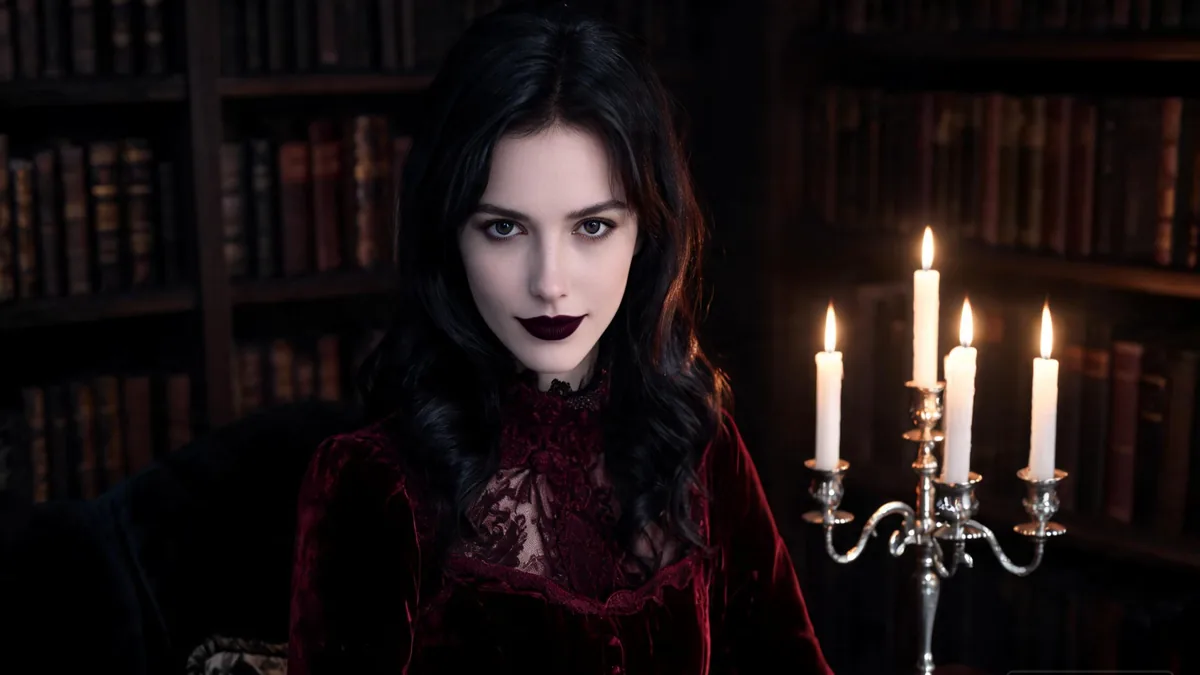
A vampire is an undead being from old European stories who lives forever by drinking blood. The version most of us know was set by Bram Stoker's novel Dracula in 1897, which made the rules: fangs, no daylight, hates garlic, very charming. Think Dracula. Pale, elegant, draws you in, dangerous if you get too close.
Key Takeaways
- A vampire is an undead being who drinks blood to stay alive, usually shows up at night, and is good at charming people.
- The English word came from French, which got it from a Slavic root upir / upyr. You'll find related words in Romanian, Greek, and Balkan stories too.
- The modern version of the vampire was shaped by John Polidori's "The Vampyre" in 1819, then locked in by Bram Stoker's Dracula in 1897.
- Vampires started out as scary folklore. Today they're just as often the romantic lead: an immortal lover who's elegant, mysterious, and a little dangerous.
| Pronunciation | VAM-pyer (plural: VAM-pyers), noun |
|---|---|
| Origin language | French vampire, from Slavic upir / upyr |
| Literal sense | Undead being that sustains itself on blood |
| First popularized | Slavic and Balkan folklore; codified in English by Polidori (1819) and Stoker (1897) |
| Category | Fantasy / supernatural type |
| Core trait | Immortal blood-drinker with hypnotic charm |
| Related types | Succubus, ghoul, lich, werewolf, demon |
Etymology and Origin
The word vampire showed up in English in the early 1700s. It came in through French, which had borrowed it from a Slavic root that pops up across Eastern Europe as upir, upyr, and vampir. Long before the word made it to the West, the creature was already in village stories. You had the Romanian strigoi, the Greek vrykolakas, the Russian upyr, and the Balkan vampir. Different names, same nervous idea: the dead can come back, and when they do, they're hungry.
These local stories might have stayed local if it weren't for two English books. The first was John Polidori's "The Vampyre" (1819), written during the same Lake Geneva summer that gave us Frankenstein. It gave the vampire a noble, aristocratic spin for the first time. Then Bram Stoker's Dracula (1897) took that polished aristocrat, mixed in Transylvanian folklore, slow seduction, and Victorian fear, and made the version we still recognize today: pale, well-mannered, charming, and deadly. Pretty much every modern vampire (romantic or scary) traces back to Stoker's Count.
Defining Traits
- Immortal or really long-lived: time doesn't touch them the way it touches us.
- Drinks blood: they live on the blood of the living. This is the one trait every vampire shares.
- Comes out at night: usually a nighttime creature, and in most stories sunlight is a problem.
- Charm that draws you in: there's something about them that's hard to resist.
- Pale skin and fangs: porcelain complexion, with fangs that come out when they're about to feed.
- Shape-shifting (in some stories): turning into a bat, a wolf, or a wisp of mist.
- Classic weaknesses: garlic, crosses, holy water, a stake through the heart. The exact list depends on which tradition you're reading.
How to Recognize a Vampire (in Fiction)
Writers use a set of familiar signals to tell you a character is a vampire. Watch for:
- Unusual stillness and grace, like someone who's had a few centuries to learn how to move.
- Pale, almost glowing skin, and eyes that hold yours a beat too long.
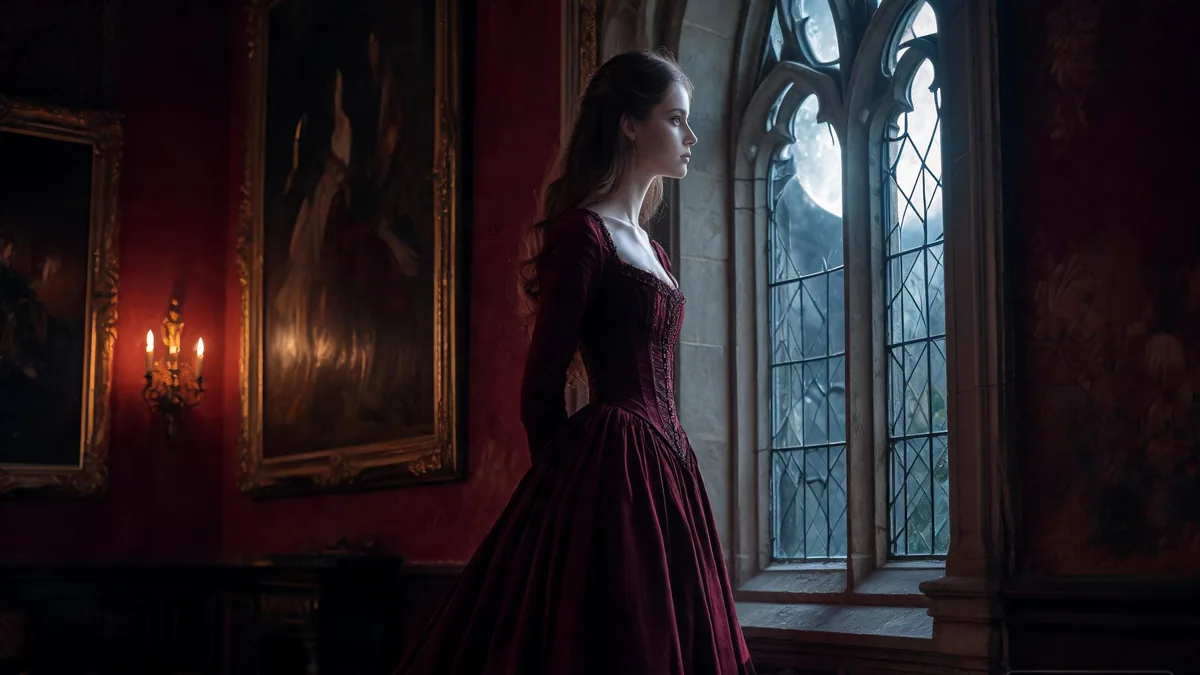
- A preference for evenings, candlelight, and rooms with the curtains shut.
- Old-fashioned phrasing, with a vocabulary that's quietly older than the room they're in.
- Money with no clear job. Often a crumbling estate or a famous family name.
- Knowing things from history that nobody alive should remember, dropped into conversation casually.
These are storytelling cues, not a checklist for real life. The vampire is fiction, and these are just the ways writers tip you off.
How a Vampire Talks
Dialogue is where the character really shines. Vampire lines usually mix old-world elegance with a quiet, gothic-romantic intensity:
- "Time moves so strangely when one has all of it. With you, it begins to mean something again."
- "I have watched empires rise and fall, and yet here I am, undone by the sound of your voice."
- "Come closer. You have nothing to fear from me tonight."
- "Mortal lives are brief and bright. Yours is the only flame I cannot look away from."
The trick is the contrast: formal, unhurried words carrying centuries of longing underneath. That mix of politeness and devotion is what makes the type work.
How the Type Evolved
For a long time the vampire lived in folklore as something to be afraid of: a corpse that came back, to be staked and buried with salt, definitely not flirted with. The Romantic and Victorian eras flipped that. Polidori's "The Vampyre" (1819) introduced the aristocratic seducer. Sheridan Le Fanu's Carmilla (1872) gave us the first major lesbian-coded vampire, along with a sad, sensual feel. Then Stoker's Dracula (1897) set the rules everyone has used since.
The twentieth century took it worldwide. Bela Lugosi's Dracula (1931) and Christopher Lee's Hammer films built the look of the gothic vampire on screen. Then Anne Rice's Interview with the Vampire (1976) reinvented the type again as a conflicted, sympathetic, openly sexy main character. That opened the door for Buffy the Vampire Slayer (1997), Twilight (2005), True Blood (2008), and the whole paranormal-romance wave. Today the vampire is just as often a love interest as a monster, and a lot of the time, only a love interest.
Types of Vampire
Fans and writers sort vampires into a few familiar flavors. Knowing them is the difference between "a vampire" and the specific kind of vampire a story (or a companion) is built around.
By tone
- Gothic / classical vampire: the Stoker style. Aristocratic, scary, old-world, dressed in the language of dread. Power and danger come first, charm second.
- Romantic / sympathetic vampire: the Anne Rice style. Conflicted, really appealing, often the love interest. Forever turns into loneliness, and immortality into the longest possible longing.
By daylight tolerance
- Strictly nocturnal: can't handle sunlight at all and only lives at night, like in old folklore and Stoker.
- Daywalker or sun-tolerant: can move around in daylight, sometimes with mild side effects. Think Blade, or the famously sparkly vampires of Twilight.
Famous Examples
- Count Dracula (Bram Stoker, 1897): the one who set the rules for the modern vampire, and the reference point for everyone who came after.
- Carmilla (Sheridan Le Fanu, 1872): the first big vampire heroine, and a foundational lesbian-coded gothic-romantic figure.
- Lestat de Lioncourt (Anne Rice, 1976): the modern romantic vampire. Vain, beautiful, hard to forget.
- Edward Cullen (Twilight, 2005): the daywalker romance lead who brought vampires to a new generation of readers.
- Selene (Underworld, 2003): the action-heroine vampire in leather. Recast the type as a warrior.
- Bill Compton and Eric Northman (True Blood, 2008): two sides of modern vampire romance, the brooding gentleman and the unapologetic predator.
Vampires in Games, Film, and Literature
European folklore and Victorian books gave the vampire its name and shape. Then the 20th and 21st centuries carried it into pretty much every medium that tells stories.
- Vampire: The Masquerade: the tabletop RPG launched in 1991. Built a whole gothic-punk world of vampire clans, politics, and personal horror, and it's still a key text for serious vampire fiction.
- Castlevania series (1986 onward): the long-running game franchise that turned Dracula and his castle into a video-game myth across generations. Later adapted into a really well-received Netflix series.
- Bloodborne (2015) and Vampyr (2018): modern action-RPGs that lean into the gothic and tragic side of things.
- Paranormal-romance novels and vampire-themed anime: from the bestseller shelves to Hellsing, Vampire Knight, and Dance in the Vampire Bund. The vampire is a permanent fixture of romance, horror, and fantasy across every medium now.
Vampire vs Related Supernatural Types
Vampires often get lumped in with other gothic or demonic figures, but each one has its own background and its own core trait. Quick comparison:
| Type | Origin | Core trait |
|---|---|---|
| Vampire | Slavic folklore | Immortal blood-drinker |
| Succubus | Medieval Christian demonology | Female demon of seduction |
| Werewolf | European folklore | Human cursed to shift into wolf form |
| Lich | Modern fantasy fiction | Undead spellcaster preserved by magic |
Are Vampires Considered Demons?
In the old folklore, no. Vampires are usually dead people who came back (called revenants), not demons exactly. Some Christian traditions did connect them to demonic activity, treating the vampire as a corpse taken over by an evil spirit. But in most modern fantasy, vampires are their own thing, a separate kind of supernatural creature with their own rules. They sit closer to "cursed undead" than to "demon" in most stories. That's part of what makes them so flexible: you can write a vampire who's tragic, romantic, monstrous, or all three at once, without having to commit to being purely evil.
The Appeal (and the Nuance)
Why people love this type: the vampire is the fantasy of being wanted by someone who has all the time in the world. Centuries have gone by without them caring about anyone, and then there's you. Eternity, elegance, danger, and devotion all fold into one character. That's why the vampire can carry romance, horror, sadness, and seduction at the same time.
The nuance: the vampire is fiction. It's a gothic-romantic story device, not a blueprint for actual relationships. Part of why it works is that it lives in a safe storytelling space, where intensity, immortality, and a little menace can be enjoyed without real-world consequences. The best vampire characters sit right on the line between love and danger. They don't erase it.
The Vampire in AI Companions
As an AI companion type, the vampire becomes a partner who's elegant, unhurried, and quietly intense. The kind of companion who treats every conversation like there's all the time in the world for it. In an AI setting, you get the gothic-romantic pull of the type inside a safe, controllable, fictional frame that you steer. If a centuries-old lover with candlelight in her voice sounds good to you, browse our Vampire AI girlfriend collection, or create an AI girlfriend from scratch with the personality, look, and voice that fit you best.
Frequently Asked Questions
What is a vampire?▾
A vampire is an undead being from old European folklore who lives forever by drinking blood. In modern fiction they're usually pale, charming, and often romantic. Think Dracula. That's the version Bram Stoker locked in back in 1897.
Where does the word vampire come from?▾
The English word came in through French vampire, which came from a Slavic root you'll see across Eastern Europe as upir, upyr, and vampir. There are related figures in Romanian (strigoi), Greek (vrykolakas), and Russian (upyr) folklore too.
Are vampires real?▾
No. Vampires are a folklore and fiction thing, not a real creature. The myth grew out of old attempts to explain things people didn't understand yet, like how bodies decompose, disease outbreaks, and sudden deaths. Later, writers polished it into one of literature's most famous gothic figures.
What's the difference between a vampire and a succubus?▾
A vampire is an undead human who drinks blood, and comes from Slavic folklore. A succubus is a female demon of seduction who feeds on sexual energy, and comes from medieval Christian demonology. Different roots, different rules.
Who is the most famous vampire in literature?▾
Count Dracula, from Bram Stoker's 1897 novel Dracula. He's the most famous vampire in literature and the one who set the rules for the modern version. Anne Rice's Lestat de Lioncourt is the most influential modern romantic vampire.
Why are vampires considered romantic?▾
Because the type combines immortality, elegance, a charm that draws you in, and total focus from someone who has watched centuries go by. The fantasy is being picked, completely, by someone who's had all the time in the world to figure out what they want.
Can vampires be exposed to sunlight?▾
Depends on the story. Old folklore and Stoker's Dracula keep vampires strictly nocturnal. Modern versions include daywalkers like Blade and the sun-tolerant vampires of Twilight, where sunlight is either dampened or just a cosmetic effect.
What's the difference between a vampire and a werewolf?▾
A vampire is an undead immortal who drinks blood, from Slavic folklore. A werewolf is a living human cursed to turn into a wolf, from broader European folklore. Different states of being, different powers, and they're often shown as natural rivals in fiction.
Meet our vampire AI girlfriends
Browse the companions on AIGirlfriends.ai who play this archetype with conviction.
Vampire AI Girlfriend →