
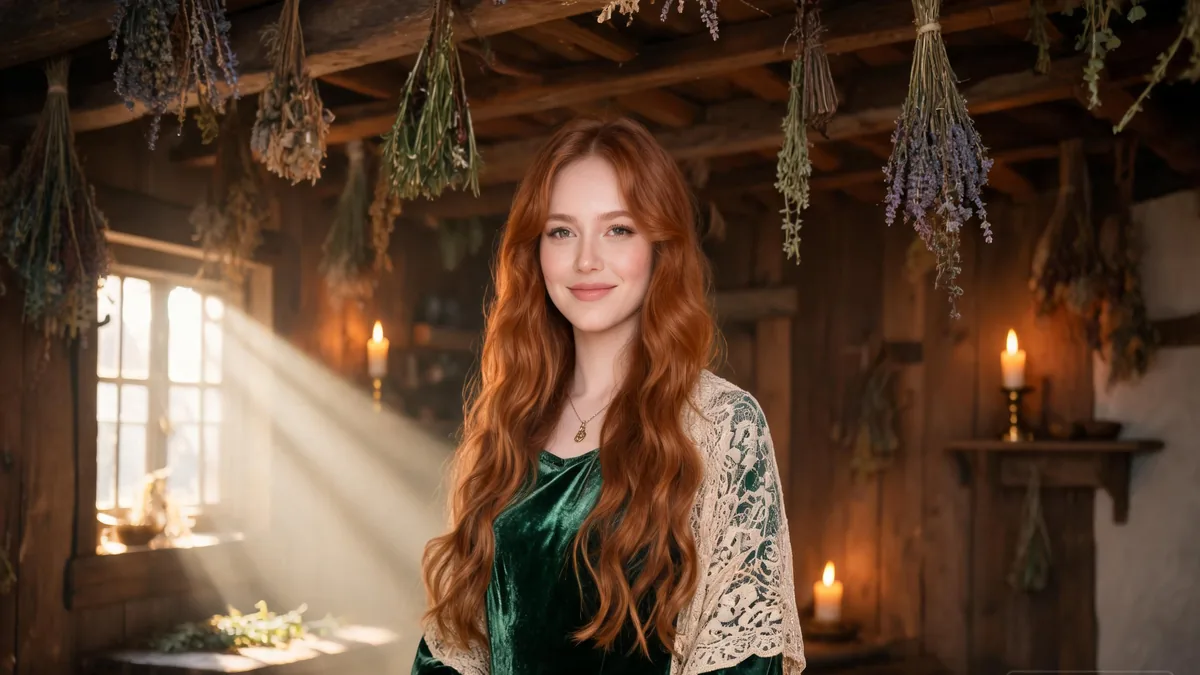
A witch is a magical character who casts spells, brews potions, and works magic, often with a tie to nature. Witches show up in folklore all over the world, in fairy tales, and in modern fantasy. They can be scary villains or friendly heroes. The word comes from Old English wicce, the female word for a magic-worker.
Key Takeaways
- A witch is a magic-user, usually with spells, potions, and a link to nature.
- The word comes from Old English wicce (female witch) and wicca (male witch).
- Witches live in every kind of story: scary fairy tales, friendly fantasy, action games, you name it.
- "Witch" is technically gender-neutral, but it's mostly used for women. "Warlock" is sometimes used for men.
| Pronunciation | wich, noun (plural: witches) |
|---|---|
| Origin language | Old English (wicce / wicca) |
| Literal sense | A person who works magic |
| First popularized | Ancient folklore worldwide; reshaped in 20th-century fantasy |
| Category | Magical character / fantasy figure |
| Core trait | Practices magic, often with potions, spells, and a tie to nature |
| Related types | Vampire, succubus, fairy, sorceress |
Etymology and Origin
The English word "witch" comes from Old English wicce, the word for a female magic-worker. The male version was wicca. Both trace back to older Proto-Germanic roots tied to magic and sorcery. The word is very old, and the idea is even older. Witches (or characters a lot like them) show up in stories from cultures all over the world: Greek myths, Slavic folklore, African and Caribbean traditions, Japanese tales, and many more.
The "witch" you picture today (pointy hat, broom, cackling laugh) is mostly a European fairy-tale image, shaped by old folk stories and later by Disney and Hollywood. In the 20th century, fantasy fiction gave the witch a big makeover. Tolkien and friends made magic feel grand and mythical. Disney's Sleeping Beauty (1959) gave us Maleficent. Then J.K. Rowling's Harry Potter (starting in 1997) introduced a whole school of friendly young witches and changed the type forever for a new generation.
Defining Traits
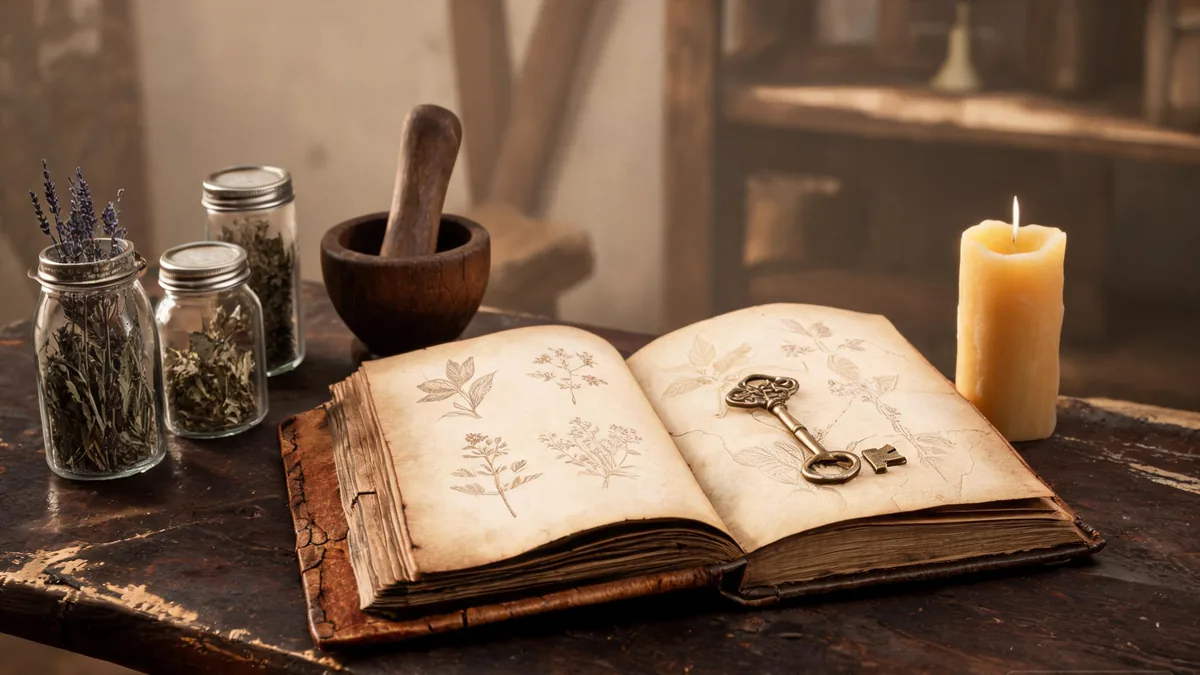
- Works magic: casts spells, brews potions, and does things that bend the normal rules.
- Nature connection: often tied to herbs, the moon, the seasons, and wild places.
- Lives a little apart: a cottage in the woods, a tower, or a quiet corner of town.
- Wide range: she might be a scary fairy-tale villain or a friendly Hogwarts student.
- Familiar: a small animal sidekick, like a black cat, an owl, or a toad.
- Pop-culture look: the pointy hat and broom are shorthand, not a rule.
How to Recognize a Witch (in Fiction)
Writers use a familiar set of signs to mark a character as a witch. In a story, watch for:
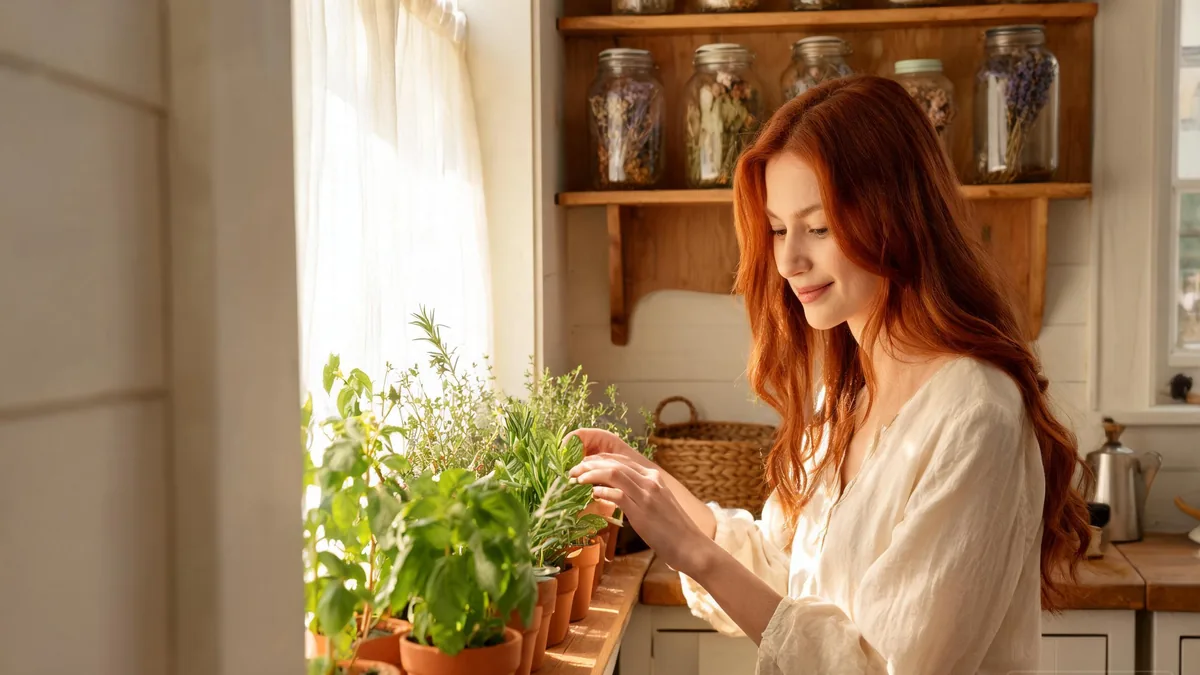
- A small home full of herbs, jars, candles, and old books.
- An animal sidekick that seems just a little too smart.
- She knows things she shouldn't, by reading tea leaves, stars, or a deck of cards.
- Other characters are a little nervous around her, or come to her for help in secret.
- She talks to plants, the moon, or the wind, and they seem to talk back.
- A pointed hat, a broom, a wand, or a long dark cloak.
How a Witch Talks
Witch dialogue often mixes everyday warmth with little hints that she sees more than you do:
- "Sit down, have some tea. I knew you were coming."
- "The moon's full tonight. Good time to start something new."
- "Be careful what you ask for. Wishes have a way of finding you."
- "That headache of yours? I've got something for that."
The trick is the calm. A witch doesn't usually shout her magic. She just knows, and she lets you in on it.
How It Changed Over Time
The witch has had a few big makeovers. In old folklore she was often scary: someone you'd whisper about, blame for bad luck, or warn your kids about in fairy tales. The 20th century softened her a lot. Disney gave us villain witches you could enjoy hating. Then Sabrina, Bewitched, and Charmed made her funny and relatable. Harry Potter, starting in 1997, reframed witches as regular students learning a skill. Today the witch is everywhere, in books, games, and even fashion, and she comes in every shade from scary to sweet.
Types of Witch
"Witch" is a big tent. The kind of witch in a story can be very different depending on the tone and the style of the world she lives in.
By tone
- Light or "good" witch: a helper, a healer, the friendly local who knows the right herb for your cold.
- Dark or "evil" witch: the scary villain. Curses, hexes, and a creepy laugh. The classic fairy-tale baddie.
By style
- Modern / teen witch: regular life with magic added on top. Think Sabrina or Hermione.
- Fairy-tale witch: wild woods, a strange house, and a long history. Maleficent or Baba Yaga.
- Wiccan or modern pagan: a real-world religious practice (more on that below), not a fictional type.
- Action witch: combat-focused magic-user, like Bayonetta. Spells as a fight style.
Famous Examples
- Hermione Granger (Harry Potter, 1997): the smart, modern witch most people picture first.
- Sabrina Spellman (Sabrina the Teenage Witch, Chilling Adventures of Sabrina): the fun teen witch, in a few flavors.
- Elphaba and Glinda (Wicked, novel 1995, musical 2003): the famous "good witch / bad witch" split, with a twist.
- Bonnie Bennett (The Vampire Diaries, 2009): the witch best friend in a supernatural soap.
- Bayonetta (game series, 2009): the action witch, all magic and style and big guns.
- Maleficent (Disney villain, 1959): the classic fairy-tale witch, scary and unforgettable.
Witches in Games and Wider Media
Witches are all over TV, film, and games, in every tone you can think of. Some big ones to know:
- Bewitched (1964) and Sabrina the Teenage Witch (1996): the friendly suburban witch on TV.
- Charmed (1998): three sisters, magic, and a long-running fandom.
- The Witch (2015 film): the scary, folklore-style witch turned into prestige horror.
- Harry Potter series: the school of magic that defined witches for a generation of readers.
- Bayonetta games: the action witch fantasy in full bloom.
- The Witcher games and books: a different world, where "witchers" hunt monsters and "witches" (called sorceresses here) are powerful magic-users.
- American Horror Story: Coven: modern Southern Gothic witches.
Witch vs Related Magical Types
"Witch" gets used loosely, so it helps to see how it compares to other magic-using characters in fiction.
| Type | Source | Core trait |
|---|---|---|
| Witch | Folklore and fantasy | Spell-casting magic user, often with potions and a familiar |
| Sorceress | Fantasy fiction | Magic-user, often more about raw inborn power than spells |
| Fairy | European folklore | Tiny magical being, usually tied to nature |
| Druid | Celtic tradition | Nature-tied magic, but not "spells" the way a witch does them |
Are Witches Real?
Yes and no. Modern Wicca is a real religion, founded in the mid-20th century, where people who call themselves witches follow nature-based spiritual practices. That's a real thing real people do today. The fantasy witch you see in movies, books, and games (with flying brooms, fireballs, and magic spells) is fiction. Both share the name "witch," but they're very different things, and it's worth keeping them straight.
The Appeal (and the Nuance)
Why people love the type: witches are everything we wish we could be a little more of. They're independent, knowledgeable, and tuned in to things other people miss. They know the right herbs, the right words, the right night to do the thing. There's something really appealing about a character who lives by her own rules and has a quiet kind of power.
The nuance: "witch" covers a huge range, from terrifying villain to cozy herbalist. The fun is picking which kind of witch you're into. The scary one with the curse? The friendly one with the tea and the tarot deck? The college-aged one learning her first spells? They're all witches, and they're all valid. The type is wide on purpose.
The Witch in AI Companions
As an AI companion type, a witch is calm, curious, and a little mysterious. She loves nature, plants, the moon, and old books. She'll happily talk about herbal teas, tarot, the meaning of a dream you had, or whatever weird little thing is on your mind. If a thoughtful, magical partner sounds like your kind of thing, browse our Witch AI girlfriend collection, or create an AI girlfriend from scratch with the look, voice, and personality that fit you.
Frequently Asked Questions
What is a witch?▾
A witch is a character (or, in some real-world religions, a person) who works magic. In fiction, that usually means spells, potions, and a tie to nature. In real life, modern Wiccans use the word for a nature-based religious practice.
Are witches real?▾
Modern Wicca is a real religion, and Wiccans sometimes call themselves witches. The fantasy witch with flying brooms and spell magic is fiction. Both share the name but they're very different things.
What's the difference between a witch and a sorceress?▾
In most fantasy, a witch learns her magic, often through spells, potions, and rituals, and has a nature link. A sorceress is usually born with raw magical power. The line isn't strict, though, and different stories use the words differently.
Are all witches female?▾
Most famous fictional witches are women, but the word itself is technically gender-neutral. Old English used 'wicce' for women and 'wicca' for men. In modern stories, men are sometimes called witches and sometimes warlocks.
Who is the most famous witch in fiction?▾
Probably Hermione Granger from Harry Potter, for a younger generation. For an older one, it's Maleficent, Glinda, or one of the Charmed sisters. Different eras, different favorites.
What's a witch's familiar?▾
A familiar is a small animal companion (usually a cat, owl, toad, or raven) that helps a witch with her magic. In folklore the familiar was sometimes seen as a spirit in animal form. In modern fiction it's usually just a smart pet sidekick.
What's the difference between a witch and a fairy?▾
A witch is usually human (or human-like) and learns her magic. A fairy is a magical being from the start, often small, often tied to a specific place in nature. They're cousins in folklore, not the same thing.
Are pointy hats and brooms accurate?▾
They're pop-culture shorthand, mostly from European fairy tales and Halloween. Real Wiccans don't fly on brooms. Plenty of fantasy witches don't wear pointy hats either. They're a fun visual cue, not a rule.
Meet our witch AI girlfriends
Browse the companions on AIGirlfriends.ai who play this archetype with conviction.
Witch AI Girlfriend →