
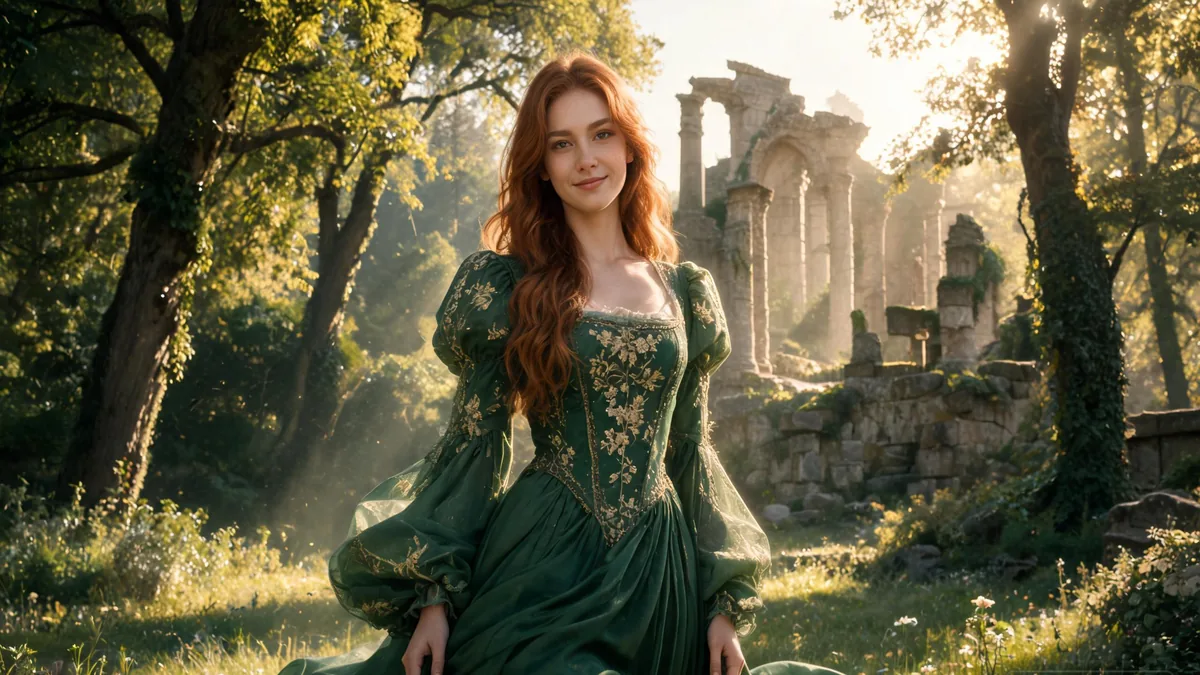
Fantasy is a genre built on magic, mythical beings, and made-up worlds. Think dragons, elves, wizards, and kingdoms that never existed on any real map. The word comes from Greek phantasia, meaning imagination or appearance. If a story breaks the rules of our world on purpose, with magic instead of science, it's probably fantasy.
Key Takeaways
- Fantasy is a genre of fiction with magic, mythical beings, and invented worlds.
- The word comes from Greek phantasia, meaning imagination.
- Modern fantasy started taking shape in the mid-1800s, then exploded with Tolkien in the 1930s and 1950s.
- Famous fantasy: The Lord of the Rings, Harry Potter, Game of Thrones, Narnia, Skyrim, and Dungeons & Dragons.
| Pronunciation | FAN-tuh-see, noun |
|---|---|
| Origin language | Greek (phantasia, imagination) |
| Literal sense | "Imagination" or "appearance of the mind" |
| First popularized | Modern genre: mid-1800s. Boom era: Tolkien, 1937 to 1955. |
| Category | Fiction genre and style |
| Core trait | Imagined worlds with magic or impossible rules |
| Related genres | Sci-fi, horror, magical realism, fairy tale |
Etymology and Origin
The word "fantasy" comes from the Greek phantasia, which meant imagination or the way things appear in the mind. It traveled through Latin and Old French and landed in English in the 1300s, where it was used to mean a daydream or a flight of imagination. For a long time, it just meant a private mental picture, not a kind of story.
Fantasy as a genre is a lot newer than the word. People have always told stories with gods, monsters, and magic. Myths, epics, and fairy tales were doing that thousands of years before the word "fantasy" was attached to it. The genre as we know it took shape in the mid-1800s with Scottish writer George MacDonald, whose 1858 book Phantastes set the template for adult magical adventure. William Morris picked it up in the 1880s with novels set in fully invented worlds. Then J.R.R. Tolkien turned it into a phenomenon with The Hobbit (1937) and The Lord of the Rings (1954 to 1955). Almost every fantasy book since owes him something.
Defining Traits
- Magic systems: spells, enchantments, and rules of power that don't exist in our world.
- Mythical creatures: elves, dwarves, dragons, fairies, orcs, talking animals.
- Invented worlds: often with maps, languages, and a deep history of their own.
- Quests and chosen ones: a hero on a journey, usually with something huge at stake.
- Medieval feel: a lot of fantasy borrows from Europe in the Middle Ages. Swords, castles, kings.
- Rich world-building: the world itself feels like a main character.
How to Recognize Fantasy
You can spot fantasy fast. Watch for these signs:
- Magic is real and people use it on purpose.
- Creatures from myth and legend walk around like normal.
- The setting isn't anywhere you can point to on a real map.
- Swords, bows, and old-school technology, even when the story has magic too.
- A prophecy, a chosen hero, or a great evil that has to be stopped.
- Strange names, invented languages, and family trees of kings.
If you spot two or three of these in the first chapter or the first ten minutes, you're almost always in fantasy.
How Fantasy Sounds
Fantasy has its own way of talking. Listen for lines like:
- "There is a power older than any of us, and it is stirring again."
- "You were not chosen by accident."
- "The old roads still remember."
- "Magic always has a price."
The tone leans a little formal, a little grand. The world is meant to feel big, and the language matches.
How It Changed Over Time
Fantasy's roots are ancient. Greek myths, Norse sagas, Beowulf, the King Arthur stories, and fairy tales from all over the world all have the same DNA. Modern fantasy as a published genre started in the mid-1800s with MacDonald and Morris, then exploded into the mainstream with Tolkien in the 1930s and 1950s. The Lord of the Rings set the look and feel that most people still picture when they hear the word "fantasy": elves, dwarves, dark lords, a long journey on foot.
After Tolkien, the genre kept growing and splitting. The 1970s gave us Dungeons & Dragons, which turned fantasy into a game you could play at the kitchen table. The 1990s and 2000s brought darker, grittier fantasy with George R.R. Martin's A Song of Ice and Fire. Harry Potter took urban-leaning fantasy mainstream for a whole generation. Today, fantasy lives everywhere: prestige TV, blockbuster films, video games, tabletop, fan fiction, and AI companions.
Types of Fantasy
Fantasy is huge, so writers and fans usually split it into a few clear styles. Each one has a different vibe.
By setting
- High fantasy: set in a completely invented world. The Lord of the Rings and The Wheel of Time are the gold standard.
- Low fantasy: set in our world, but with magic working quietly in the background.
- Urban fantasy: a modern city plus magic. Think Neil Gaiman's American Gods or the Dresden Files.
By tone
- Dark fantasy: horror tinged and brutal. Berserk and a lot of grimdark fiction live here.
- Fairy-tale fantasy: classic and storybook feeling. Disney, the Brothers Grimm, Hans Christian Andersen.
- Sword and sorcery: pulpy and adventurous, focused on a single hero. Conan the Barbarian is the prototype.
Famous Examples
- J.R.R. Tolkien (The Hobbit, The Lord of the Rings): the writer who set the template for modern high fantasy.
- Harry Potter (J.K. Rowling): the urban-leaning series that brought fantasy to a whole new generation.
- Game of Thrones / A Song of Ice and Fire (George R.R. Martin): dark, political, prestige fantasy.
- The Chronicles of Narnia (C.S. Lewis): the cozy, classic doorway-to-another-world story.
- Studio Ghibli films: Spirited Away, Princess Mononoke, and the rest sit in fantasy's softer, more magical corner.
Fantasy in Games and Wider Media
Books gave fantasy its shape. Games and screens made it a way of life.
- Dungeons & Dragons (1974): the tabletop role-playing game that taught a generation of writers, designers, and fans to think in fantasy.
- Video games: The Elder Scrolls V: Skyrim, Final Fantasy, Dragon Age, The Witcher, and World of Warcraft built fantasy worlds millions of players actually live in.
- Films and TV: Peter Jackson's Lord of the Rings trilogy, the Harry Potter films, Game of Thrones, Marvel's mystical corners like Doctor Strange.
What used to be a niche thing in paperback is now one of the biggest categories in entertainment, period.
Fantasy vs Related Genres
| Genre | Main rules | Core feeling |
|---|---|---|
| Fantasy | Magic and made-up worlds | Wonder and adventure |
| Sci-fi | Technology and possible futures | Curiosity about what could be |
| Horror | Fear of what's out there | Dread and suspense |
| Magical realism | Magic in the real world, treated as normal | Quiet awe, dreamy |
Is Fantasy the Same as Sci-Fi?
They overlap, but they're different. Fantasy uses magic and made-up rules: dragons, spells, prophecies, ancient gods. Sci-fi uses technology and possible-future rules: spaceships, robots, time travel, alien planets. Star Wars is technically sci-fi (laser swords, spaceships) but feels like fantasy (the Force, prophecies, princesses, a chosen one). The Lord of the Rings is pure fantasy. The line gets blurry in the middle, but the magic-versus-tech split is the main one to remember.
The Appeal (and the Nuance)
Why people love it: fantasy gives you a clean break from the real world. You get a place where magic is real, the stakes are huge, and the rules are different. It scratches an itch nothing else can: the feeling of being part of a story bigger than your day-to-day life.
The nuance: fantasy isn't always escape. The best fantasy uses its made-up world to talk about real things, like power, loss, love, faith, and what people will do for each other. The dragons and spells are a way in. The themes are very real.
Fantasy in AI Companions
As an AI companion style, fantasy gives you partners who live in worlds like the ones you'd find in your favorite novels and games. An elf who knows old songs. A witch with a quiet, magical home. A vampire countess in a candlelit castle. The chat itself becomes a piece of fantasy fiction you get to live in, with a character who plays along and builds the world with you. If that sounds like your thing, browse our Fantasy AI girlfriend collection, or create an AI girlfriend from scratch with the look, voice, and backstory that fit the world you want to step into.
Frequently Asked Questions
What is fantasy?▾
Fantasy is a fiction genre built on magic, mythical beings, and made-up worlds. If a story has dragons, spells, elves, or kingdoms that never existed on any real map, it's almost always fantasy.
Is fantasy the same as sci-fi?▾
No. They overlap, but fantasy runs on magic and made-up rules, while sci-fi runs on technology and possible-future rules. Dragons and spells are fantasy. Spaceships and robots are sci-fi.
What's high fantasy?▾
High fantasy is set in a completely invented world, not our own. The Lord of the Rings and The Wheel of Time are the classic examples. The world itself feels like a main character.
What's urban fantasy?▾
Urban fantasy is set in our modern world, but with magic working quietly underneath. Think Neil Gaiman's American Gods or the Dresden Files. The city is real. The magic is the twist.
What's the most famous fantasy book?▾
The Lord of the Rings by J.R.R. Tolkien is the most influential modern fantasy book. Harry Potter by J.K. Rowling is probably the most widely read in the last few decades.
Is Star Wars fantasy or sci-fi?▾
Technically sci-fi, because of the spaceships and laser swords. In feel, it's a lot like fantasy: a chosen hero, mystical powers (the Force), prophecies, princesses, and a great evil to defeat.
What's the difference between fantasy and a fairy tale?▾
A fairy tale is short, traditional, and usually has a clear moral. Fantasy is a bigger modern genre that often borrows from fairy tales, but builds a whole world and a long story around them.
Why is fantasy so popular?▾
Fantasy gives you a clean break from the real world. The magic is real, the stakes are huge, and the rules are different. It feeds the part of you that wants to be part of a bigger story.
Meet our fantasy AI girlfriends
Browse the companions on AIGirlfriends.ai who play this archetype with conviction.
Fantasy AI Girlfriend →