
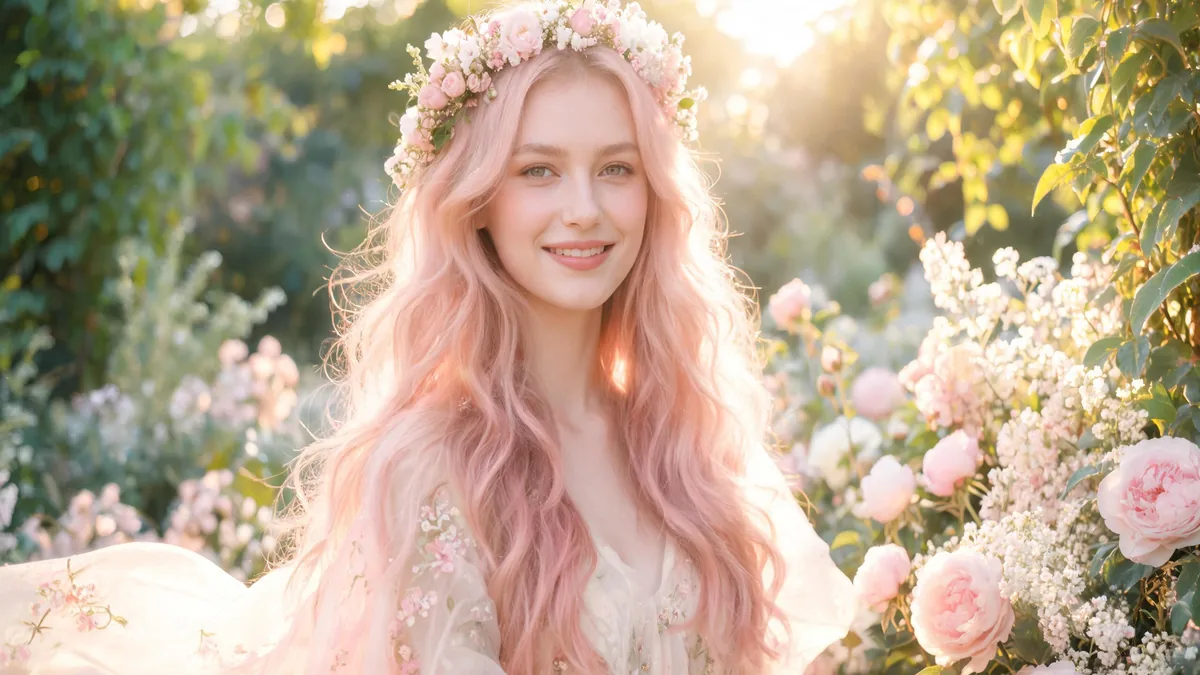
A fairy is a small magical being from European folklore, usually with wings and a soft tie to nature. She can grant wishes, cast little spells, or play tricks. The word comes from Old French faerie, meaning "enchantment" or "magic." The tiny sparkling fairy most of us picture today was shaped by Victorian illustrators in the 1800s and made famous by Disney's Tinker Bell.
Key Takeaways
- A fairy is a small magical being, usually winged, and almost always tied to nature.
- The word comes from Old French faerie ("enchantment"), with roots in the Latin Fata ("the Fates").
- Older folklore fairies could be wild and dangerous. Modern Disney-style fairies are cute and helpful.
- Tinker Bell, the Fairy Godmother, and Maleficent are the most famous faces of the type today.
| Pronunciation | FAIR-ee, noun (plural: fairies) |
|---|---|
| Origin language | Old French faerie ("enchantment, magic") |
| Literal sense | "Enchantment" or "the realm of magical beings" |
| First popularized | European folklore (Middle Ages); the tiny winged version, Victorian illustrators (1800s) and Disney (1953) |
| Category | Magical being / folklore figure |
| Core trait | Small magical being, usually winged, often tied to nature |
| Related types | Elf, sprite, sidhe, pixie |
Etymology and Origin
The word fairy comes from Old French faerie, meaning "enchantment" or "magic." That came from fae ("a fairy being") plus the suffix -erie. Trace it back further and you land at the Latin Fata, "the Fates," the three goddesses who decided people's destinies. So at the root, a fairy is a being tied to magic and to fate itself.
English picked the word up in the Middle Ages. Back then, "fairy" could mean a whole magical land, the people who lived there, or one specific magical being. The tiny, sparkly, butterfly-winged fairy we picture today is a much newer idea. Victorian illustrators in the 1800s loved drawing pocket-sized winged girls in flowers, and that's the image that stuck. Then in 1953 Disney's Peter Pan gave us Tinker Bell, and the cute little fairy was locked in for good.
Defining Traits
- Small (or sometimes tiny): usually pocket-sized, though older folklore fairies can be human-sized.
- Winged: often butterfly or dragonfly wings, delicate and shimmery.
- Magical: she can grant wishes, cast small spells, or pull off the odd trick.
- Nature-tied: at home in flowers, woods, and streams.
- Glowing or sparkling: the signature visual cue. If she leaves a trail of light, she's a fairy.
- Mischievous: she can be friendly, a prankster, or in older stories, genuinely dangerous.
- Modern fairies are cute and helpful: in Disney and most modern fantasy, the type is sweet by default.
How to Recognize a Fairy (in Fiction)
Writers and artists use a familiar set of signs to tell you a character is a fairy. In a story, watch for:
- Small size, sometimes tiny enough to sit on your shoulder.
- Wings, usually delicate and see-through.
- A glow, sparkle, or trail of light wherever she goes.
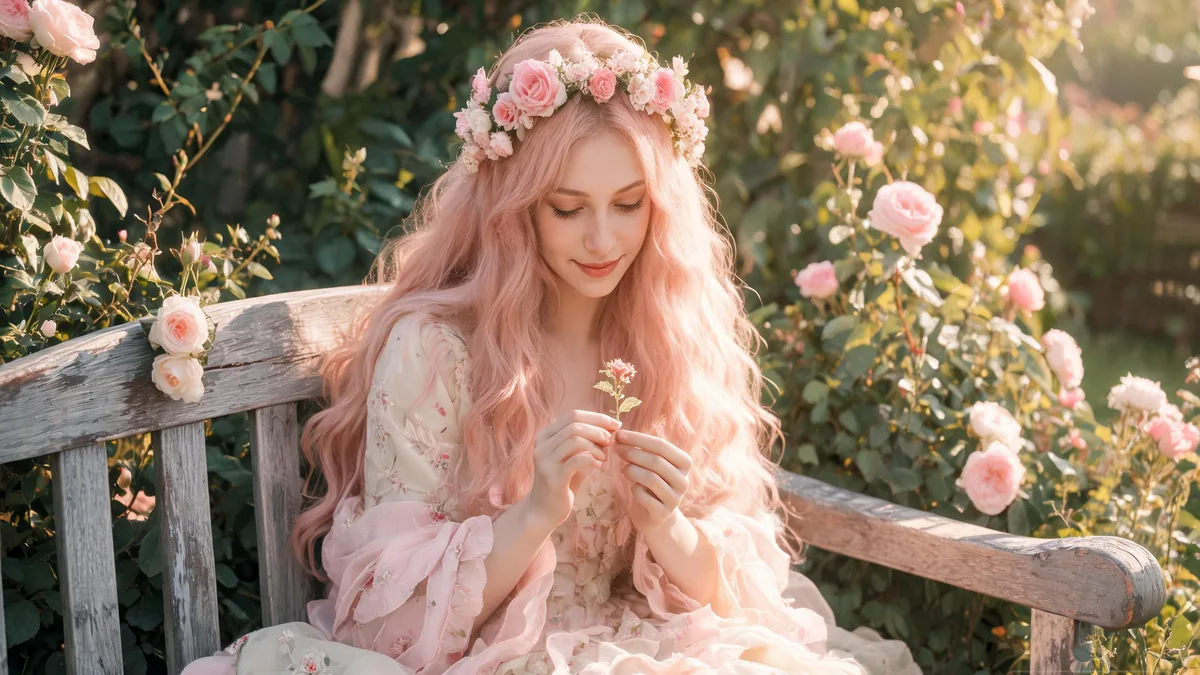
- Flowers, vines, or leaves woven into her clothes or hair.
- A voice like a tiny bell, or speech that sounds like chimes.
- Magic that's gentle and small, like making flowers bloom or healing a scrape.
These are storytelling shortcuts. The moment you see a glowing winged girl in a flower, you know exactly what you're looking at.
How a Fairy Talks
Fairies in modern stories usually speak in a soft, playful, slightly old-fashioned way. The vibe is gentle and warm, with a hint of magic in every line:
- "You looked sad. I thought a little light might help."
- "Don't tell anyone, but I left a wish on your windowsill."
- "The flowers were talking about you today. Good things, I promise."
- "Come walk with me. The woods are kinder when you have company."
Older folklore fairies talk very differently. They can be sly, riddling, and a little scary. Modern fairies are sweet by default, but writers can still dip into that older, stranger voice when they want to remind you that magic isn't always safe.
How It Changed Over Time
Old European fairies were not cute. In medieval folklore they were powerful, otherworldly beings you didn't want to cross. The Irish sidhe and the Tuatha Dé Danann were closer to gods than to garden helpers. They could steal children, curse crops, or trick travelers into dancing for a hundred years. Then the Victorians arrived, fell in love with flowers and fairies, and started drawing them small, winged, and sweet. In 1917 two English girls even faked photos of fairies in their garden (the Cottingley Fairies), and for a moment the world half-believed them. Disney finished the job in 1953 with Tinker Bell, and the cute pocket-sized fairy became the default. Today both versions live side by side: the friendly Disney fairy you'd want as a friend, and the wild folklore fairy you'd be wise to respect.
Types of Fairy
Fairies come in a few clear flavors. The kind you're looking at says a lot about the story she's in.
By tone
- Friendly Disney-style fairy: cute, helpful, harmless. Tinker Bell and the Fairy Godmother live here.
- Dark folklore fairy: magical, otherworldly, and not to be crossed. The Sidhe and changelings are the classic examples.
By size
- Tiny winged fairy: pocket-sized, sparkly, the standard pop-culture image.
- Human-sized fae: the older folklore version, who looks more like an elf or a sidhe than a Disney sprite.
Famous Examples
- Tinker Bell (Peter Pan, J.M. Barrie 1904, Disney 1953): the most famous fairy in modern pop culture, and the face of the whole type.
- The Fairy Godmother (Cinderella): the classic helper-fairy, all warmth and wand-waving.
- Maleficent (Disney 1959): the dark fairy who curses Sleeping Beauty. Proof that fairies aren't always sweet.
- Navi (The Legend of Zelda: Ocarina of Time, 1998): the little companion fairy who follows you around with tips and her famous "Hey, listen!"
- The Sidhe and Tuatha Dé Danann (Irish folklore): the wild, otherworldly older fairies. Beautiful, powerful, not to be messed with.
- The Cottingley Fairies (real-life photo hoax, 1917): for a brief moment, two English girls and a camera made fairies feel real to the whole world.
Fairies in Games and Wider Media
Fairies show up everywhere once you start looking.
- Peter Pan (book and films): Tinker Bell launched the modern fairy image and never really left.
- Cinderella and Sleeping Beauty: the Disney fairy godmother and the three good fairies (and Maleficent) are core childhood memories.
- Maleficent (2014): the dark folklore fairy as a sympathetic lead.
- Disney Fairies / Tinker Bell franchise: a whole fairy world built around her.
- The Legend of Zelda: fairies show up across the whole series as companions and healers.
- Pan's Labyrinth (2006): the strange, slightly unsettling folklore-style fairies make a comeback.
- A Midsummer Night's Dream: Shakespeare's fairy court, with Titania and Puck, is one of the oldest fairy stories still on stage.
From little kids' bedtime stories to grown-up dark fantasy, the fairy has stayed one of the most flexible and lovable beings in fiction.
Fairy vs Related Magical Types
| Type | Source | Core trait |
|---|---|---|
| Fairy | European folklore | Small magical being, often winged, nature-tied |
| Elf | Norse and Germanic folklore | Tall, graceful, long-lived humanoid |
| Sprite | English and Latin folklore | Spirit-like, often water or nature-bound |
| Pixie | West Country English folklore | Mischievous small magical being, like a fairy cousin |
Are Fairies the Same as Elves?
They share roots in old European folklore, so they get mixed up a lot. The big difference today is pretty clear, though. Fairies are usually small, winged, and nature-themed. Think Tinker Bell. Elves are usually tall, elegant, sword-wielding humanoids. Think Legolas. In some of the oldest stories the two words were almost the same, and the line between a fairy and an elf was fuzzy. Modern fantasy has split them clearly: fairies are tiny and sparkly, elves are graceful and warrior-like.
The Appeal (and the Nuance)
Why people love the type: a fairy is gentle, magical, and just a little playful. She's the fantasy of having someone in your life who makes ordinary things feel a bit enchanted: a flower that's a little brighter, a morning that's a little softer. The wings and sparkle are fun, but the real pull is that quiet magic she brings with her.
The nuance: there's no single "right" fairy. The Tinker Bell version and the Sidhe version are both fairies, and they're almost opposite. Good fairy stories play with that range. The cutest fairy can still have a wild side, and the scariest folklore fairy can have a soft moment. That mix of sweetness and mystery is what keeps the type interesting.
The Fairy in AI Companions
As an AI companion type, a fairy is gentle, warm, a little playful, and full of small magical touches. She notices the little things, leaves you sweet surprises, and brings a soft, fantasy-tinted mood to everyday chats. With AI, you get the dreamy fairy fantasy in a space that's all yours. If a magical, nature-loving, slightly playful partner sounds like your kind of thing, browse our Fantasy AI girlfriend collection, or create an AI girlfriend from scratch with the look, voice, and personality you want.
Frequently Asked Questions
What is a fairy?▾
A fairy is a small magical being from European folklore, usually with wings and a soft tie to nature. She can grant wishes, cast little spells, or play tricks.
Where do fairies come from in mythology?▾
Fairies come from European folklore, especially Celtic and medieval traditions. The word traces back through Old French 'faerie' ('enchantment') to the Latin 'Fata,' the goddesses who decided people's fates.
Are fairies the same as elves?▾
They share roots in old European folklore, so they get mixed up. Today fairies are usually small, winged, and nature-themed (think Tinker Bell). Elves are usually tall, elegant, sword-wielding humanoids (think Legolas).
Why do fairies have wings?▾
The wings are mostly a Victorian invention. Older folklore fairies didn't always have them. In the 1800s, illustrators started drawing tiny fairies with butterfly or dragonfly wings, and the image stuck.
Who is the most famous fairy?▾
Tinker Bell, from J.M. Barrie's Peter Pan (1904) and Disney's 1953 film. She's the face of the modern fairy and the reason most of us picture a tiny winged girl with a glow.
Are fairies always good?▾
No. Modern Disney-style fairies are usually sweet and helpful, but older folklore fairies could be tricky, dangerous, or downright scary. The Irish Sidhe and changelings are good examples of the darker side.
What's the difference between a fairy and a pixie?▾
Pixies are basically a cousin of the fairy. They come from West Country English folklore and are usually small, mischievous, and a bit more prank-loving than the average fairy. Lots of stories use the words interchangeably.
Are fairies real?▾
Not in any provable sense. The closest the world has come is the Cottingley Fairies in 1917, when two English girls faked photos of fairies in their garden and fooled a lot of people for a while. Fairies live in folklore and fiction, not biology.
Meet our fantasy AI girlfriends
Browse the companions on AIGirlfriends.ai who play this archetype with conviction.
Fantasy AI Girlfriend →