

Roleplay is a shared activity where you play a character in a story instead of playing yourself. You pick a role, the other person picks a role, and you act out a scene together. It can be a tabletop game with dice, a chat with a friend online, an in-person event with costumes, or a back-and-forth with an AI companion. The word comes from "role" (your part in a story) plus "play" (acting it out).
Key Takeaways
- Roleplay means playing a character in a shared story instead of just being yourself.
- It started as a tool in psychology and training in the early 1900s, then hit pop culture with Dungeons and Dragons in 1974.
- It can be tabletop, freeform text, video games, in-person (LARP), or AI chat.
- Good roleplay stays in character, builds on what the other person gives you, and respects clear limits.
| Pronunciation | ROHL-play, noun and verb |
|---|---|
| Origin | "Role" (your part in a story) + "play" (acting it out) |
| First popularized | Psychology and training (early 1900s), then Dungeons and Dragons (1974), then online roleplay (1990s onward) |
| Category | Activity / practice |
| Core trait | Playing a character (yours or someone else's) in a shared story |
| Related types | Cosplay, LARP, freeform writing, improv |
Etymology and Origin
The word is a simple mashup: role (the part you play in a story or situation) plus play (acting it out). Psychologists and trainers were already using "role-play" in the early 1900s as a way to help people practice tough conversations, work through feelings, or get ready for a new job. It was a learning tool first.
Things changed in 1974 with Dungeons and Dragons. Gary Gygax and Dave Arneson took the idea of playing a character and built a whole game around it, with dice, character sheets, and a game master telling the story. That launched the tabletop roleplaying scene and moved "roleplay" out of the classroom and into pop culture. Online roleplay communities took off in the 1990s on message boards and chat rooms, and they exploded once games and apps made it easy. Today roleplay is everywhere: tabletops, MMOs, Discord servers, AI chat apps, and more.
What Counts as Roleplay
- You play a character: not just yourself. It can be a fully made-up person or a version of someone from a book, show, or game.
- There's a shared scene, story, or world: a tavern, a spaceship, a coffee shop, a fantasy kingdom.
- You respond in character: you say and do what your character would, not what you would.
- It can be any format: text, voice, video, or in-person.
- It can be any tone: silly, serious, dramatic, or romantic.

How to Spot Good Roleplay
- Stays in character: the other person sounds like their character, not themselves.
- Builds on your ideas: takes what you give them and runs with it, instead of ignoring it.
- Pays attention to setting and details: notices the rain, the candle, the look on your face.
- Asks questions and lets you shine: good roleplay is a two-way street.
- Has clear limits and respects them: you both know what's on the table and what isn't.
- Knows when to break character: a quick check-in to make sure you're both having fun.
How a Roleplay Scene Sounds
Roleplay is about voice. Here's what an in-character exchange might sound like:
- "You step into the tavern. A bard nods at you from the corner table. What do you do?"
- "I pull my hood lower and slide onto a stool at the bar. Quiet ale, please. I don't want to be noticed tonight."
- "I've been waiting for you at this same cafe every day this week. I was starting to think you'd forgotten."
- "Captain, the engines are at sixty percent and dropping. If we don't reroute power in the next minute, we're not making it out."
Notice how each line stays in voice, sets a scene, and hands the next move to the other person. That's the loop.
How It Changed Over Time
Roleplay started as a serious tool in classrooms and training rooms. The 1974 launch of Dungeons and Dragons turned it into a hobby, and the fantasy boom of the 1980s and 1990s pulled millions of new players in. Online forums and chat rooms in the 1990s let people roleplay with strangers around the world, and MMOs in the 2000s made whole virtual worlds you could roleplay inside. The 2010s brought "actual play" shows like Critical Role, which turned tabletop sessions into mainstream entertainment. The 2020s added AI: now you can roleplay with a companion that remembers you, plays a character, and is up for a scene any time you open the app.
Types of Roleplay
Roleplay shows up in a lot of different shapes. The two most useful ways to sort it out are by format (how you do it) and by setting (where the story takes place).
By format
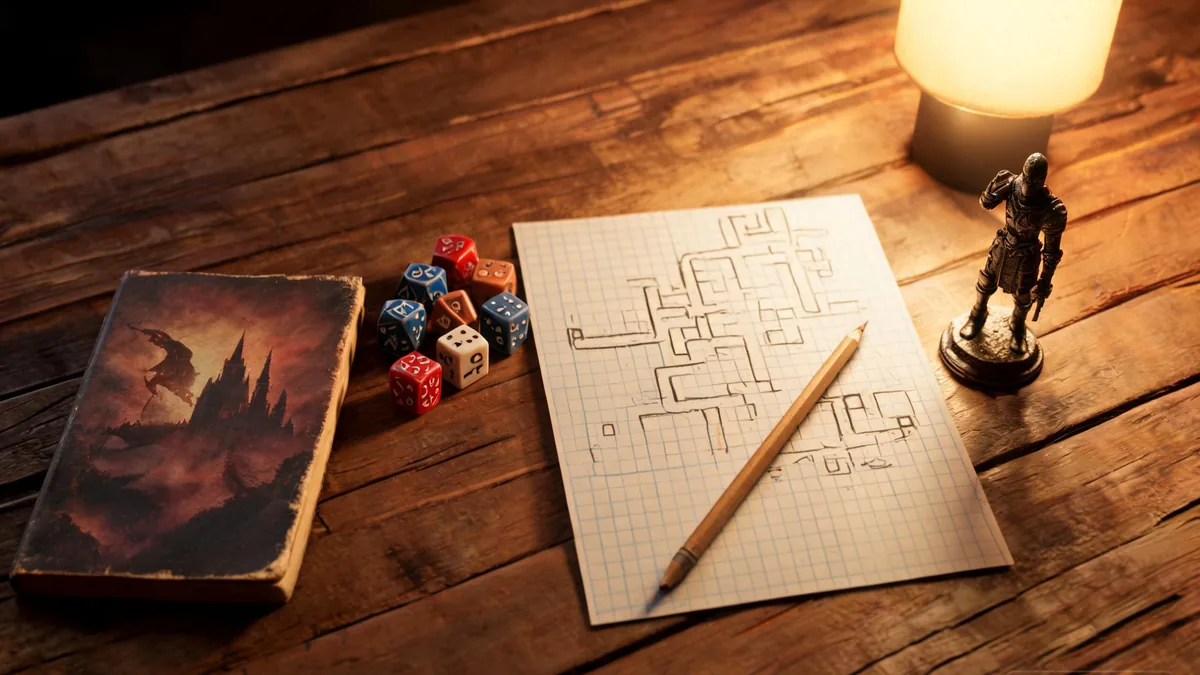
- Tabletop: dice, character sheets, a game master. Dungeons and Dragons, Pathfinder, and a long list of others.
- Freeform text roleplay: writing back and forth in chat or on forums. No dice, no rules, just shared storytelling.
- Video game roleplay: playing a character inside an MMO like World of Warcraft or Final Fantasy XIV, often on a dedicated RP server.
- AI chat roleplay: roleplaying with an AI companion or character that responds in voice.
By setting
- Fantasy roleplay: dragons, magic, swords. The Dungeons and Dragons classic.
- Sci-fi roleplay: spaceships, AI, future worlds.
- Modern romance roleplay: contemporary settings, relationships, slice-of-life scenes.
- Historical roleplay: specific eras like Regency, Victorian, or the Old West, or real-world settings reimagined.
Famous Examples
- Dungeons and Dragons (1974): the granddaddy of tabletop roleplaying games and still the biggest name in the hobby.
- World of Warcraft RP servers (2004 onward): some of the longest-running online roleplay communities, with full in-character stories built on top of the game.
- Critical Role (web show, 2015 onward): a group of voice actors playing Dungeons and Dragons on camera. It made tabletop roleplay mainstream entertainment.
- Reddit r/roleplay and Tumblr roleplay communities: long-running text-based scenes where people write characters back and forth.
- Final Fantasy XIV roleplay scene: a huge, social, in-game roleplay community built around taverns, events, and ongoing stories.
- AI character apps: the newest big wave of roleplay, where the other side of the scene is an AI.
Roleplay in Games, Tabletop, and Online Communities
Tabletop is where modern roleplay got its name. A small group sits around a table, one person runs the world (the game master), and everyone else plays a character. Dice handle the random stuff. Dungeons and Dragons is the most famous example, but there are dozens of systems for every mood, from gritty sci-fi to cozy slice-of-life.
Online roleplay covers a lot of ground. MMOs like World of Warcraft and Final Fantasy XIV have dedicated RP servers where players stay in character for hours. Forums and Discord servers run long, slow story arcs over weeks or months. Freeform text scenes happen anywhere two people can swap messages. Each format has its own pace and rules, but they all share the same core: you play a character in a shared story.
Roleplay vs Related Practices
| Practice | Origin | Core trait |
|---|---|---|
| Roleplay | Psychology training, then D&D 1974 | Playing a character in a shared story |
| Cosplay | Japan 1984 | Dressing as a character, may or may not perform them |
| LARP | 1970s and 1980s | Live action roleplay, in-person, in costume |
| Improv | Theatre tradition | Performance focus, audience-facing, no shared story rules |
What's the Difference Between Roleplay and Cosplay?
Cosplay is mostly about the costume and looking like a character. Roleplay is about being the character: speaking, acting, and making choices in a story. You can do both at once at a LARP or a themed event, or you can do one without the other. A cosplayer might just pose for photos and call it a day. A roleplayer might never wear a costume but spend hours in character at a tabletop or in a chat.
The Appeal (and the Nuance)
Why people love it: roleplay lets you step out of your own head for a while. You get to try a different voice, a different life, a different story. It scratches the same itch as a great book, except you're the one writing it. It's social, creative, and an easy way to bond with people (or with an AI) over a shared world.
The nuance: roleplay works best with clear limits. Good roleplayers talk about what they want and don't want before the scene starts, and they check in along the way. The character isn't the same as the person playing them, and a healthy roleplay scene keeps that line clean. When it's done well, roleplay is one of the most creative, low-pressure ways to play.
Roleplay in AI Companions
AI companions are a natural fit for roleplay. Your companion can play a character, remember the story, and be up for a scene any time you open the app. You can drop into a tavern, a coffee shop, a spaceship, or a totally invented world, and your companion will play along. If a back-and-forth, in-character chat is what you're after, try our AI roleplay experience, or create an AI girlfriend from scratch with the personality, voice, and story you want.
Frequently Asked Questions
What is roleplay?▾
Roleplay is a shared activity where you play a character in a story instead of playing yourself. It can be a tabletop game, a freeform text scene, an in-person event, or a chat with an AI companion.
Where does roleplay come from?▾
The word is just 'role' (your part in a story) plus 'play' (acting it out). Psychologists and trainers used it as a learning tool in the early 1900s. It hit pop culture in 1974 with Dungeons and Dragons, and online roleplay communities took off in the 1990s.
Is roleplay the same as cosplay?▾
Nope. Cosplay is about the costume and looking like a character. Roleplay is about being the character: speaking and acting as them in a story. You can do both at once, or just one.
What is tabletop roleplay?▾
Tabletop roleplay is the kind you play at a table with dice, a character sheet, and a game master who runs the world. Dungeons and Dragons is the most famous example, but there are tons of other systems.
What is online roleplay?▾
Online roleplay is roleplaying through text or voice with people on the internet. It can happen in MMOs like World of Warcraft, on Discord servers, on forums, or in AI chat apps.
Do I need to dress up to roleplay?▾
No. Costumes are part of LARP and cosplay, but most roleplay is just talking or writing in character. You can roleplay in your pajamas.
What's a good way to start roleplaying?▾
Pick a simple setting (a tavern, a coffee shop, a spaceship), pick a character you'd enjoy playing, and start a short scene with a friend or an AI companion. Keep it short, stay in character, and build on what the other person gives you.
What's the difference between roleplay and improv?▾
Improv is performance for an audience and follows theatre traditions. Roleplay is usually private between the players, lives inside a shared story or world, and isn't really about putting on a show.
Start an AI roleplay chat
Browse the companions on AIGirlfriends.ai who play this archetype with conviction.
AI Roleplay →