
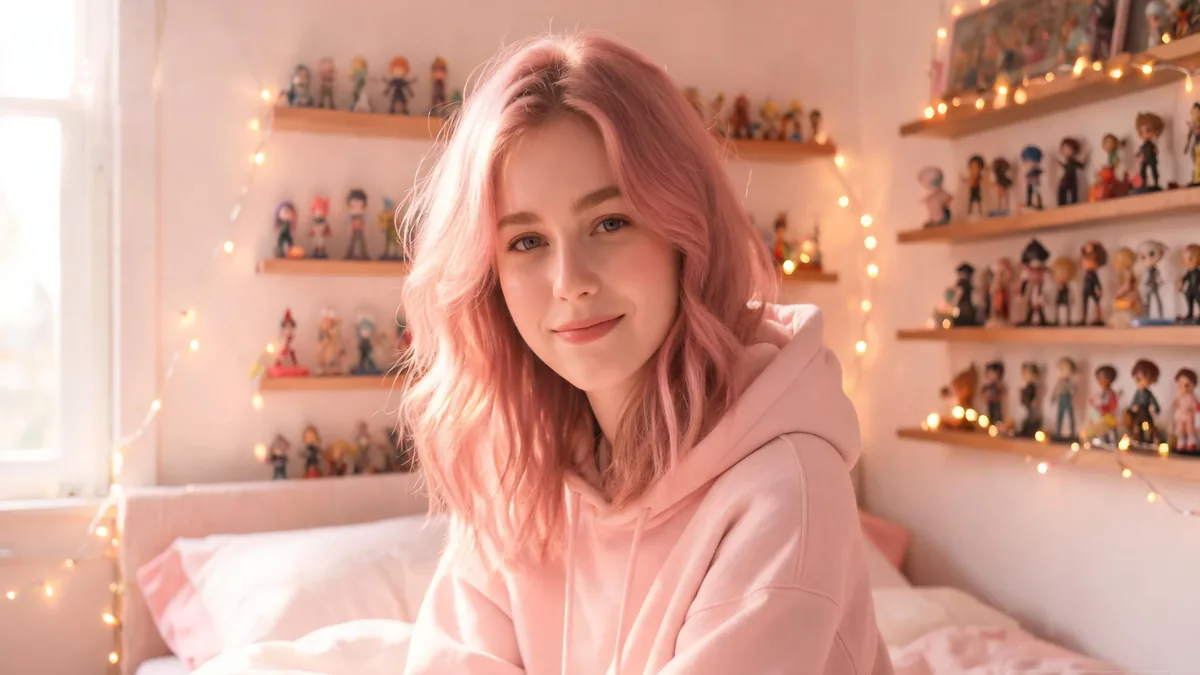
Anime is the style of animation that comes from Japan, or that's made to look like it. You know it when you see it: big expressive eyes, dramatic hair, sharp action lines, and emotions cranked all the way up. The word is Japanese, and it's actually a borrowing from English. It's a short version of "animation." Outside Japan, "anime" specifically means animated work made in Japan, or in that visual style.
Key Takeaways
- Anime is a style and medium of animation that comes from Japan, with a look you can spot in a second.
- The word is a Japanese shortening of the English "animation." In Japan it means any animation. Everywhere else, it means Japanese animation specifically.
- Modern anime took shape from the 1960s onward, with Osamu Tezuka's Astro Boy (1963) usually called the start.
- It covers every genre you can think of, from kids' shows to gritty drama. Anime isn't a genre, it's a whole medium.
| Pronunciation | AN-uh-may (アニメ), uncountable noun |
|---|---|
| Origin language | Japanese (borrowed from English "animation") |
| Literal sense | Short for "animation" |
| First popularized | 1960s in Japan, 1980s and 1990s globally |
| Category | Animation style and medium |
| Core trait | Distinctive visuals: expressive eyes, dynamic action, emotional storytelling |
| Related terms | Manga, Isekai, Shonen, Cosplay |
Etymology and Origin
The word looks Japanese, and it is, but it's actually a borrowed English word. In Japan, the full word is animeshon (アニメーション), a phonetic take on the English "animation." In the 1980s, Japanese fans and the industry shortened it to anime (アニメ). That's the form that stuck.
Inside Japan, "anime" means any animated work, including Disney films and Western cartoons. Outside Japan, the word picked up a more specific meaning: animated content made in Japan, or made in that recognizable visual style. So when an American fan says "I'm watching anime," they almost always mean a Japanese show, not a Pixar movie.
Modern anime as we know it took shape from the 1960s. Osamu Tezuka's Astro Boy (1963) is usually called the start. It set up the visual shorthand and the production style that the whole industry copied. The 1980s and 1990s then blew the doors open globally, with films like Akira and shows like Sailor Moon and Dragon Ball Z.
What Makes Anime Look Like Anime
Anime has a visual shorthand that's easy to spot, even if you've never watched a full episode. The big ones:
- Large expressive eyes: oversized eyes that catch the light and show feelings in a glance.
- Stylized hair: dramatic shapes, gravity-defying spikes, and unnatural colors used to mark personality.
- Exaggerated reactions: sweatdrops, lightning lines, blushing cheeks, glowing eyes. Big visual cues for big feelings.
- Dynamic action: speed lines, dramatic camera angles, and strong impact frames during fights.
- Detailed backgrounds: the world behind the characters is often painted with a ton of care, even when the characters themselves are drawn simply.
- Genre-bending: serious drama sits next to silly comedy in the same show. A heartbreaking scene can be followed by a goofy gag, and that's normal.
How to Tell if Something Is Anime (vs Other Animation)
Sometimes a show looks "anime-ish" but isn't actually anime. Here's the quick test:
- Where was it made? Anime is made in Japan (or in a few cases, by Japanese-led studios). A show made in the US that just looks like anime is usually called "anime-inspired" or "Western animation in anime style."
- The eyes: big, glossy, with detailed catchlights. Western shows usually use simpler eye shapes.
- The pacing: anime often holds still on a face for a beat to let an emotion land. Western animation tends to keep movement constant.
- The mouth movement: anime mouths usually open and close in three simple shapes. Lip sync isn't matched to every syllable.
- The opening and ending songs: a J-pop or J-rock theme over a stylized montage is a dead giveaway.
How Anime Sounds: Voice Acting and Music
Half of anime is the sound. Japanese voice actors, called seiyuu, are huge stars in Japan, with their own fan followings and concerts. The performance style is more theatrical than Western voice acting. Emotions are turned up to match the visuals.
Music matters just as much. Most anime has a full original score, plus a catchy opening song and ending song that change every season or so. These songs are often hits on their own. J-pop and J-rock acts use anime tie-ins to break globally, and fans recognize a show by its theme in the first three seconds.
How It Changed Over Time
Early anime in the 1960s was made on tight TV budgets, and a lot of the visual shorthand (limited mouth movement, held frames, dramatic reaction shots) came from cost-saving tricks that turned into a real style. In the 1980s, films like Akira (1988) showed the world that anime could be cinematic, dark, and adult. The 1990s brought the global breakout: Dragon Ball Z, Sailor Moon, and Pokemon turned anime into a worldwide kid-and-teen obsession. Studio Ghibli's Spirited Away (2001) won an Oscar and put anime in the conversation with the world's best animation. Streaming in the 2010s and 2020s made it easier than ever to watch the latest shows the same week they air in Japan. Today, anime is mainstream pop culture, not a niche hobby.
Types of Anime
Anime isn't a single genre. It's a medium that covers every kind of story you can think of. Fans usually split it two ways: by who it's aimed at, and by what it's about.
By audience
- Shonen: aimed at young boys and teens. Big action, big friendships, and big fights. Think Dragon Ball, Naruto, and One Piece.
- Shojo: aimed at young girls and teens. Often romance-focused, with strong feelings and pretty visuals. Think Sailor Moon and Fruits Basket.
- Seinen: aimed at adult men. Darker themes, more complex characters, more violence or moral grey areas. Think Berserk and Vinland Saga.
- Josei: aimed at adult women. Realistic relationships, workplace life, and grown-up feelings. Think Nodame Cantabile and Honey and Clover.
By genre or setting
- Isekai: a regular person gets sent to another world (usually a fantasy or game world). Think Re:Zero and Sword Art Online.
- Mecha: giant robots, often piloted by teenagers with a lot of feelings. Think Gundam and Evangelion.
- Slice-of-life: low-stakes stories about everyday life. Calming, character-driven. Think K-On! and Yuru Camp.
- Magical girl: ordinary girls who transform and use magic powers, usually to protect the world. Think Sailor Moon and Madoka Magica.
Famous Examples
- Astro Boy (1963): Osamu Tezuka's show is usually called the start of modern anime. It set the template the whole industry built on.
- Akira (1988): the cyberpunk film that introduced anime to the West as a serious, cinematic art form.
- Sailor Moon (1992): the magical girl pioneer that built a global fandom and shaped a whole genre.
- One Piece (1999) and Naruto (2002): the mega-popular long-runners that became the gateway anime for a whole generation.
- Spirited Away (2001): Studio Ghibli's Oscar-winning film, often called one of the greatest animated movies ever made.
- Attack on Titan (2013): the modern epic that pulled a huge new audience into anime in the 2010s.
- Demon Slayer (2019): the contemporary mainstream hit that broke box-office records and showed anime is now firmly part of pop culture.
Anime in Games, Manga, and Western Culture
Most popular anime started life as manga, which is Japanese comics. A successful manga gets an anime adaptation, then often video games, movies, merchandise, and the whole circus. It's a whole content pipeline.
Anime has hugely influenced Western pop culture. Avatar: The Last Airbender borrowed its visual language and storytelling rhythms openly. The Matrix took whole sequences and shot styles from anime films. Fashion, music videos, and video games (especially fighting games and JRPGs) all carry anime's fingerprints. Conventions like Anime Expo in Los Angeles and Comiket in Tokyo pull in hundreds of thousands of fans each year, and the audience just keeps growing.
Anime vs Other Animation Styles
| Style | Origin | Core trait |
|---|---|---|
| Anime | Japan, 1960s to present | Distinctive visual style with expressive eyes and dynamic action |
| American cartoons | USA, 1900s to present | Often comedy-focused, broad audience, variable styles |
| Disney animation | USA, 1937 to present | Family-focused, polished, song-driven |
| French and European animation | France, Belgium, 1960s to present | Often more art-house, varied painterly styles |
Is Anime the Same as Cartoons?
Both are animated, but they're treated as different things. "Anime" specifically means animation made in Japan, or in that style. "Cartoon" usually means Western animation, often comedy-focused. They have different visual styles, different storytelling traditions, and different audiences. Technically, calling all anime "cartoons" isn't wrong (it's all animation after all), but most fans use the two words for different things, and using "cartoons" for anime can come off as dismissive.
The Appeal (and the Nuance)
Why people love anime: it tells stories with feelings turned all the way up. The visuals make every emotion land harder. The genre range is huge, so there's something for every mood: epic fantasy, quiet slice-of-life, action-packed shonen, heartbreaking drama, weird comedy. And the medium isn't afraid to go places live action won't, because anything you can draw, you can animate.
The nuance: "anime" isn't a single thing. A grim seinen war drama and a bright kids' show are both anime, and they have almost nothing in common except the country they're made in. If someone tells you they "don't like anime," they probably haven't found their genre yet. The medium is huge, and not all of it is going to be for everyone.
Anime and AI Companions
As a style for an AI companion, "anime" usually means that big-eyed, expressive look that fans love: bright hair, stylized features, big personality. It's a visual shorthand for a character who feels lively and emotional. With AI, you can pick the anime look, choose the personality, and have a companion who fits the style of show you love most. Try our anime AI chat to talk with anime-styled characters, or create an AI girlfriend from scratch with the exact look, voice, and personality you want.
Frequently Asked Questions
What is anime?▾
Anime is the Japanese style of animation. In Japan, the word means any animation. Outside Japan, it specifically means animated work made in Japan, or in that recognizable visual style with big eyes, stylized hair, and dynamic action.
Is anime just cartoons?▾
Technically all animation is 'cartoons,' but most fans treat anime and cartoons as different things. Anime is made in Japan and has its own visual style and storytelling traditions. 'Cartoon' usually means Western animation, often comedy-focused.
Where does the word 'anime' come from?▾
It's a Japanese borrowing of the English word 'animation.' Japanese speakers shortened animeshon (アニメーション) to anime (アニメ) in the 1980s, and that's the form that stuck worldwide.
What's the difference between anime and manga?▾
Manga is Japanese comics. Anime is Japanese animation. Most popular anime started as a manga first, then got animated. Same characters and stories, different mediums.
What's the most famous anime?▾
It depends on the era. Astro Boy (1963) is the start of modern anime. Studio Ghibli's Spirited Away (2001) won an Oscar. One Piece, Naruto, Dragon Ball, and Demon Slayer are some of the biggest global hits.
What's an isekai?▾
Isekai is a genre where a regular person gets sent to another world, usually a fantasy world or a video game. Re:Zero and Sword Art Online are popular examples. It's been one of the biggest anime genres of the last decade.
What's the difference between shonen and shojo?▾
Shonen anime is aimed at young boys and teens. It's usually action-heavy, with big fights and strong friendships (Naruto, One Piece). Shojo is aimed at young girls and teens. It's usually more romance-focused with softer visuals (Sailor Moon, Fruits Basket).
Why are anime eyes so big?▾
Big eyes are easier to draw expressively, and they make emotions land fast. The look traces back to Osamu Tezuka in the 1960s, who was inspired in part by early Disney. Over time, the oversized eye became a defining feature of the anime style.
Chat with our anime AI characters
Browse the companions on AIGirlfriends.ai who play this archetype with conviction.
Anime AI Chat →