
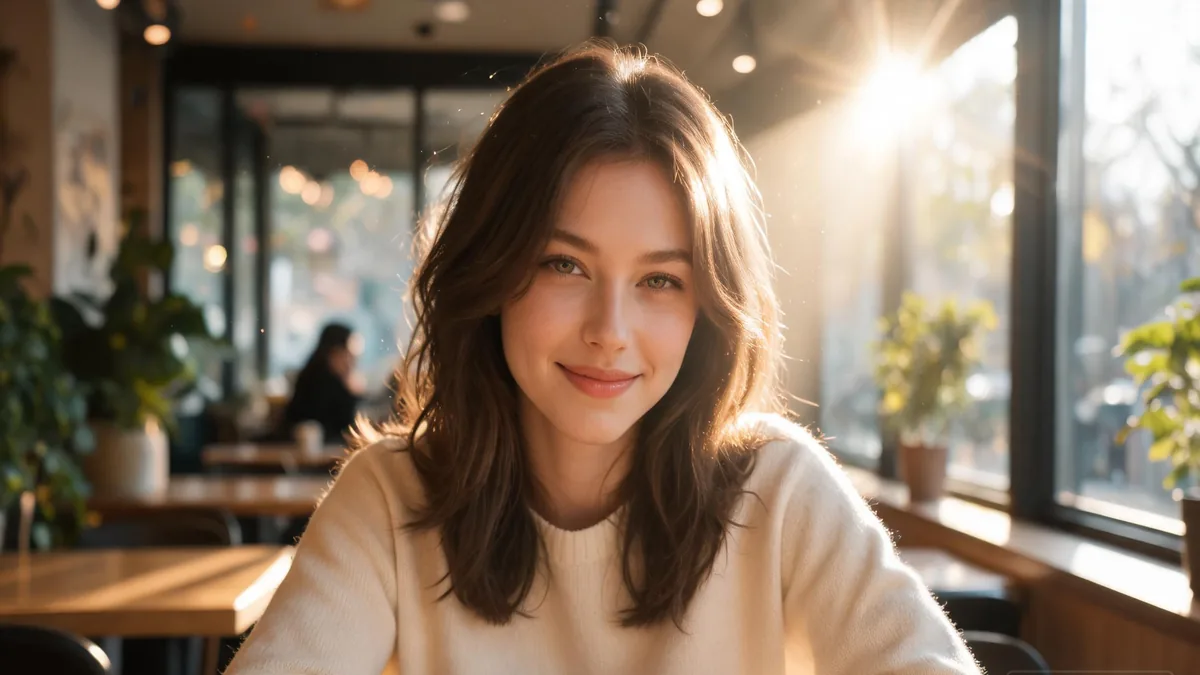
"Realistic" means an AI character that looks like a real photo of a real person. Real skin, real lighting, natural proportions, and everyday clothes. It's the opposite of anime or cartoon styles. With today's AI image tools, a realistic character can be hard to tell apart from a snapshot you'd take on your phone.
Key Takeaways
- Realistic means photorealistic: skin, lighting, and proportions that look like real life.
- The word comes from realism, a 19th-century art movement that ditched perfect, idealized images for true-to-life subjects.
- "Realistic AI" took off in the 2010s, then exploded in 2022 with tools like Stable Diffusion, Midjourney, and DALL-E.
- It's a visual style choice, not a separate technology. The same AI can make realistic, anime, or cartoon looks.
| Pronunciation | REE-uh-LIS-tik, adjective |
|---|---|
| Word root | From "realism," the 19th-century art movement |
| Literal sense | Looks like a real photo of a real person |
| First popularized | Realism in painting from the 1840s; "realistic AI" as a term in the 2010s |
| Category | Visual style |
| Core trait | Photorealistic skin, lighting, and proportions |
| Related styles | Anime, Cartoon, 3D rendered |
Etymology and Origin
The word comes from realism, a movement that started in French painting in the 1840s. Painters like Gustave Courbet and Jean-Francois Millet got tired of the idealized, polished images everyone else was making. They wanted to paint life as it actually looked: regular people, working hands, plain rooms, real light. Realism was a push for honesty over fantasy.
Fast forward to the 2010s, and the word picked up a new use. As AI image tools got good, "realistic" became the way people describe AI-generated faces and scenes that look like real photos. The big leap happened in 2018 with StyleGAN, the model behind "This Person Does Not Exist." Then in 2022, Stable Diffusion, Midjourney, and DALL-E put photorealistic image generation in everyone's hands. Suddenly "realistic AI character" was a category millions of people were searching for.
Defining Traits
- Photorealistic skin and lighting: pores, soft shadows, natural highlights. No painted-on smoothness.
- Natural proportions: bodies and faces look like real people, not stylized exaggerations.
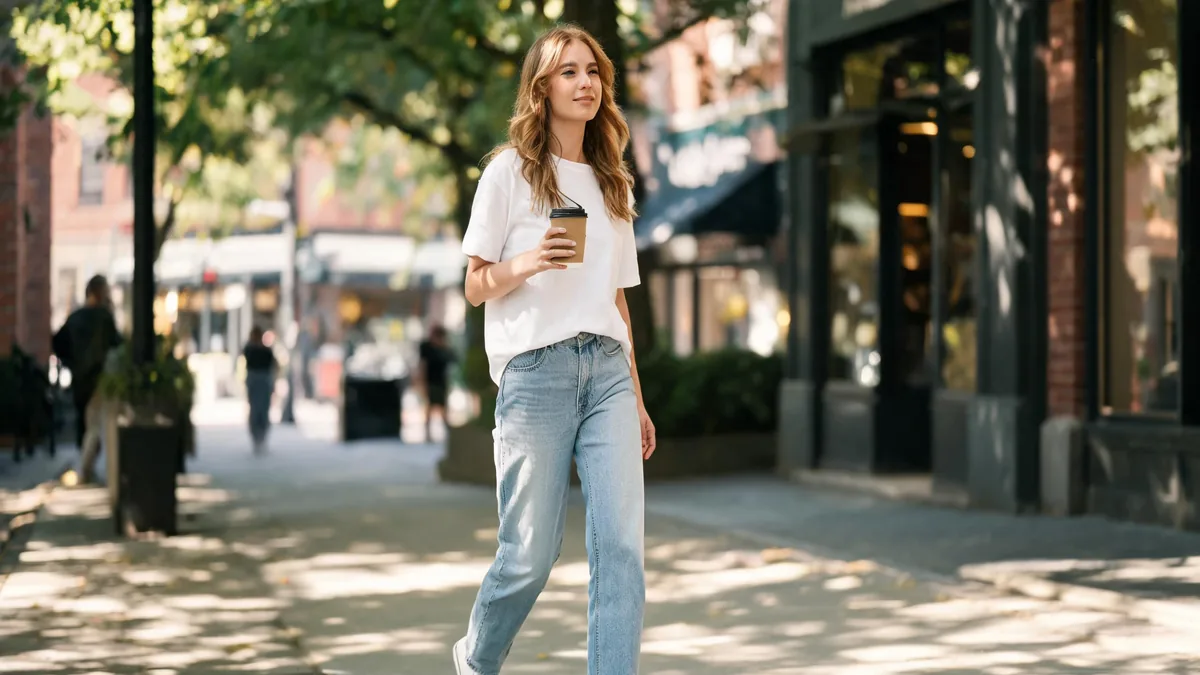
- Everyday clothing or fashion: jeans, sweaters, dresses you'd actually see on the street.
- Realistic settings: cafes, bedrooms, parks, city streets. Places that feel lived-in.
- Voices that sound like real people: warm, breathy, with normal pauses and small ums.
- Conversation that feels lifelike: small talk, references to her day, casual texting cadence.
How to Recognize a Realistic AI Character
Spotting a realistic AI character is usually pretty quick. Here's what to look for:
- Skin shows pores, freckles, or small marks. It's not perfectly smooth.
- Lighting wraps around the face the way a real lamp or the sun would.
- Hair has stray strands, not perfect helmet shapes.
- Clothes have wrinkles, threads, real fabric texture.
- Backgrounds look like real places with real depth.
- Proportions don't get exaggerated for style. Eyes, hands, and bodies look human.
If a picture passes for a phone snapshot at first glance, you're looking at a realistic AI character.
How a Realistic AI Character Sounds and Talks
Realistic isn't just about the look. It's also about how she comes across in chat and voice:
- "Just got home from work. Long day, but I made it."
- "Want to hear what I picked up at the grocery store? It's a mess."
- "You up? I was thinking about you."
- "Sorry, I was making coffee. Where were we?"
The trick is small, everyday details. A realistic character doesn't speak in big speeches. She texts like a friend would, with little asides and the rhythm of a normal conversation.
How It Changed Over Time
"Realistic" used to mean a careful portrait painting or, later, a photograph. AI changed that. In the 2010s, early machine-learning models could make faces that looked passable from a distance, but you'd spot weird eyes or smudged ears up close. StyleGAN in 2018 was the turning point. Suddenly AI-generated faces could fool people. Then 2022 hit, and tools like Stable Diffusion, Midjourney, and DALL-E made realistic AI images something anyone with a laptop could generate. By the mid-2020s, realistic AI companions became a major category. Voice models caught up too, so the same character could look real and sound real. Today, realistic AI characters sit alongside anime and cartoon styles as one of the big visual options people pick from when they build a companion.
Types of Realistic
"Realistic" covers a lot of ground. Most realistic AI characters fall into one of these flavors.
By visual feel
- Editorial-realistic: magazine-style. Clean composition, soft styling, a polished portrait look. Think a glossy print spread.
- Casual-realistic: snapshot feel. Looks like a quick phone photo. Friendly, candid, low-pressure.
- Glamour-realistic: high fashion energy. Bold makeup, dramatic lighting, runway-ready outfits.
- Lifestyle-realistic: everyday moments. Coffee shop, gym, bed in the morning. The look of real life, captured.
By role and vibe
- Girl-next-door realistic: warm, approachable, the friend you wish you had. Soft makeup, comfy clothes.
- Model realistic: built around striking looks. Strong cheekbones, sharp wardrobe, photoshoot poses.
- Slice-of-life realistic: built around the everyday. Cooking, working from home, lazy weekends.
Famous Tools and Examples
- StyleGAN (2018): the model behind "This Person Does Not Exist." It showed the world AI could make faces that looked real.
- DALL-E (2021) and DALL-E 2 (2022): OpenAI's tools made text-to-image realistic generation a household idea.
- Stable Diffusion (2022): open-source, runs on your own computer, kicked off a huge community of realistic image models.
- Midjourney (2022): known for striking, photo-real images straight from a text prompt.
- Realistic AI companion apps: services that wrap photorealistic models around a chat or voice partner you can talk to.
Realistic AI in Games and Wider Media
Realistic AI has spilled out everywhere.
- Marketing and ads: brands use AI-generated portraits for stock photos, product shots, and social posts.
- Virtual influencers: personalities like Lil Miquela blur the line between CGI and real people, and earned millions of followers.
- Realistic AI companion apps: a major and growing category. People choose realistic looks for partners they chat with daily.
- Deepfake tech: the more controversial side of realistic AI. Same underlying tools, used to put real people's faces on bodies or voices that aren't theirs. It's a real concern, and a big part of why platforms now build in checks.
Realistic AI is mainstream now. The same look you see in a fashion ad shows up in companion apps, games, and your social feed.
What's the Difference Between Realistic and Anime AI Characters?
Realistic AI characters look like real photos. Real skin, natural lighting, lifelike features. Anime AI characters use the anime style: big eyes, stylized hair, bold colors, exaggerated emotions. The tech behind both is the same. Same models, same training methods, just trained or prompted to make different visual choices. Most AI companion apps let you pick either, and a lot of users build one of each.
Realistic vs Other Visual Styles
| Style | Look | Best for |
|---|---|---|
| Realistic | Photorealistic skin, real lighting, natural proportions | Wanting something that feels like a real partner |
| Anime | Big eyes, stylized hair, bold colors | Anime and manga fans who love the look |
| Cartoon | Simplified shapes, bright colors, expressive lines | Playful, light-hearted characters |
| 3D rendered | Game-engine look, polished surfaces | A stylized but solid look, video-game feel |
Can Realistic AI Characters Be Male?
Yes. Realistic is a visual style, not a gender. Realistic male AI characters are just as common, and a lot of apps offer both. The same tools that make a realistic woman make a realistic man. The look, voice, and conversation rules all carry over. Whatever your taste, the realistic style is open to it.
The Appeal (and the Nuance)
Why people pick realistic: it feels closer to home. A realistic AI companion looks like someone you might actually meet, which makes the chat hit differently. The little texture details (a freckle, a stray hair, soft afternoon light) build a sense of presence that stylized art can't quite reach. For a lot of users, that's the whole point.
The nuance: realistic doesn't mean real. A realistic AI character is still AI. She doesn't have a life off-screen, and the photo you're looking at isn't of a person who exists. That's also the reason platforms put work into safeguards. The best realistic AI experiences are honest about being AI, while still giving you the warmth and presence that pull you in.
Realistic AI in AI Companions
As an AI companion style, realistic gives you a partner who looks and sounds like the real thing. Photorealistic skin, natural lighting, a voice with real warmth, and chat that texts like a person. If you want a companion you can really picture, browse our realistic AI chatbot collection, or create an AI girlfriend from scratch with the exact look, voice, and personality you want.

Frequently Asked Questions
What does realistic mean for AI?▾
It means the character looks like a real photo of a real person. Photorealistic skin, natural lighting, natural proportions, everyday clothes. The opposite of anime or cartoon styles.
What's the difference between realistic and anime AI?▾
Realistic looks like a real photo. Anime uses the anime style: big eyes, stylized hair, bold colors. Same AI tech behind both. Just different visual choices.
How realistic can AI photos get?▾
Really realistic. Modern tools like Stable Diffusion, Midjourney, and DALL-E can make images that pass for real phone snapshots. You usually need to look at hands, ears, or fine detail to spot the giveaways, and even those are getting harder to catch.
Are realistic AI characters fake?▾
Yes, in the sense that they aren't real people. A realistic AI character looks like a photo, but the person in it doesn't exist. That's why the style is realistic, not real.
What tools make realistic AI images?▾
The big ones are Stable Diffusion, Midjourney, and DALL-E, all from 2021 to 2022. StyleGAN in 2018 was the first model that really showed off photorealistic AI faces.
Is realistic AI the same as deepfake?▾
Not quite. Both use realistic AI tools. Deepfake means putting a real person's face or voice on something they didn't actually do. Realistic AI characters, by contrast, aren't based on anyone real. They're invented from scratch.
Can AI chatbots sound realistic?▾
Yes. Modern voice models can give an AI character warm, natural-sounding speech with normal pauses and rhythm. Pair that with photorealistic looks and the whole experience feels lifelike.
Why pick realistic over anime?▾
If you want a companion that feels like a real person, realistic is the way to go. If you love the anime style, anime is the better fit. A lot of users build one of each and switch depending on the mood.
Chat with a realistic AI
Browse the companions on AIGirlfriends.ai who play this archetype with conviction.
Realistic AI Chatbot →