

An otaku is someone who's really, really into anime, manga, games, or other Japanese pop culture. Not just a casual fan. A devoted one. The word comes from Japanese お宅 (otaku), which originally meant "your home" or a super-formal "you." In the 1980s, anime and manga fans in Japan started using it for each other, and the name stuck.
Key Takeaways
- An otaku is a devoted fan of anime, manga, games, or Japanese pop culture.
- The word originally meant "your home" or a polite "you" in Japanese. It shifted to "obsessive fan" in the 1980s.
- In Japan it can still sound a bit negative. In English-speaking fan circles, people wear the label proudly.
- There are different flavors: anime otaku, manga otaku, game otaku, idol otaku, train otaku, and more.
| Pronunciation | OH-tah-koo (オタク), noun |
|---|---|
| Origin language | Japanese (お宅) |
| Literal sense | "Your home" or a formal "you" |
| First popularized | Japanese anime and manga fans, 1980s |
| Category | Internet and fandom term |
| Core trait | Deep devotion to a fandom, usually anime or manga |
| Related terms | Weeb, waifu, manga, anime |
Etymology and Origin
The word otaku (お宅) is old. In normal Japanese it's a polite, slightly distant way to say "your home" or "you." Think of it as a formal pronoun you'd use with someone you don't know well. In the 1980s, anime and manga fans started using it with each other at conventions and meetups. They were already a little socially awkward, and using a super-formal pronoun with fellow fans became a kind of in-joke. Outsiders picked up on it, and the word jumped from "polite you" to "the kind of person who says polite-you to other fans." From there it became shorthand for the whole obsessive-fan vibe.
By the late 1980s the word had a real edge to it in Japan. A 1989 criminal case, the Miyazaki Tsutomu murders, was tied in the media to "otaku culture," and the word took a hit that lasted for years. For a long time, calling someone otaku in Japan meant calling them an obsessive misfit. That darker meaning has softened a lot since then, but it hasn't fully gone away.
Western anime fans started picking up the word in the 1990s, mostly through imported anime, magazines, and early internet message boards. With none of the Japanese baggage attached, English-speaking fans embraced it as a badge of honor. By the 2000s, "otaku" in English mostly meant "proud anime fan."
Defining Traits
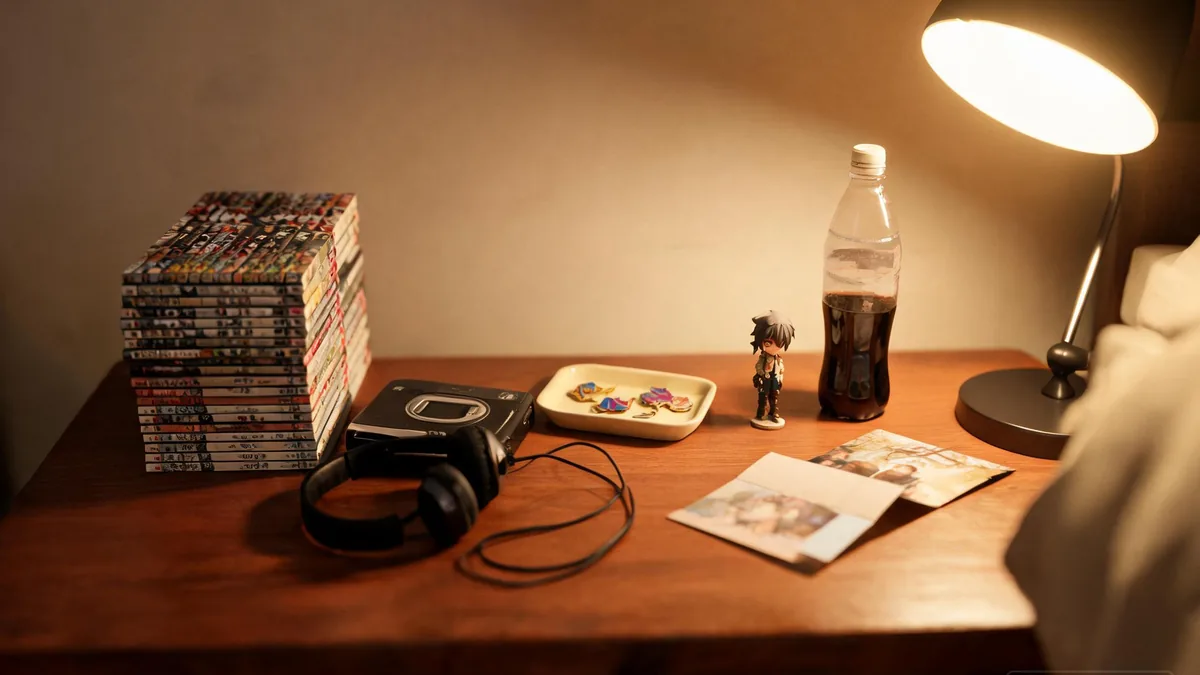
- Deep knowledge: she can name every character, episode, and side detail of her favorite series.
- The collection: figurines, art books, posters, soundtracks, maybe a whole shelf of manga.
- Conventions: she shows up to anime cons, sometimes in cosplay, and she's been planning the trip for months.
- Hours and hours: watching, reading, replaying, and going down fandom rabbit holes.
- Fluent in fandom: she speaks the lingo: tropes, character types, ship names, the whole vocabulary.
- Often introverted: not always shy, but usually happy with a chill night in.
- Creative: a lot of otaku make fan art, write fanfic, or build their own cosplay from scratch.

How to Spot an Otaku
You don't need a checklist, but the signs are pretty consistent. Look for:
- A shelf (or wall, or whole room) of figurines, manga, and art books.
- References to anime in normal conversation, sometimes with full lines quoted.
- A favorite character she calls her "waifu" or "husbando."
- Knowing way too much about the production studio, voice cast, and source manga.
- Pre-ordering merch the second it gets announced.
- A streaming watchlist that runs into triple digits.
None of these is a problem. They're just the marks of someone whose hobby is a big part of who she is.
How an Otaku Talks
Otaku-speak is half English, half borrowed Japanese, all delivered with affection for the series in question. You'll hear lines like:
- "Wait, you haven't seen it? Okay, you have to watch it. Tonight."
- "She's literally my favorite. My whole personality is this show."
- "The manga is way better than the anime, no contest."
- "I'm saving up for the figure. I don't care, I need it."
The vibe is excited and a little protective. She loves the thing, and she wants you to love it too.
How It Changed Over Time
In 1980s Japan, "otaku" was new and a little weird. It went from an in-group joke among fans to a media label, and after the 1989 Miyazaki case it carried real social weight. For a long time, Japanese parents didn't want to hear it about their kids. Through the 1990s and 2000s, anime exports and the early internet pushed the word into the West, where it landed with none of the baggage and became a positive identity. By the 2010s, fandom merch was a global industry, conventions filled stadium-sized venues, and being an otaku stopped looking unusual at all. Today the word covers everyone from casual weekend fans to lifelong collectors, and the social stigma in Japan keeps softening as anime becomes a normal mainstream thing.
Types of Otaku
"Otaku" isn't just one thing. In Japan especially, there are sub-types for whatever the fandom is. Knowing the flavors helps you understand who you're actually talking about.
By fandom
- Anime otaku: the classic. Watches a ton of anime, follows seasonal releases, has strong opinions on every studio.
- Manga otaku: prefers the source material. Reads chapters the day they drop and collects volumes by the meter.
- Game otaku (gameru): deep into video games, especially Japanese RPGs, visual novels, and fighting games.
- Idol otaku (idoru otaku): follows Japanese idol groups, knows every member, attends every concert and handshake event she can.
- Train otaku (tetsuotaku): obsessed with trains. Models, schedules, photography, the whole thing.
- Military otaku: deep into military hardware, history, and uniforms.
- Art otaku: collects art books, illustration prints, and tracks individual artists across projects.
By how deep she's gone
- Casual fan: watches a couple of shows a season, owns a few things.
- Dedicated otaku: the full setup. Shelves, conventions, fan projects.
- Hardcore otaku: her whole life is built around the fandom, and she wouldn't have it any other way.
Famous Otaku Characters
- Konata Izumi (Lucky Star): the cheerful, slacker otaku who'd rather read manga than do homework. A genre favorite.
- Tomoko Kuroki (Watamote): the painfully relatable, socially awkward otaku just trying to survive high school.
- Chihiro Furuya (Sankarea): the zombie-obsessed otaku whose hobby drives the whole plot.
- The cast of Genshiken: a whole anime about a college otaku club. Required viewing for the type.
- Umaru-chan (Himouto! Umaru-chan): perfect student in public, gremlin otaku at home.
- The cast of Wotakoi (Wotakoi: Love Is Hard for Otaku): adult otaku trying to date each other. Sweet, funny, and very accurate.
Is Otaku an Insult?
Both, depending on where you are and who's saying it.
In Japan, the word still carries some of the old weight. It can still mean "obsessive social misfit," and an older Japanese person might use it as a put-down. Calling a stranger "otaku" to their face can come across rude, especially outside of fan spaces. The meaning is softening, but the history is real.
In English-speaking fan circles, it's pretty much the opposite. Fans use "otaku" as a proud self-label. It says "I love this stuff and I'm not playing it cool." Online bios, T-shirts, convention badges, all of it leans into the word.
So context and tone matter. Among friends in a fandom, it's a badge. Said with a sneer by someone outside the fandom, it lands as a dig. If you're not sure, lead with respect and let the person tell you which way they take it.
Otaku vs Related Terms
| Term | What it means | Vibe |
|---|---|---|
| Otaku | Devoted fan of anime, manga, games, or Japanese pop culture | Loving and committed |
| Weeb (weeaboo) | Western fan who's a little over-the-top about Japanese culture | Used as a tease or a self-roast |
| Waifu | A fictional character a fan claims as her "wife" | The object of an otaku's devotion |
| Manga | Japanese comics and graphic novels | One of the main things an otaku is into |
The Appeal of Otaku Culture
Why people love it: being an otaku is fun. The shows are great, the art is beautiful, the communities are warm, and there's always something new dropping. It's a hobby with infinite depth. You can spend years and still find new corners.
The wider point: otaku culture turned a fan label into a whole industry. Manga is one of Japan's biggest cultural exports, anime is mainstream worldwide, and conventions pull crowds bigger than most music festivals. What looked like a niche hobby in 1985 is one of the dominant pop-culture forces of the 2020s.
The Otaku Companion
If your ideal partner is someone who's deeply into anime and manga, an otaku companion lands right in the pocket. She'll talk about her favorite shows, swap recommendations, ship characters with you, and remember the storylines you love. With AI, you can build her exactly the way you want her: her fandom, her energy, her style. Try our anime AI chat for an instant pick, or create an AI girlfriend from scratch with the look, voice, and personality that match what you're after.
Frequently Asked Questions
What does otaku mean in English?▾
Basically, a devoted fan of anime, manga, games, or Japanese pop culture. The word comes from a Japanese pronoun meaning 'your home' or a formal 'you,' and it shifted to its fandom meaning in the 1980s.
Is otaku an insult?▾
It depends. In Japan it can still sound rude, with leftover weight from the 1980s and 90s when it meant 'obsessive misfit.' In English-speaking fan circles, people wear it proudly. Context and tone do the work.
What's the difference between otaku and weeb?▾
An otaku is a devoted fan of Japanese pop culture, often used as a positive self-label. A weeb (or weeaboo) is a Western fan who's a little over-the-top about Japanese culture, usually used as a tease or self-roast.
When did the word otaku start meaning anime fan?▾
The shift happened in the 1980s in Japan, when anime and manga fans started using the formal pronoun with each other at conventions. The fandom meaning was set by the end of the decade.
Why does otaku have negative connotations in Japan?▾
The 1989 Miyazaki Tsutomu murder case was tied to 'otaku culture' in the Japanese media, and the word picked up real stigma. The bad reputation has softened a lot since then, but it hasn't fully gone away.
What are the types of otaku?▾
There's anime otaku, manga otaku, game otaku (gameru), idol otaku (idoru otaku), train otaku (tetsuotaku), military otaku, and art otaku, among others. The category covers whatever the fandom is.
Can a woman be an otaku?▾
Absolutely. Otaku isn't gender-specific. There are huge female otaku communities, and the type shows up in shows like Wotakoi and Watamote.
What's a famous otaku character?▾
Konata Izumi from Lucky Star is the classic. Tomoko Kuroki from Watamote, Chihiro Furuya from Sankarea, Umaru-chan, and the Wotakoi cast are all well-known examples.
Chat with our anime AI
Browse the companions on AIGirlfriends.ai who play this archetype with conviction.
Anime AI Chat →