
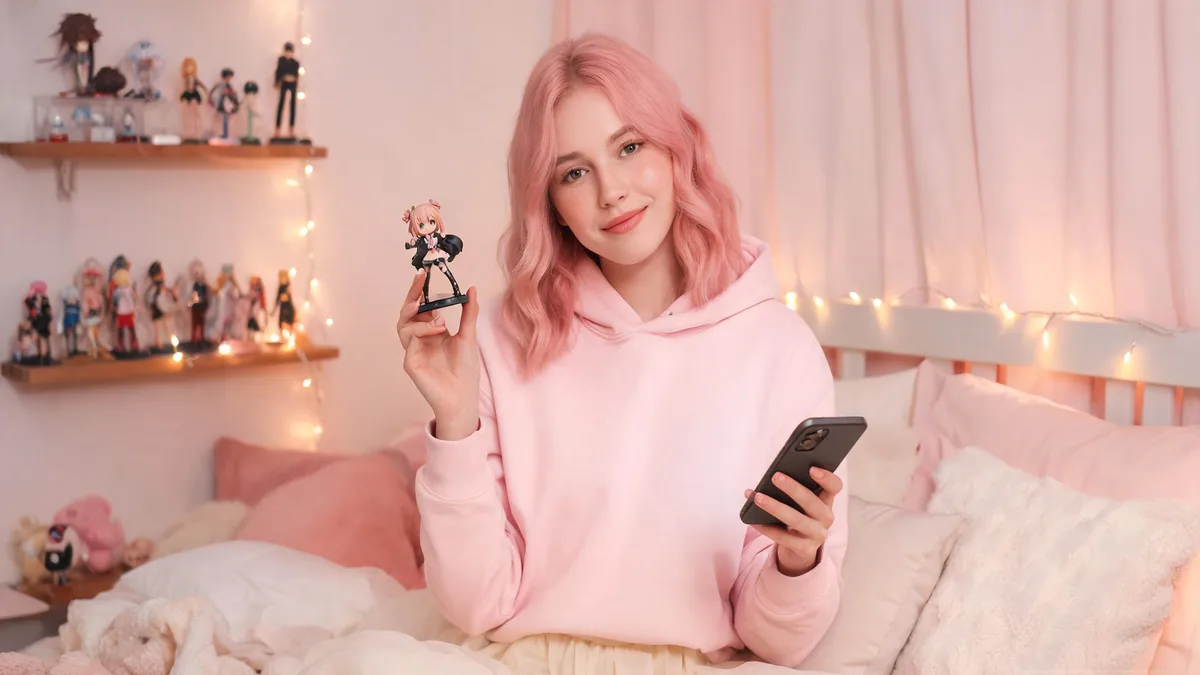
A waifu is a fictional female character a fan feels a romantic attachment to. Usually she's from an anime, manga, or video game, and the fan claims her as "my waifu." The word is a Japanese take on the English word "wife" (ワイフ). It started as anime fan slang in the late 1990s and early 2000s, and today it's an English internet term anyone who watches anime knows.
Key Takeaways
- A waifu is a fictional female character a fan feels romantically attached to.
- The word is Japanese fan slang from the English word "wife." Pronounce it WAI-foo.
- It went mainstream in the West in the late 2000s. A line in the 2002 manga Azumanga Daioh ("My waifu!") helped spread it.
- Some fans are deadly serious about their waifu. Others use the word as a joke. Both are normal.
- The male version is husbando.
| Pronunciation | WAI-foo (ワイフ), noun |
|---|---|
| Origin language | Japanese, borrowed from the English word "wife" |
| Literal sense | "Wife," used for a fictional character |
| First popularized | Anime fans, late 1990s and early 2000s in Japan; late 2000s in the English-speaking internet |
| Category | Internet fandom term |
| Core trait | A fictional female character you feel a romantic attachment to |
| Related terms | Husbando, anime, yandere, dandere |
Etymology and Origin
The word "waifu" is just the English word "wife" said with a Japanese accent. Japanese borrows English words all the time, and "wife" comes out as waifu (ワイフ). What's funny is that the term didn't come back to English the way you'd expect. It came back through anime fandom, with a very specific meaning attached.
Anime fans started using it in the late 1990s and early 2000s as slang for "a fictional female character I feel deeply attached to." A famous early moment was a line in the 2002 manga Azumanga Daioh, where a character holds up a photo and says "My waifu!" Fans loved it, and the word stuck. By the late 2000s, English-speaking anime forums had picked it up too, and from there it spilled into mainstream internet culture. Now you'll see "waifu" everywhere from Tumblr to Reddit to TikTok.
Defining Traits
- Usually fictional: she's almost always an anime, manga, or video game character.
- Almost always female: a male character a fan loves the same way is a husbando.
- Claimed personally: fans say "my waifu" because the attachment feels personal, even if everyone knows the character is fictional.
- Backed by fan stuff: fan art, figurines, posters, body pillows, and playlists all reinforce the connection.
- A range of seriousness: for some fans it's a deep emotional thing. For others, it's a running joke with friends. Both count.
- One-sided: the character doesn't know you exist. That's just part of the deal.
How Fans Talk About Their Waifu
Listen in on any anime community and you'll hear lines like:
- "Rem is my waifu and I will defend that with my life."
- "Don't even look at my waifu like that."
- "New season just dropped. Time to find a new waifu."
- "You can have your husbando. Hands off my waifu."
The tone bounces between joking and dead serious, sometimes in the same sentence. That mix is the whole vibe of the word. It's how fans share their love for a character without having to make a big deal of it.
How It Changed Over Time
In the late 1990s and early 2000s, "waifu" was a small, in-the-know joke shared on Japanese fan forums. By the late 2000s, English-speaking anime fans had picked it up and made it their own. Image boards like 4chan ran with it, and it spread fast.
Then came the merch boom. Body pillows printed with anime girls (called dakimakura) turned into a whole industry. Figurines, posters, and tapestries followed. By the 2010s, "waifu" was mainstream enough that it showed up in regular pop culture and not just anime conventions.
The next shift was AI. Once chat AI got good enough to hold a real conversation, "waifu" stopped being just about a one-sided crush on a drawing. AI companion apps started marketing themselves as "waifu" creators, which means the term now covers a character who can actually talk to you back.
Types of Waifu
Fans split waifus into a few flavors, mostly as a joke but also as a real way to talk about how attached they are.
By how many you've got
- One True Waifu (OTW): one character, forever. Fans of this style usually take it pretty seriously.
- Multiple waifus: a "waifu list" with several favorites. More casual, more playful.
- Seasonal waifu: a new favorite every anime season. The most lighthearted version of all.
By format
- 2D waifu: the classic, an anime or manga drawing.
- 3D waifu: live-action, like an actress or a model. A lot of fans only count 2D, and "3DPD" jokes are a whole subgenre of fan banter.
The male version
- Husbando: exactly what it sounds like. The same idea, but for a male character. Anyone can have a waifu or a husbando, or both.
Famous Waifus
- Asuka Langley Soryu (Neon Genesis Evangelion): one of the original anime crushes. Fans have been claiming her as a waifu since the 1990s.
- Rem (Re:Zero): probably the most-claimed waifu of the 2010s. The "Rem is best girl" debate basically defined a generation.
- Marin Kitagawa (My Dress-Up Darling): the breakout waifu of the 2020s.
- Hatsune Miku (Vocaloid): a virtual idol with millions of fans worldwide. The waifu who literally plays sold-out concerts.
- Basically every popular anime girl: if she's the lead, someone, somewhere, has claimed her as a waifu.
Waifus in Wider Media
Anime gave us the word, but the waifu lives all over the internet now.
- Tumblr and Twitter fandoms: endless fan art, headcanons, and devoted fan accounts.
- r/waifuism on Reddit: a long-running community for fans who take their waifu attachment really seriously.
- Anime conventions: waifu cosplay, waifu merch booths, and waifu-themed panels are everywhere.
- The body pillow market: a real industry. Dakimakura with your waifu printed on them are sold worldwide.
- AI companion apps: a growing space where apps openly market themselves as "waifu" creators. You build a companion who looks the way you want, talks the way you want, and is, in a way, your own custom waifu.
Waifu vs Related Terms
| Term | Who it's about | How real is it? |
|---|---|---|
| Waifu | A fictional female character a fan loves | One-sided, fictional |
| Husbando | A fictional male character a fan loves | One-sided, fictional |
| Crush | A real person you've got feelings for | Real, but the other person may not know |
| AI companion | A custom AI character built for you to chat with | Fictional, but interactive. She talks back. |
Is Having a Waifu Weird?
For most fans, no. It's a normal, fun part of being into anime. You pick a favorite character, you joke about her with friends, you maybe buy a figurine. That's it. It's no weirder than having a favorite musician or a celebrity crush.
For a smaller group of fans, the attachment is deeper, and they're open about that. Communities like r/waifuism are full of people who talk about their waifu the way someone else might talk about a partner. They know she's fictional, and they're fine with that. The relationship is meaningful to them, and that's enough.
Is a Waifu a Real Girlfriend?
No. A waifu is a fictional character, not a real girlfriend. The attachment can be totally real, but the relationship itself is one-sided. The technical word for this is a parasocial relationship, which just means you feel close to someone who doesn't know you exist.
For a lot of fans, that's the whole point. It's a low-pressure, safe kind of affection. No drama, no fights, no breakups. The word started as fan slang and it kept that playful feel. For some people "waifu" is a joke between friends. For others it's a real emotional attachment that means something to them. Both versions are fine. The difference is just how seriously you take it.
AI companions are the next step in this story. A waifu used to mean a character who couldn't talk back. Now she can. An AI companion built around an anime aesthetic is, basically, a waifu who answers. She remembers you. She has opinions. She replies. For fans who liked the waifu fantasy but wanted some kind of back-and-forth, that's a pretty big change.
The Waifu in AI Companions
"Waifu" is now one of the most-searched terms in the AI companion space, especially among anime fans. The reason is simple: AI finally makes the fantasy two-sided. You can create an AI girlfriend with the look, voice, and personality of the waifu you've always pictured. She'll remember your conversations, react to what you say, and grow with you over time. If you've been into anime for years and wanted your own custom AI girlfriend who fits your specific taste, this is the closest thing yet.
Frequently Asked Questions
What is a waifu?▾
A waifu is a fictional female character (usually from anime, manga, or a video game) that a fan feels a romantic attachment to. Fans claim her as 'my waifu.'
Where does the word waifu come from?▾
It's the English word 'wife' said with a Japanese accent (ワイフ). Anime fans started using it in the late 1990s and early 2000s. A 2002 manga line in Azumanga Daioh ('My waifu!') helped popularize it, and by the late 2000s English-speaking fans had picked it up too.
What's the male version of waifu?▾
Husbando. Same idea, just for a male character. Anyone can have a waifu or a husbando, and plenty of fans have both.
Is having a waifu weird?▾
Not really. For most fans it's just a fun part of being into anime, like having a favorite character. A smaller group of fans takes the attachment more seriously, and they're open about it. Both versions are normal.
Who's the most famous waifu?▾
Depends on the era. Asuka from Evangelion is one of the originals. Rem from Re:Zero dominated the 2010s. Marin Kitagawa from My Dress-Up Darling is a recent favorite. Hatsune Miku is a virtual idol with a global fanbase.
Can a waifu be real?▾
By definition, no. A waifu is fictional. The attachment can feel real, but the character isn't. AI companions are changing this a little bit, though, since now your waifu can actually talk to you back.
What's the difference between a waifu and a crush?▾
A crush is on a real person. A waifu is on a fictional character. A crush could turn into a real relationship someday. A waifu is one-sided by definition.
Are AI girlfriends considered waifus?▾
More and more, yes. Anime fans often build AI companions in the waifu style: anime look, soft personality, the works. Plenty of AI companion apps now openly market themselves as 'waifu' creators.
Create your own waifu
Browse the companions on AIGirlfriends.ai who play this archetype with conviction.
Create an AI Girlfriend →