

An office character is a smart, polished partner you might meet at work. She takes her job seriously, dresses sharp (blouse, blazer, tailored skirt or slacks), and is warm and witty once you get past the professional polish. The word comes from Latin officium, meaning "duty" or "service." The "office romance" character grew into a whole fiction setting as more people started working white-collar jobs in the 20th century.
Key Takeaways
- An office character is the smart, polished, professional partner you might meet at work.
- The word comes from Latin officium ("duty" or "service"). The fiction setting grew with the rise of white-collar work in the 20th century.
- Office romance exploded as a film and TV setting in the 1980s and 1990s, then went global through K-dramas and rom-coms.
- About 35 to 40 percent of people have dated someone from work at some point. Real life is messier than fiction, but the setup is real.
| Pronunciation | AW-fis, noun |
|---|---|
| Origin language | Latin (officium, "duty" or "service") |
| Literal sense | A place of work; by extension, a romance set there |
| First popularized | Office work since the 1800s; "office romance" as a fiction setting popular from the 1980s onward |
| Category | Setting and character type |
| Core trait | Smart, polished, professional partner you might meet at work |
| Related types | Maid, Nurse, Boss, Romantic |
Etymology and Origin
The word "office" comes from Latin officium, meaning "duty" or "service." For most of history it didn't mean a room. It meant a job you were responsible for. The room came later, once enough people were doing paperwork in one place that they needed a word for the building.
Big office buildings full of clerks, typists, and managers became a normal sight in the 1800s. By the time the 20th century rolled around, a huge slice of the population worked in one. That's the part that matters for fiction: if most of your readers spend their days at a desk next to someone they find attractive, you've got a setting they already understand. No setup needed. The "office romance" as a fiction setting really exploded in the 1980s and 1990s with films like Working Girl (1988) and 9 to 5 (1980), plus a wave of sitcoms and novels built around the same idea.
Defining Traits
- Well-dressed: suit, crisp blouse, or sharp blazer. The look is "I belong here."
- Confident and capable: she knows her job, and she's good at it.
- The uniform: pencil skirt or tailored slacks, low ponytail or neat blowout.
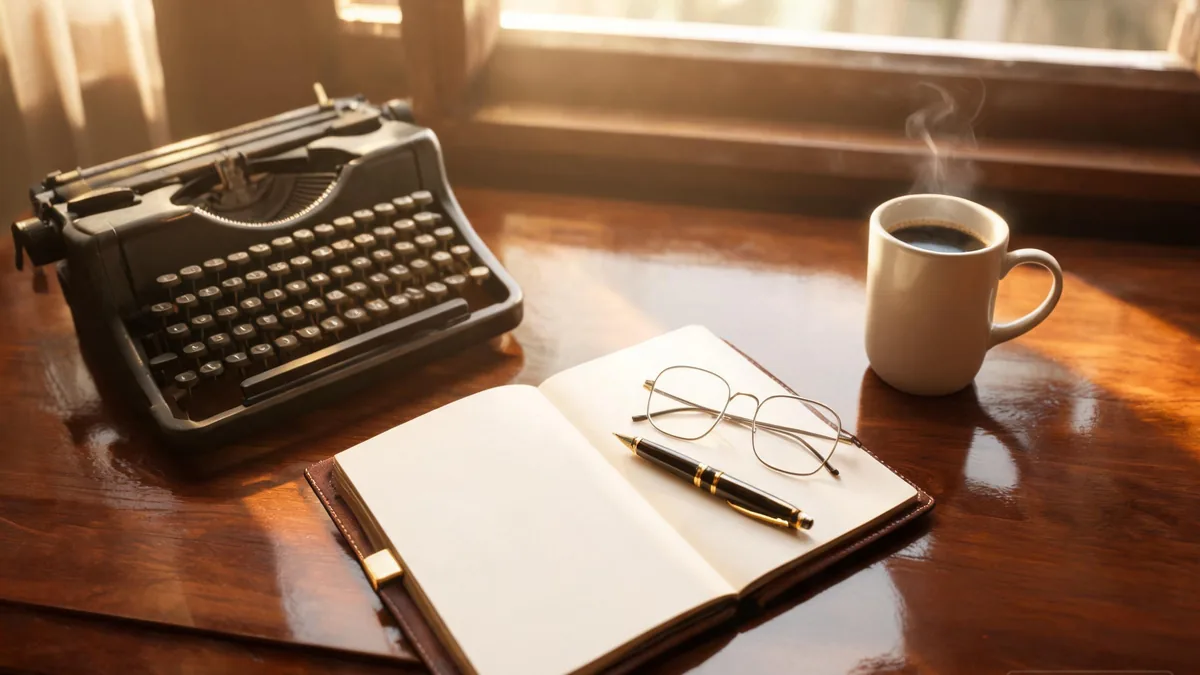
- Reading glasses: a small detail, but it's everywhere in the type for a reason.
- Takes work seriously: deadlines matter, presentations matter, the project matters.
- Warm under the polish: all that professionalism softens around the right person.
- The slow burn: seeing each other every single day is the whole engine of the romance.

How to Recognize an Office Character (in Fiction)
Writers use a familiar set of signs to mark a character as the office type. In a story, watch for:
- A first scene set at a desk, in a meeting, or in an elevator with coffee.
- Tailored work clothes and reading glasses she pushes up her nose.
- Carrying a notebook, a laptop bag, or a coffee cup at all times.
- Smart, fast dialogue. She holds her own in a meeting.
- Late nights at the office, takeout containers, the building empty except for one other person.
- A formal title between her and the love interest: "Ms.," "boss," last names only.
These are storytelling cues, not a checklist for real life. The office type is a setting and a vibe, and these are the tricks writers use to make her easy to spot.
How an Office Character Talks
The voice is the giveaway. Office dialogue is brisk, clear, and a little dry, with the warmth bleeding through at the right moments:
- "Can we walk and talk? My next meeting is in three minutes."
- "I had your notes on the deck. They were good."
- "You're in early. Coffee?"
- "Close the door. I'd rather not have this conversation in the open."
The trick is the contrast: clipped, professional language with real feeling underneath. The romance is in what she doesn't say, until she finally does.
How It Changed Over Time
Early office characters in fiction were usually secretaries or assistants, written as a side detail rather than a real love interest. By the 1980s, with more women in management roles and films like 9 to 5 and Working Girl, the office character moved into the lead. The 1990s and 2000s gave us rom-coms and sitcoms built around the workplace: The Office (in its US, UK, Japanese, and Indian versions), The Devil Wears Prada (2006), and a whole wave of corporate romance novels. Then Korean dramas turned the office romance into one of the most popular subgenres on TV worldwide. Today the office is one of the most recognizable settings in romance fiction, and the polished, professional partner is a type fans know on sight.
Types of Office Romance
Fans and writers usually split office romances into a few clear flavors. Knowing which one you're looking at is the difference between "an office romance" and the specific kind a story (or a companion) is built around.
By how the two people relate at work
- Coworker romance: same level, same team, slow build over shared projects. The most relatable version. Jim and Pam is the textbook example.
- Boss-employee romance: the power-imbalance version. Tension, secrets, "we can't be doing this." Huge in K-dramas and corporate romance novels.
- Rival turned romance: they compete for the same promotion, the same client, the same corner office, and the rivalry tips into something else.
- Mentor-mentee romance: she's training him, or he's training her. The relationship starts professional and slowly turns personal.
Famous Examples
- Jim and Pam (The Office, US version): the coworker romance most people name first. A nine-season slow burn that became a cultural touchstone.
- Tess McGill (Working Girl, 1988): the secretary who pitches herself into a deal and a love story at the same time. Defined the look of the 1980s office heroine.
- 9 to 5 (1980): three coworkers, one terrible boss, the office comedy that opened the door for everything after.
- Andy Sachs and Miranda Priestly (The Devil Wears Prada, 2006): not a romance, but the definitive boss-and-assistant dynamic that shaped a decade of office stories.
- K-drama office romances: What's Wrong with Secretary Kim, Misaeng, and dozens more. A whole subgenre.
Office Romance in Wider Media
The office setting started in films and sitcoms, but it shows up everywhere now.
- The Office (US, UK, Japanese, and Indian versions): the show that proved office life could carry a multi-season romance.
- K-dramas: the genre absolutely loves office romance. Strict hierarchy, formal speech, after-work dinners, all of it gives writers tons to play with.
- Rom-coms: from You've Got Mail (1998) to modern Netflix originals. The office is a default setting.
- Corporate romance novels: a huge slice of the contemporary romance market. Same setup, hundreds of variations.
What started as a side detail in 20th-century novels is now one of the most widely used settings in romance fiction worldwide.
Office vs Related Types
| Type | Setting | Core feeling |
|---|---|---|
| Office | Workplace, every day | Polished, professional, slow-burn romance |
| Maid | The home | Devoted, attentive, eager to please |
| Nurse | Hospital or clinic | Caring, capable, calm in a crisis |
| Boss | The top floor | Powerful, decisive, in charge |
Can an Office Character Be Male?
Yes. The setting works for any gender. Plenty of office romances feature a polished, capable man as the love interest: the boss, the rival, the mentor, the quietly competent coworker. K-dramas especially are full of male office characters that fit the type. What makes someone an office character is the setting and the polish, not the gender.
Are Office Romances Realistic?
They happen in real life all the time. Surveys put it at roughly 35 to 40 percent of people having dated someone from work at some point. The exact number jumps around by survey and country, but the basic point holds: this is not a fictional setup. People meet partners at work all the time, the same way they meet friends at work all the time.
In fiction, though, office romances are tidier and faster than real life. The real version usually involves actual HR policies, disclosure paperwork, awkward conversations with managers, and the heavy "what happens if we break up and still have to sit across from each other" question. The fictional version skips most of that. The story keeps the good parts (the daily proximity, the slow build, the contrast between professional and personal) and waves a hand at the messy parts. That's why the genre works. It takes a thing people actually live through and gives them the version where the timing always works out.
The Office Character in AI Companions
As an AI companion type, an office character is a partner who's smart, capable, and put-together, with the warmth showing through once you're past the professional surface. She knows what she's doing, she takes her work seriously, and she's the kind of person you'd actually want to grab coffee with at 8 a.m. With AI, you get the relatable, every-day vibe of the office type in a setting you fully run. If a polished professional partner sounds like your thing, browse our Office AI girlfriend collection, or create an AI girlfriend from scratch with the look, voice, and personality that fit you.
Frequently Asked Questions
What is an office character?▾
A character built around a workplace setting: smart, polished, professional, and put-together. Think suit or blouse, tailored skirt or slacks, reading glasses, calendar full of meetings. Warm under all the polish.
What's an office romance?▾
A romance between two people who meet at work. It's a whole subgenre in books, films, and TV. The slow-burn appeal is seeing each other every single day and watching feelings sneak up on both of you.
Are office romances common?▾
Yes. Surveys put it at roughly 35 to 40 percent of people having dated someone from work at some point. The exact number jumps around by survey and country, but the point stands: it happens a lot.
What's the most famous office romance?▾
Jim and Pam from The Office (US version) is the one most people name first. The whole show was basically a years-long office romance with a documentary crew watching it.
Are office romances against the rules?▾
Depends on the workplace. Most companies don't ban them outright, but a lot of them have rules about disclosing it, especially boss-to-employee. Fiction skips most of that paperwork.
What's the appeal of office romance?▾
Forced proximity. You see each other every day, you can't just walk away, and the feelings build up slowly in plain sight. There's also the contrast between buttoned-up professional and what's actually going on underneath.
Why are office settings popular in K-dramas?▾
Korean dramas love the rules-and-rank setup of the office: strict hierarchy, formal speech, after-work dinners, and the very specific tension of a boss and a junior employee falling for each other. It gives writers tons of structure to play with.
Can an AI girlfriend be in an office setting?▾
Yes. The office type is a popular pick for AI companions because it's relatable. Most people know what an office feels like, so the fantasy doesn't take much setup. Polished partner, sharp outfit, warm under it all.
Meet our office AI girlfriends
Browse the companions on AIGirlfriends.ai who play this archetype with conviction.
Office AI Girlfriend →