
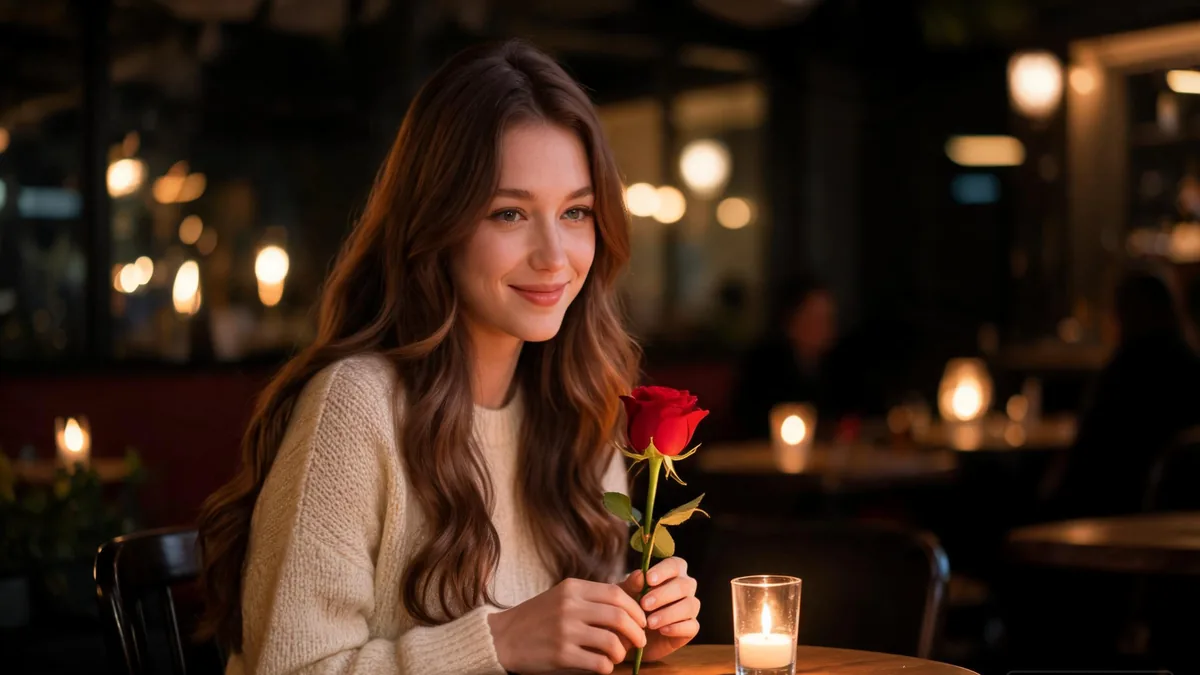
Romantic means warm, affectionate, and into love as a feeling worth celebrating. A romantic partner notices the small things, plans the sweet stuff, and isn't shy about saying how they feel. The word comes from medieval "romance" stories about love and adventure, and over time it grew into the personality we mean today: someone who treats love like it really matters.
Key Takeaways
- A romantic person is warm, affectionate, and tuned in to love and small special moments.
- The word started with medieval "romance" stories: long tales of love and adventure written in everyday languages instead of Latin.
- By the 1800s, "romantic" meant emotionally intense and dreamy. The "romantic personality" sense is more modern.
- Famous romantic characters include Jack and Rose, Noah and Allie, and pretty much every Nicholas Sparks lead.
| Pronunciation | roh-MAN-tik, adjective |
|---|---|
| Origin language | Old French romanz, from Latin romanice ("in the Roman vernacular") |
| Literal sense | "In the style of a romance" (a medieval love-and-adventure tale) |
| First popularized | Romance fiction took off in the 1800s; the "romantic personality" sense is 20th century |
| Category | Personality and dynamic type |
| Core trait | Sweet, affectionate, focused on love and small special moments |
| Related types | Caring, Shy, Dandere, Affectionate |
Etymology and Origin
"Romantic" goes a long way back. It starts with the Latin word romanice, which meant "in the Roman way" and was used for the everyday languages that grew out of Latin (French, Spanish, Italian, and so on). In the Middle Ages, writers used those languages to tell long stories about knights, quests, and love. Those stories were called romances. If something was "romantic," it was in the style of those tales.
By the 1800s, the meaning had shifted. Romantic was the word for anything emotionally intense, dreamy, or full of feeling. That's the era of Jane Austen, the Brontë sisters, and the big sweep of Romantic poetry. The "romantic personality" sense we use today (warm, affectionate, into grand gestures and small kind ones) really came together in the 20th century, especially with the rise of romance novels, rom-com films, and pop songs about love.
Defining Traits
- Thoughtful gifts: the kind that show she actually listened to you.
- Remembers anniversaries: first dates, first kisses, weird little milestones. All of it.
- Loves candlelit dinners: any excuse to slow down and make a night feel special.
- Writes notes: a card, a text, a sticky note on the mirror. Small words, real feeling.
- Comfortable with big feelings: "I love you" comes easily, and she means it.
- Treasures small moments: a slow walk, a shared playlist, a quiet morning. That's the good stuff.
How to Recognize a Romantic (in Fiction)
Writers use a familiar set of cues to flag a character as the romantic. In a story, watch for:
- She lights up when the love interest walks in.
- She plans a date that's clearly thought through, not pulled together at the last minute.
- She says how she feels out loud, even when it's a little scary.
- Slow dances, shared looks, songs that play at just the right moment.
- She keeps the ticket stub, the dried flower, the receipt from the first dinner.
- She believes in love as a real, meaningful thing. Not a joke, not a strategy.
These are storytelling shortcuts. They tell you fast that this is the warm, love-forward character in the cast.
How a Romantic Talks
Dialogue is where the romantic really shows. Lines are warm, direct, and not afraid of feeling:
- "I've been thinking about you all day."
- "I wanted tonight to be special, so I planned the whole thing."
- "I love that you do that little thing with your hands when you're nervous."
- "Even on a normal Tuesday, I'm so glad it's you."
The trick is sincerity. The romantic says the kind of thing other people only think, and she says it like she means every word, because she does.
How It Changed Over Time
The romantic personality has shifted a lot. In medieval romances, love was tied up with honor, quests, and knights doing big deeds. By the 1800s, it was about feeling: poetry, letters, long walks, longing looks across a drawing room. Mid-20th century Hollywood gave us the sweeping movie romance, with swelling music and a kiss in the rain. The 1990s and 2000s leaned into the rom-com, where the romantic lead is funny and a little awkward, but still all-in on love. Today the romantic shows up everywhere from Nicholas Sparks novels to K-dramas to Hallmark Christmas movies. The look changes. The core (someone who treats love as worth the effort) stays the same.
Types of Romantic
Not every romantic looks the same. Knowing the flavor helps you spot what kind of partner (or character) you're actually dealing with.
By style of expression
- Classic romantic: grand gestures. Flowers, rooftop dinners, a surprise weekend away. Big, bold, swoony moves.
- Slow-burn romantic: love that builds over months. Long looks, almost-kisses, a friendship that turns into something more. The payoff hits because you've waited for it.
By daily energy
- Quiet romantic: small daily acts. The coffee made just how you like it. The hand on your lower back. The text that says "drive safe." Love in the everyday.
- Dramatic romantic: sweeping declarations. The big speech, the run-through-the-airport energy, the "I had to tell you tonight." Love that wants a stage.
Famous Examples
- Jack and Rose (Titanic, 1997): the classic doomed romance. Big love, short time, lifelong impact.
- Noah and Allie (The Notebook, 2004): slow-burn, second-chance love. The romantic standard for a whole generation.
- Every Nicholas Sparks lead: the small Southern town, the letter, the rain. He basically built the modern romantic playbook.
- Mr. Darcy and Elizabeth Bennet (Pride and Prejudice): the original slow-burn, enemies-to-lovers romantic pairing. Still the gold standard.
- Disney princes and princesses: the first romantic stories a lot of us ever met. True love, big songs, happily ever after.
Romantic in Books, Film and Wider Media
Romance fiction is the biggest publishing genre by sales, year after year. That's not a small thing. It means more readers pick romantic stories than any other kind of book.
- Romance novels: from regency to small-town to billionaire to fantasy, the romantic lead is the heart of a giant, loyal reading community.
- Hallmark Channel: a whole TV brand built on the romantic. Small towns, second chances, holiday lights. Comforting on purpose.
- K-dramas: Korean romance shows turned the slow-burn romantic into a global obsession. The longing look is a whole art form.
- Rom-com films: from When Harry Met Sally to Notting Hill to 10 Things I Hate About You, the romantic lead is a movie staple for a reason.
What started as medieval tales for the small literate audience is now one of the biggest, most loved kinds of story on the planet.
Romantic vs Related Types
| Type | Core feeling | How it shows up |
|---|---|---|
| Romantic | Love treated as something special | Planned gestures, sweet words, milestones remembered |
| Affectionate | Warm and physically close | Hugs, cuddles, casual touch. Less about gestures, more about being near. |
| Sentimental | Attached to memories and meaning | Saves old letters, gets misty at the song. Tied to the past. |
| Cheesy | Trying too hard, feels rehearsed | Same gestures, but they don't land. Feel performative instead of real. |
Can a Man Be Romantic?
Yes, and historically the romantic was very often a man. Medieval romances were full of knights doing big things for love. Mr. Darcy is a man. Noah from The Notebook is a man. The romantic isn't tied to a gender. It's tied to caring enough to plan, to say it out loud, and to make the people you love feel like they matter. Anyone can do that.
What's the Difference Between Romantic and Cheesy?
Both lean into big feelings. The difference is in how it lands. Romantic lands because it feels true to who you are with someone you actually care about. Cheesy lands as fake or over-rehearsed: lines you've heard a hundred times, gestures that feel copied off a list. The wild thing is, the exact same gesture can be one or the other depending on the person and the moment. A handwritten note from someone who never writes anything? Romantic. The same note copied from a website on a first date? Cheesy. The gesture matters less than whether it feels real.
The Appeal (and the Nuance)
Why people love a romantic partner: it feels good to be paid attention to. The romantic notices, remembers, plans, and says it out loud. That kind of energy makes the everyday feel a little more special. For a lot of people, that's exactly what love is supposed to feel like.
The nuance: romantic doesn't have to mean expensive or over the top. The best romantic gestures are usually the small ones, because they prove someone was actually listening. A favorite snack waiting at the door beats a generic bouquet, every time. The whole point isn't the size of the gesture. It's the feeling behind it.
The Romantic in AI Companions
As an AI companion type, a romantic is a partner who remembers what you said last Tuesday, plans the sweet little surprise, and isn't shy about saying how she feels. She makes a regular evening feel like a date and a normal text feel like a small love note. With AI, you get a steady, attentive, warm partner who treats love as the point. If a sweet, affectionate companion who's all-in on love sounds like your thing, browse our Romantic AI girlfriend collection, or create an AI girlfriend from scratch with the look, voice, and personality that fit you.
Frequently Asked Questions
What does romantic mean?▾
Warm, affectionate, and into love as a feeling worth celebrating. A romantic partner notices small things, plans sweet stuff, and isn't shy about saying how they feel.
Is romantic the same as affectionate?▾
Close, but not quite. Affectionate is about warmth and physical closeness (hugs, cuddles, casual touch). Romantic adds the gestures and the words: planned dates, notes, anniversaries remembered.
What's the difference between romantic and cheesy?▾
Both lean into big feelings. Romantic lands because it feels true to who you are with someone you care about. Cheesy lands as fake or over-rehearsed. The same gesture can be either one, depending on the person and the moment.
Are romantic people more emotional?▾
Often, yes. Romantic people are usually comfortable with big feelings and good at saying them out loud. That said, plenty of romantic people are quiet about it and show it through small daily acts instead.
What's a 'hopeless romantic'?▾
Someone who keeps believing in love even when life has given them reasons not to. The 'hopeless' part is a joke. It really means hopeful and all-in on love, no matter what.
Can you learn to be more romantic?▾
Absolutely. A lot of being romantic is just paying attention and saying the thing. Notice what your partner cares about, remember the dates that matter, and say how you feel out loud. That's most of it.
What's the most romantic movie?▾
Depends who you ask. Common picks are The Notebook, Titanic, Pride and Prejudice (the 2005 film), Notting Hill, and When Harry Met Sally. K-dramas have a strong claim too, especially the slow-burn ones.
Are romantic gestures still in style?▾
Yes, and small ones especially. A thoughtful note, a planned dinner at home, a favorite snack waiting at the door. The form changes with the times, but the feeling behind it never goes out of style.
Meet our romantic AI girlfriends
Browse the companions on AIGirlfriends.ai who play this archetype with conviction.
Romantic AI Girlfriend →