

Kemonomimi is the Japanese word for any character with animal ears (and usually a tail) on an otherwise human body. Think catgirls, foxgirls, bunny girls, wolf girls. They look human, with cute fluffy ears poking out of their hair and a tail to match. The word literally means "animal ears" in Japanese, and it's the umbrella term for the whole family of these characters.
Key Takeaways
- Kemonomimi means "animal ears" in Japanese. It's the umbrella term for any character with animal ears and a tail on a human body.
- The word comes from kemono (beast or animal) plus mimi (ears).
- Catgirls, foxgirls, bunny girls, dog girls, and wolf girls are all kemonomimi.
- Kemonomimi is not the same as furry. Kemonomimi characters look mostly human. Furry characters look mostly animal.
| Pronunciation | keh-MOH-noh-MEE-mee (獣耳), noun |
|---|---|
| Origin language | Japanese (獣 + 耳) |
| Literal sense | "Animal ears" |
| First popularized | Japanese anime and manga fandom, around the 2000s (with older roots) |
| Category | Anime character umbrella type |
| Core trait | Human body with the ears and tail of an animal |
| Related types | Catgirl, Kitsune, Monster girl |
Etymology and Origin
The word is two Japanese pieces stuck together. The first is kemono (獣), which means "beast" or "animal." The second is mimi (耳), which means "ears." Put them together and kemonomimi literally means "animal ears." Simple as that.
The character type itself is way older than the word. You can find people with animal ears in Japanese folklore going back centuries. Foxes, tanuki, and cats all show up as part-human, part-animal beings in old stories. The modern character we know from anime started showing up in the 1980s and 1990s, but it didn't get a tidy name right away. Fans on Japanese forums settled on kemonomimi around the 2000s, and the word stuck. Today it's the standard term whether you're talking to a Japanese fan or a Western one.
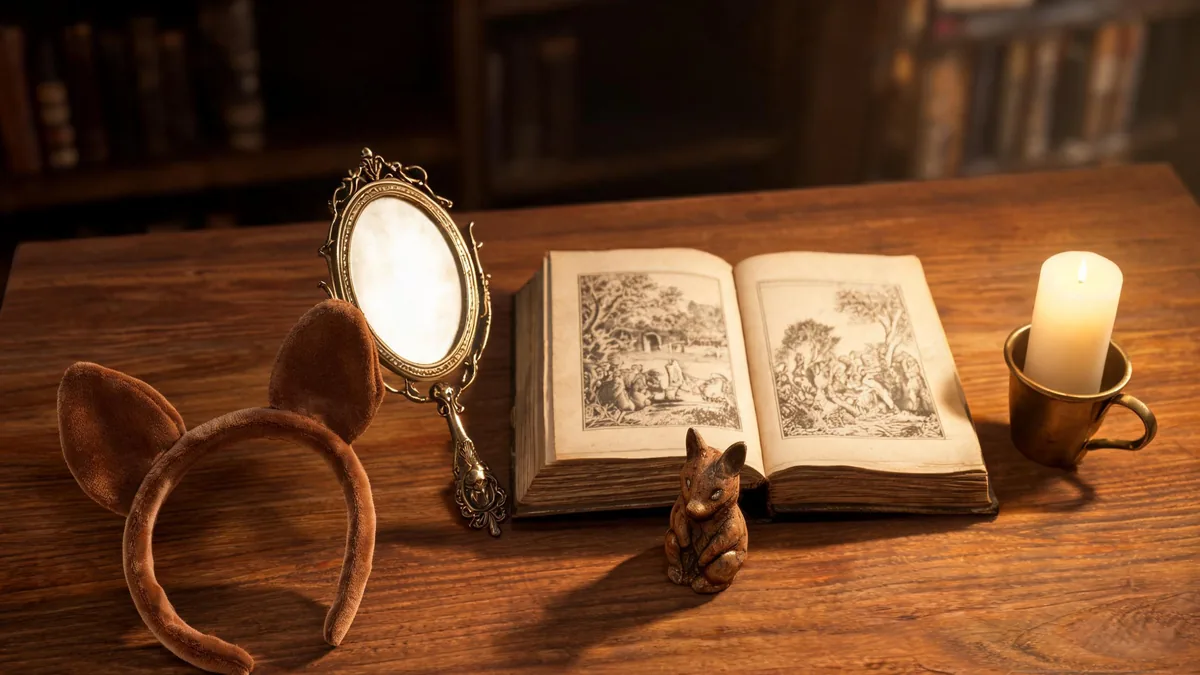
Defining Traits
- Human body: the whole shape is human. Face, hands, legs, all of it.
- Animal ears: on top of the head. Cat, fox, bunny, dog, wolf, whatever the species is.
- A tail: almost always there too, matching the ears.
- Optional extras: sometimes you'll see little paw pads on the palms, a soft fur patch, or claws. Usually nothing more than that.
- Animal-coded personality: cats act aloof and curious. Dogs are loyal and eager. Foxes are clever and a little sly. The personality matches the animal.
- Plenty of variety: the subtypes change a lot by species. A wolf girl feels very different from a bunny girl, even though they're both kemonomimi.

How to Recognize a Kemonomimi (in Fiction)
Spotting a kemonomimi is the easiest job in anime. Look for:
- Animal ears sticking up out of the hair (the regular human ears are usually gone, or just not drawn).
- A matching tail behind her.
- Little behaviors that fit the animal: a cat girl who curls up to nap, a dog girl who wags her tail, a bunny girl who twitches her ears at loud noises.
- Subtle vocal tics. A cat girl's "nya" instead of a meow is the classic example.
- Outfits that play up the species, like a collar with a bell for a cat girl, or a fluffy hood for a wolf girl.
These are storytelling cues. They tell you instantly which species you're looking at, and they hint at how she'll act.
Common Subtypes
Kemonomimi is the umbrella. Inside it sits a whole family of character types, one for each animal. The big ones are:
- Catgirl (nekomimi): by far the most popular. Curious, playful, a bit aloof. Neko means cat.
- Foxgirl (kitsune-mimi): clever, magical, sometimes mischievous. Foxes are big in Japanese folklore, so foxgirls usually have a hint of the supernatural.
- Bunny girl (usagi-mimi): shy, soft, twitchy. Often pictured in cute, cozy outfits.
- Dog girl (inu-mimi): loyal, friendly, eager to please. The opposite of the catgirl in personality.
- Wolf girl (ookami-mimi): proud and a little fierce. A more serious cousin of the dog girl.
- Bird girl: rarer, with feathered ears or wings instead of a tail.
- Sheep girl: soft, sleepy, gentle. A niche favorite.
Each subtype has its own personality and its own fanbase, but they all sit under the kemonomimi umbrella.
How a Kemonomimi Talks
Most kemonomimi characters speak like any other anime girl, but you'll hear little animal-style tics in their lines:
- "Nya~ you're home! I missed you."
- "My ears went all twitchy when I heard your voice."
- "Pet me right here, behind the ear. That's the good spot."
- "My tail kind of has a mind of its own when I'm happy."
The animal cues sneak into the dialogue. That's a big part of the charm of the type.
How It Changed Over Time
Early kemonomimi characters were often magical or supernatural beings. Folklore foxes, beast spirits, that kind of thing. As anime and manga grew through the 1980s and 1990s, the type got cuter and more everyday. Catgirls in particular took off. By the 2000s, kemonomimi were everywhere: schoolgirls who happened to have cat ears, maids with bunny ears, anyone with a tail. The supernatural origin stories faded into the background, and the focus shifted to charm, comedy, and romance. Today, kemonomimi are a mainstream fixture of anime, games, fan art, and AI companion design all over the world. The catgirl alone has crossed into general pop culture so far that plenty of people who've never seen an anime still know what one is.
Types of Kemonomimi by Style
Beyond the species split, fans usually sort kemonomimi by how animal they look:
- Pure kemonomimi: just the ears and tail. Everything else is human. This is the most common style and the one the word usually refers to.
- Anthropomorphic kemonomimi: a step further. Maybe small paw pads, a fur patch, slit eyes, or claws. Still mostly human, just leaning more into the animal side.
- By animal: the big split that matters most for fans. Cat, fox, bunny, dog, wolf, and so on. Each has its own personality, fan base, and signature looks.
Famous Examples
- Holo (Spice and Wolf): a wolf-eared, wolf-tailed harvest goddess. Witty and confident. One of the most beloved kemonomimi in modern anime.
- Felicia (Darkstalkers): the playful blue cat girl from the classic fighting game series. A famous early example in games.
- Blair (Soul Eater): a magical cat who takes a curvy human form with cat ears and tail. Fun, flirty, and mischievous.
- Senko (Sewayaki Kitsune no Senko-san): a tiny foxgirl who shows up to take care of an overworked office worker. The whole show is a love letter to the foxgirl.
Kemonomimi in Games and Wider Media
Anime gave the type its name, but games kept it everywhere.
- Fighting games: Felicia (Darkstalkers) and Taokaka (BlazBlue) are big-name catgirl fighters.
- RPGs and MMOs: games like Final Fantasy XIV (with the Miqo'te) let you play a kemonomimi yourself.
- Visual novels and dating sims: a kemonomimi love interest is a stock favorite. Cat, fox, and bunny routes show up constantly.
- Fan art and merch: the catgirl alone is one of the most-drawn character types online. The merch market is huge.
From its anime roots, the kemonomimi has become a global pop culture staple, especially in games and online art.
Kemonomimi vs Related Types
| Type | What she is | Core feel |
|---|---|---|
| Kemonomimi | Human body with animal ears and tail | Cute, charming, animal-coded |
| Catgirl | A kemonomimi with cat ears and tail | Playful, curious, a little aloof |
| Kitsune | A foxgirl, often with magical powers | Clever, sly, a hint of the supernatural |
| Monster girl | Any non-human girl (mermaid, slime, oni, etc.) | Wider umbrella, more strange and varied |
What's the Difference Between Kemonomimi and Furry?
This one trips people up all the time, so here it is straight. Kemonomimi is a Japanese anime style: a human body with animal ears and a tail attached. The character looks mostly human. Furry is a Western fandom: characters whose entire bodies are animal-like, covered in fur, with paws, snouts, and animal heads. The character looks mostly animal.
So a kemonomimi catgirl has a regular human face, regular skin, regular hair, with cat ears and a tail. A furry cat character has a full cat head, fur all over, and paws. They come from different cultures, they look different, and they're enjoyed by different fandoms. They get confused with each other sometimes, but they're really not the same thing.
The Appeal
The appeal is honestly pretty simple. Animal ears are cute. A tail that swishes when she's happy is cute. The little behaviors that come with the animal (a cat girl curling up to nap, a dog girl wagging when she sees you) add charm and warmth to a character. You also get the best of both worlds: a partner who's recognizably human, plus the playful animal-coded touches that make her stand out. That mix is what's kept the type a global favorite for decades.
The Kemonomimi in AI Companions
As an AI companion type, a kemonomimi is a partner with all the cute animal touches: ears that twitch when she hears your voice, a tail that gives away her mood, and a personality that leans into her species. A catgirl companion is curious and playful. A foxgirl is clever and a touch flirty. A bunny girl is soft and sweet. With AI, you can pick the species and the personality that fit you and get all the charm of the type in a chat companion you control. Curious? Browse our Catgirl AI girlfriend collection (our most popular kemonomimi flavor), or create an AI girlfriend from scratch with the ears, tail, and personality of your pick.

Frequently Asked Questions
What does kemonomimi mean in English?▾
Literally 'animal ears.' It's the Japanese umbrella term for any character with animal ears (and usually a tail) on an otherwise human body. Catgirls, foxgirls, bunny girls, dog girls, and wolf girls are all kemonomimi.
How do you pronounce kemonomimi?▾
keh-MOH-noh-MEE-mee. Four short, even syllables. In Japanese it's written 獣耳.
Is a catgirl a kemonomimi?▾
Yes. A catgirl is the most popular subtype of kemonomimi. The Japanese word for catgirl is 'nekomimi,' which literally means 'cat ears.'
What's the difference between kemonomimi and furry?▾
Kemonomimi characters have a human body with animal ears and a tail tacked on. Furry characters have full animal bodies, with fur all over, snouts, and paws. Kemonomimi looks mostly human. Furry looks mostly animal. They're separate styles from different cultures.
What are the main types of kemonomimi?▾
The big ones are catgirl (nekomimi), foxgirl (kitsune-mimi), bunny girl (usagi-mimi), dog girl (inu-mimi), and wolf girl (ookami-mimi). Bird girls and sheep girls also show up sometimes.
Where did kemonomimi come from?▾
The character type goes back centuries in Japanese folklore (think fox spirits and tanuki). The modern anime version got going in the 1980s and 1990s. Fans started using the word 'kemonomimi' for it around the 2000s.
Can a kemonomimi be male?▾
Yes. Plenty of male kemonomimi characters show up in anime, manga, and games. The female version is more famous, but the type itself isn't gendered. It's about the ears and tail, not the character's gender.
Who are some famous kemonomimi characters?▾
Holo from Spice and Wolf (wolf), Felicia from Darkstalkers (cat), Blair from Soul Eater (cat), and Senko from Sewayaki Kitsune no Senko-san (fox) are all classics. Catgirls dominate the famous-examples list.
Meet our catgirl AI girlfriends
Browse the companions on AIGirlfriends.ai who play this archetype with conviction.
Catgirl AI Girlfriend →