
The relationship between loneliness and depression is bidirectional and frequently misunderstood, including by people experiencing both simultaneously. They share phenomenological overlap (sadness, withdrawal, loss of pleasure in social activity) but have distinct causal structures and, critically, different optimal intervention points. Understanding which is primary, and which is secondary to the other, determines whether social connection or clinical treatment should come first.
It’s easy to confuse loneliness with depression. After all, both can feel heavy, isolating, and difficult to explain to others. But while they sometimes overlap, they are not the same thing.
Understanding the difference between loneliness and depression is important.
Knowing how to recognize each one helps you respond in healthier ways, whether that means reaching out to others for connection or seeking professional support for your mental health.
Understanding the difference between loneliness and depression is important. For a detailed look at this connection, see Loneliness and Depression: What the Research Really Shows.
Key Takeaways:
- Loneliness and depression are different because loneliness is usually temporary while depression is a mental health disorder
- They can overlap when long-term loneliness raises depression risk and depression increases social withdrawal
- Signs are different as loneliness means craving connection and depression involves lasting sadness and loss of interest
- Both affect health by raising risks of anxiety, poor sleep, and heart disease
- Support is available with building connections helping loneliness and therapy or medication supporting depression
What Is Loneliness?

I remember starting a new job where I didn’t know anyone. Every day, I sat in meetings full of people, but I still felt like an outsider. I had casual conversations with coworkers, yet none of them felt truly meaningful. That experience taught me how loneliness isn’t about being physically alone, it’s about lacking real connection.
Before comparing loneliness to depression, it helps to understand what loneliness really means.
This section explains the definition, the different types of loneliness, and common situations that may trigger it. For a full explanation, check our guide on the meaning of loneliness.
Definition and Psychological Meaning
Loneliness is the feeling of being socially disconnected, wanting more meaningful contact, closeness, or understanding than you currently have. Importantly, loneliness is not the same as being alone; you can feel lonely in a crowd or content when by yourself.
Around the world, about 16% of people feel lonely regularly, with higher rates in some groups. For additional insights and surprising loneliness facts, check our detailed post. It might pass quickly for some, but it can become long-lasting for others, leading to depression or worsening existing mental health issues.
Types of Loneliness (Social, Emotional, Existential)
Loneliness can take different forms, each affecting our well-being in unique ways.
- Social loneliness
This type of loneliness happens when you miss having a circle of friends, a community, or a sense of social belonging in your life.
- Emotional loneliness
Emotional loneliness occurs when you lack deep, meaningful relationships, even if you have many acquaintances around you.
- Existential loneliness
Existential loneliness is a profound feeling of emptiness or meaninglessness that can arise even when you are surrounded by other people.
Common Triggers and Situations
Loneliness often comes from significant changes or challenges in life that disrupt our usual social connections. See Causes of Loneliness for detailed triggers.
Loneliness often arises from:
- Moving to a new city: This can leave you feeling disconnected as you leave behind familiar people and routines.
- Losing a loved one: Grieving a loss can create a deep sense of emotional emptiness and isolation.
- Ending a relationship: The breakup or divorce often cuts off an important source of companionship.
- Starting a new job or school: Adjusting to unfamiliar environments and meeting new people can feel overwhelming.
- Retirement or aging that reduces social contact: Reduced daily interactions can increase feelings of isolation and loneliness.
What Is Depression?

Let’s define depression, explore its types, and look at its biological and psychological causes.
Definition According to Medical and Psychological Standards
Depression (major depressive disorder) is a clinical mental health condition. It involves persistent sadness, hopelessness, and a lack of interest in daily life that lasts for at least two weeks and disrupts normal functioning.
Types of Depression (Major Depressive Disorder, Persistent Depressive Disorder, Situational Depression, etc.)
- Major depressive disorder (MDD) – severe symptoms lasting weeks or months
- Persistent depressive disorder (dysthymia) – ongoing low mood for two years or more
- Seasonal affective disorder (SAD) – depression tied to seasonal changes, often in winter
- Postpartum depression – occurs after childbirth
- Bipolar depression – periods of depression alternating with episodes of mania
Biological and Psychological Factors
Depression can result from a combination of biological and psychological factors that affect the brain and mood.
One key factor is brain chemistry imbalances, such as irregular levels of serotonin or dopamine, which are chemicals that influence how we feel and regulate emotions. Genetic factors can also play a role; if depression runs in your family, you may be more likely to experience it yourself.
Traumatic life experiences, like abuse or loss, can trigger depression by affecting mental health deeply. Lastly, chronic stress or ongoing medical conditions can wear down the body and mind, making it harder to cope and increasing the risk of depression.
Loneliness vs Depression: Core Differences
Depression is characterized by pervasive low mood, anhedonia (the inability to feel pleasure), and neurovegetative symptoms (sleep disturbance, appetite change, fatigue) that persist regardless of circumstances. Loneliness, by contrast, is context-sensitive, it lifts when genuine connection is present and returns when connection is absent. This context-sensitivity is the key diagnostic distinction. If your mood improves substantially when you are genuinely with people who engage you, loneliness is the more parsimonious explanation. If your mood remains flat even in those contexts, depression is more likely the primary issue.
Although they may feel similar, loneliness and depression are not interchangeable. This section
breaks down their differences across emotions, behaviors, duration, and underlying causes.
| Loneliness vs Depression: Quick Comparison | ||
|---|---|---|
| Aspect | Loneliness | Depression |
| Nature | A feeling of social disconnection or lack of meaningful connection | A clinical mental health disorder affecting mood, thoughts, and behavior |
| Duration | Often short-term; improves when social needs are met | Lasts 2+ weeks and can persist for months or years if untreated |
| Emotional Symptoms | Craving connection, feeling excluded, emptiness | Persistent sadness, hopelessness, guilt, low self-worth |
| Cognitive Symptoms | Preoccupation with being alone, longing for companionship | Trouble concentrating, negative thinking, suicidal thoughts |
| Physical Symptoms | Restlessness, fatigue, poor sleep from isolation | Appetite/weight changes, persistent fatigue, slowed movement |
| Behavioral Signs | Seeking social contact but feeling unfulfilled | Withdrawing from activities, losing interest in hobbies, and relationships |
| Root Causes | Life transitions, loss, social rejection, relocation | Biological factors (brain chemistry, genetics) + psychological and environmental stressors |
| Treatment Focus | Rebuilding connections, therapy for social skills | Therapy, medication, lifestyle changes, and professional support |
Nature of the Experience
Loneliness is a temporary feeling of isolation that usually improves when social connections are restored.
Depression is a mental health disorder that affects emotions, thoughts, and daily functioning, often lasting longer and needing treatment.
Emotional and Cognitive Symptoms
Loneliness often brings emotional symptoms like feeling left out, unwanted, or disconnected, along with a strong longing for companionship.
People experiencing loneliness may also feel restless, have trouble sleeping, and feel drained due to the lack of social bonds.
Depression involves ongoing sadness, hopelessness, guilt, low self-worth, and difficulty concentrating.
It also causes physical and behavioral symptoms such as persistent fatigue, changes in appetite or weight, slowed movements, and loss of motivation.
Duration and Intensity
Loneliness is usually short-term and tends to ease when new social connections are formed. In contrast, depression typically lasts for two weeks or more and can have long-lasting effects if it is not treated.
How Loneliness and Depression Overlap
Cacioppo's longitudinal research established a feedback loop that explains much of the clinical complexity here: loneliness produces hypervigilance to social threat, which generates defensive behavior that damages relationships, which deepens loneliness, which over time precipitates depressive episodes. The loop is self-reinforcing. Breaking it at the loneliness stage, before depression has established, is consistently easier than treating established depression. This is one of the strongest arguments for early intervention in loneliness.
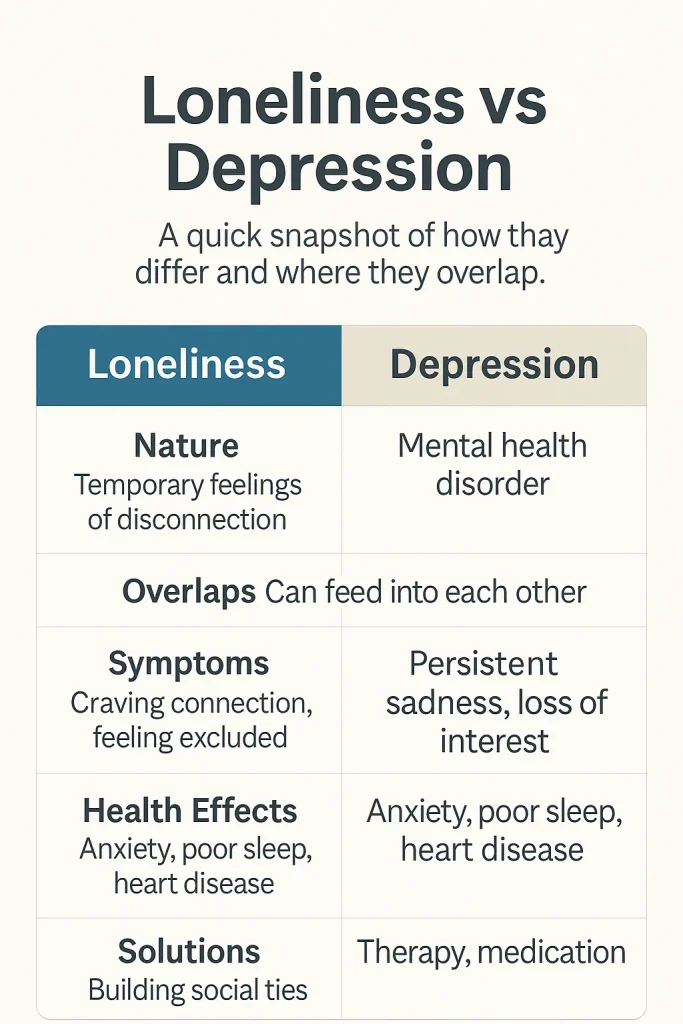
Even though loneliness and depression are distinct, they can feed into each other. This section looks at how they overlap and how one can increase the risk of the other.
Shared Symptoms
Both can cause:
- Low energy and fatigue
- Irritability or mood swings
- Lack of motivation
- Social withdrawal
How Loneliness Can Lead to Depression
When loneliness continues for weeks or months, it can raise stress levels, affect self-esteem, and disrupt sleep. Over time, this may increase the likelihood of developing depression.
Depression Worsening Loneliness
Depression can make it hard to connect with others, leading to withdrawal and isolation. Feelings of shame or stigma may push people further away, creating a cycle of loneliness and depression.
Signs You May Be Experiencing Loneliness vs Depression

It’s not always easy to tell whether you’re simply feeling lonely or struggling with depression. This section highlights the different signs to help you understand your experience.
Signs of Loneliness
- Feeling isolated even when around people
- Longing for deeper connections
- Boredom or emptiness when alone
Signs of Depression
- Persistent sadness or numbness
- Losing interest in once-enjoyable activities
- Hopelessness, low self-worth, or thoughts of self-harm
Causes and Risk Factors
Both loneliness and depression can affect anyone, but certain life events, genetics, and environments increase the risk. This section breaks down the most common causes.
Causes of Loneliness
Loneliness can be caused by moving to a new city or starting at a new school, where familiar faces and routines are missing.
Ending a relationship or going through a divorce often leads to feelings of loneliness as important connections are lost.
The death of a loved one can leave a deep sense of emptiness and isolation.
Retirement or having fewer opportunities to socialize can reduce daily contact with others, increasing loneliness.
Experiencing social rejection or being excluded from groups can also cause strong feelings of loneliness and isolation.
Causes of Depression
Depression can have biological causes like genetic factors and chemical imbalances in the brain that affect mood.
Psychological causes include trauma, unresolved grief, and negative patterns of thinking that can weigh heavily on a person’s mental health.
Environmental factors such as financial problems, ongoing stress, and a lack of support from family or friends can also contribute to depression.
Health Impacts of Loneliness and Depression

Both loneliness and depression can affect more than just your mood. This section explores how they impact mental and physical health.
Mental Health Effects
- Higher risk of anxiety disorders
- Increased stress and emotional instability
- Greater chance of cognitive decline over time
Physical Health Effects
- Trouble sleeping or oversleeping
- Lowered immunity and frequent illness
- Higher risk of heart disease, high blood pressure, and other chronic conditions
Treatment and Coping Strategies

The good news: both loneliness and depression are manageable, and support is available. This section covers practical strategies for coping and treatment options that can help.
Coping with Loneliness
To cope with loneliness, try building connections by calling a friend, reaching out to family, or meeting new people. Even small talks can make a difference.
Joining groups or communities, like clubs, classes, or volunteer activities, is a great way to meet others who share your interests and find a sense of belonging.
Therapy or counseling can also help by teaching you better communication and social skills, while providing support to reduce feelings of isolation. It’s okay to ask for help when you need it.
Using digital tools like an AI girlfriend can offer comforting, consistent interaction when human connections are limited. To understand how these artificial companions work and their benefits in easing loneliness, visit What is an AI girlfriend.
Treating Depression
Treating depression often starts with therapy, such as Cognitive Behavioral Therapy (CBT), talk therapy, or group therapy. These approaches help you understand and change negative thought patterns and provide support.
Medication, like antidepressants, can also be useful in managing depression. It’s important to take these only under a doctor’s guidance to ensure safety and effectiveness.
Making lifestyle changes can make a big difference, too. Regular exercise, eating a balanced diet, practicing mindfulness, and keeping a consistent daily routine all support better mental health.
When to Seek Professional Help
There are times when loneliness or depression may require outside support. This section helps you know when it’s time to reach out.
Here are the warning signs that professional support is needed
- Sadness lasting most of the day, nearly every day, for weeks
- Losing interest in almost all activities
- Difficulty functioning at work, school, or home
- Thoughts of self-harm or suicide
Prevention and Long-Term Wellbeing

While loneliness and depression can feel overwhelming, there are ways to build resilience and protect your long-term wellbeing.
Building Resilience
Building resilience means finding ways to handle stress better. You can try journaling your thoughts, practicing meditation, or doing simple breathing exercises to calm your mind and body.
Developing problem-solving and coping skills also helps you face challenges more confidently.
Maintaining a Support Network
Staying connected with family and friends is important for your well-being. Even small check-ins, like a quick text or call, can help keep relationships strong and make you feel supported.
Practicing Self-Care Routines
Taking care of yourself means prioritizing good rest, regular exercise, and healthy food. Doing creative hobbies or activities you enjoy can boost your mood.
Setting small, achievable goals helps build your confidence step by step.
Conclusion
Loneliness and depression are related but not the same. Loneliness is usually a temporary state tied to social disconnection, while depression is a long-term mental health condition that affects how you think, feel, and function.
Recognizing the differences helps you take the right steps, whether that means reaching out to build connections or seeking professional support. Remember, if feelings of hopelessness or thoughts of self-harm arise, reaching out for help is not a weakness, it’s a vital step toward healing and wellbeing.
Understanding the difference between loneliness and depression is important. For a detailed look at this connection, see Loneliness and Depression: What the Research Really Shows. For those looking for a safe space to connect and feel less alone, an AI girlfriend can offer compassionate conversation anytime.
Distinguishing Loneliness From Depression
How do I know if I am depressed or just lonely?
The most reliable self-test is context-sensitivity. Spend a day genuinely engaged with people you find meaningful, not performing engagement, but actually connecting. If your mood lifts substantially during and after that contact, loneliness is the more likely explanation. If the connection brings no relief, if the grey feeling persists even when people are present, depression is more likely the primary issue. Neither conclusion is a failure; both require attention. But the appropriate first response is different.
Can loneliness cause depression?
Yes, this causal relationship is well-established in longitudinal research. Cacioppo and Hawkley's 20-year prospective study found that baseline loneliness predicted the onset of depressive symptoms five years later, even controlling for existing depression, health status, and demographic variables. The mechanism involves chronic stress activation, inflammatory signaling, and the gradual erosion of the cognitive resources needed to form new connections. Loneliness left unaddressed is a reliable depression risk factor.
Does treating loneliness cure depression?
When loneliness is the primary driver, increasing genuine social connection does produce significant reductions in depressive symptoms, sometimes to a degree that clinical treatment would not have achieved alone. When depression is primary, however, social prescribing alone is insufficient. The anhedonia and negative cognitive bias of depression actually make social contact feel aversive, creating a situation where pushing connection can worsen rather than help. The sequencing matters: sometimes depression needs to be addressed clinically before the person has the capacity to benefit from social interventions.
What are the physical symptoms of both loneliness and depression?
Both loneliness and depression are associated with elevated inflammatory markers, disrupted cortisol rhythms, impaired immune function, and increased cardiovascular risk. Loneliness specifically is associated with elevated blood pressure and disrupted sleep architecture. Depression is associated with HPA axis dysregulation (the stress hormone system), appetite changes, and motor retardation. The physical effects of both are real and measurable, these are not "just" mental states but states with documented physiological consequences.
Should I see a therapist for loneliness?
Yes, if loneliness is significantly affecting your daily function, your sense of self-worth, or your ability to engage with life. Cognitive behavioral therapy has strong evidence for addressing the cognitive patterns that maintain loneliness, specifically the hypervigilance to social threat and the negative interpretation of ambiguous social signals. If depression is co-occurring, that may warrant additional treatment. The most important thing is not to treat the experience as something to manage alone simply because it is not classified as a formal diagnosis.
Disclaimer
This article is for informational purposes only and is not a substitute for professional medical advice, diagnosis, or treatment. Always seek the guidance of a qualified health provider with any questions you may have about your mental health. If you are experiencing thoughts of self-harm or suicide, please seek help immediately by calling your local crisis hotline.