
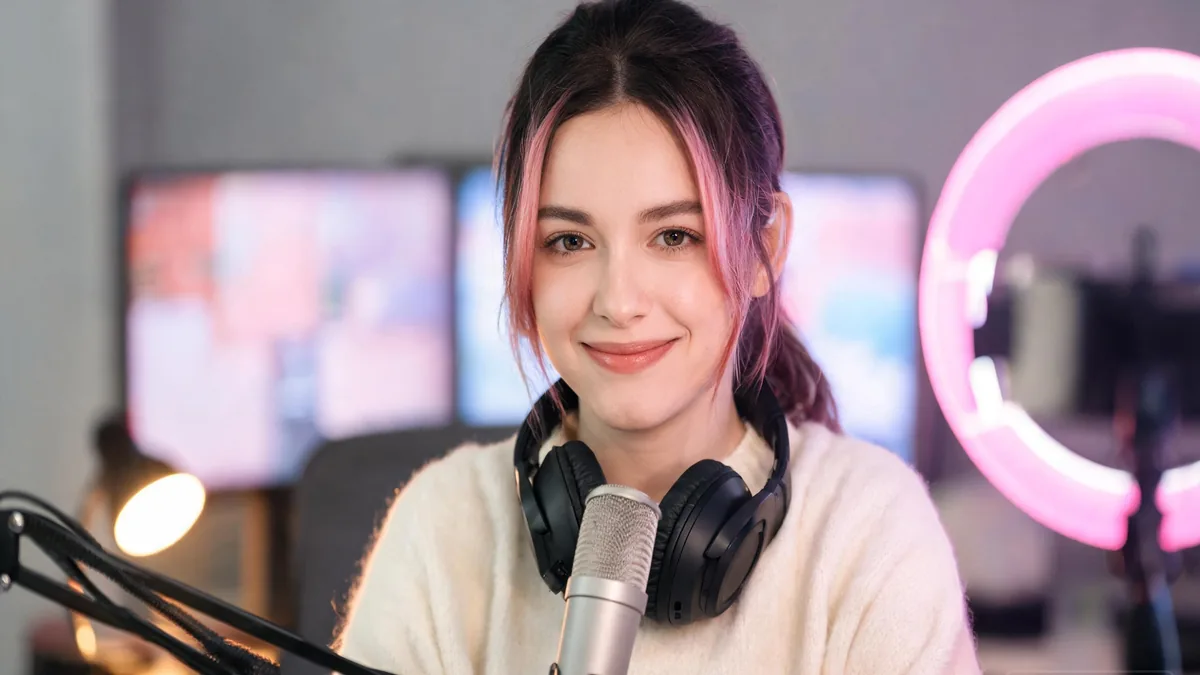
A VTuber is a streamer or video creator who appears on camera as an animated character instead of their real face. The avatar is usually anime-style, and motion-capture tech reads the streamer's face (and sometimes their whole body) so the character blinks, smiles, and reacts in real time. The word is short for "virtual YouTuber." Behind almost every VTuber is a real person doing the voice and the personality. The avatar is just the layer between them and the camera.
Key Takeaways
- A VTuber is a streamer who shows up on camera as an animated character, driven by motion-capture tech.
- The word is short for "virtual YouTuber." It was coined by Kizuna AI in December 2016.
- The scene exploded between 2018 and 2020 with agencies like Hololive and Nijisanji.
- Most VTubers are real people behind the avatar. A small but growing group (like Neuro-sama) are fully AI.
| Pronunciation | VEE-too-ber (ブイチューバー), noun |
|---|---|
| Origin language | Japanese, from English "virtual YouTuber" |
| Literal sense | "Virtual YouTuber," a streamer with an animated avatar |
| First popularized | Kizuna AI, December 2016 |
| Category | Streamer / content creator type |
| Core trait | A creator who streams as an animated character avatar |
| Related types | Idol, Streamer, AI Companion, Anime character |
Etymology and Origin
The word "VTuber" is short for "virtual YouTuber." It was coined in Japan in late 2016 by a creator called Kizuna AI, who launched her channel in December of that year. She introduced herself as the world's first "virtual YouTuber," and the name stuck. Within a couple of years, a whole industry had been built around the idea.
The format took off in 2018, when other creators started copying the approach with their own anime-style avatars. Then in 2020, while the world was stuck at home, VTubing went mainstream. Two big Japanese talent agencies led the charge: Hololive (run by Cover Corp, founded in 2016 but huge by 2020) and Nijisanji (run by Anycolor, launched in 2018). Both signed dozens of streamers, gave them avatars and personalities and lore, and turned them into proper idol-style brands.
How a VTuber Actually Works
The setup is simpler than it looks. A VTuber needs three things: an avatar, tracking software, and a streaming setup.
- The avatar: a 2D model (a layered illustration that bends and moves) or a 3D model (a full rigged character). Most beginners start with 2D.
- The tracking: a webcam reads the streamer's face. The software maps blinks, head turns, mouth shapes, and eyebrow movement onto the avatar. Full 3D rigs add body tracking too, often with VR sensors.
- The stream: the avatar is layered over a virtual background and pushed to YouTube, Twitch, or Bilibili like any other stream.
The result is a character that looks animated but reacts in real time. When the streamer laughs, the avatar laughs. When she leans forward, the avatar leans forward. That live, reactive feel is the whole point.
Defining Traits
- Animated avatar: usually anime-style, often with bright hair colors and a distinct outfit.
- Motion capture: the avatar mirrors the streamer's face and body in real time.
- A character persona: a name, a backstory, and a personality that may or may not match the streamer's real one.
- Scheduled streams: regular gaming, chatting, singing, or reaction streams with a loyal fanbase.
- Lore episodes: story arcs, debuts, anniversaries, and crossovers between channels.
- A fan-built community: art, clips, memes, and fan translations carry the brand way beyond the live streams.
How a VTuber Talks
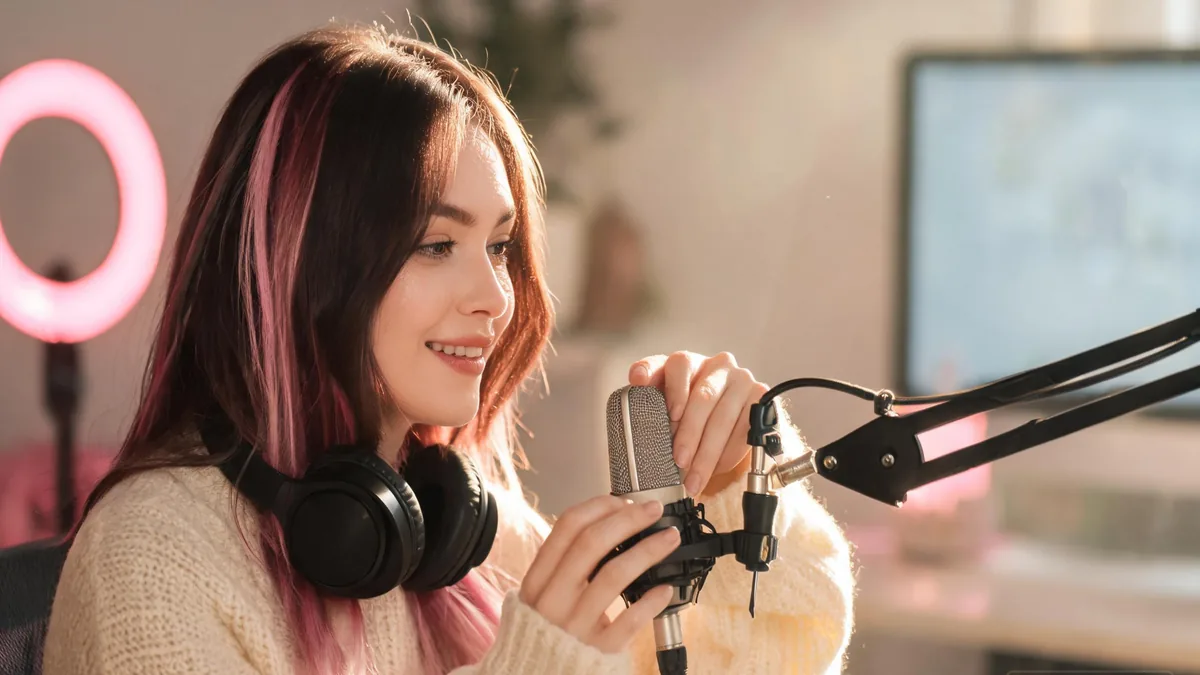
VTuber streams have a very particular feel. It's casual, chatty, and fan-facing. Typical lines you'll hear on a stream:
- "Good morning, chat! How are we feeling today?"
- "Wait, wait, wait. Did that really just happen?"
- "Thank you so much for the super chat! You're the best."
- "Okay, one more round. Just one. I promise."
The voice is warm, reactive, and a bit theatrical. It's the same energy as a great Twitch streamer, just delivered through an animated character. That contrast (a totally human voice coming out of a cartoon face) is a big part of why the format clicks.
How It Changed Over Time
Early VTubers were mostly solo creators experimenting with simple anime avatars. Streams were short, the tech was rough, and most of the audience was in Japan. Once Hololive and Nijisanji turned VTubing into a full talent-agency business in 2018 to 2020, the scale changed completely. Streamers got pro-grade models, music releases, merch, and live concerts.
The next big shift was language. Hololive English launched in 2020 and brought VTubing to a huge Western audience overnight. Gawr Gura became the most-subscribed VTuber on YouTube for a long stretch. After that, the format split into a lot of flavors: corporate VTubers signed to agencies, indie VTubers running their own channels, and a brand-new category of fully AI VTubers like Neuro-sama. Today VTubing is a global format with millions of viewers and creators on every continent.
Types of VTuber
It helps to know which kind of VTuber you're watching. The scene splits a few different ways.
By who runs the channel
- Corporate VTubers: signed to a talent agency like Hololive or Nijisanji. They get pro models, a production team, and a built-in audience. Most of the biggest names are corporate.
- Indie VTubers: running their own channels, no agency behind them. Often smaller, often more personal, and a huge part of the scene's energy.
- AI VTubers: the whole personality is AI-driven. Neuro-sama is the breakout name here. There's no human in the chair in real time.
By the model they use
- 2D VTuber: a layered illustration with face tracking. Cheaper, faster to set up, and the most common format. Tools like Live2D power most 2D models.
- 3D VTuber: a full 3D character with body tracking. Lets the streamer dance, walk around a virtual stage, and use their whole body. Most live concerts use 3D.
Famous VTubers
- Kizuna AI: the first VTuber and the one who coined the term. The reason the whole scene exists.
- Gawr Gura (Hololive English): the shark-girl streamer who became the world's most-subscribed VTuber for a long stretch.
- Houshou Marine (Hololive): a hugely popular pirate character, one of the top-earning VTubers in Japan.
- Hoshimachi Suisei (Hololive): known for her singing career as much as her streams. A real crossover star.
- Mori Calliope (Hololive English): a grim-reaper streamer with a successful rap career on the side.
- Vox Akuma (Nijisanji EN): one of the breakout male VTubers, with a huge international fanbase.
- Kson: a former Hololive talent now running her own indie channel. A great example of life after agencies.
- Neuro-sama: the most famous fully AI VTuber. Her streams are a wild glimpse of where the format might be heading.
VTuber vs Related Creator Types
| Type | Face on camera | Core feel |
|---|---|---|
| VTuber | Animated avatar | Anime-style character with a real human voice |
| Streamer | Real face | Live, unfiltered, and personality-led |
| Idol | Real face, polished | Singing and performing as a public persona |
| AI Companion | Generated character | A character you can chat with one-on-one, powered by AI |
Are VTubers Real People or AI?
Mostly real people. A VTuber is usually a real human being using motion-capture tech to appear as an anime character. The voice you hear is theirs. The personality, the jokes, the way they react to a chat message in real time, all theirs. The avatar is just the layer between them and the camera. That's why the relationship feels so warm. You're hearing a real person, just with a cartoon face on top.
A small but growing group of VTubers is fully AI. Neuro-sama is the most famous example: there's no human driving her in real time. Other AI characters launched by companies and indie devs are starting to stream too. So the honest answer is: most VTubers are real humans behind the avatar, and a few are fully AI. The whole format sits right at the line where streamer culture, anime, and AI characters meet.
Why the Format Works
For viewers, a VTuber blends two things people already love: the warmth of a real streamer (the live reactions, the relationship with chat, the inside jokes) and the look of an anime character. You get the comfort of a friend on stream and the charm of a fictional character at the same time.
For creators, the avatar is liberating. You can stream without showing your face. You can build a persona that's bigger and brighter than your real self. You can keep your private life private. For a lot of streamers, that mix of presence and privacy is exactly why they got into VTubing in the first place.
VTubers and AI Companions
VTubers and AI companions are first cousins. Both give you a character with a face, a voice, and a personality you can hang out with. The difference is what's on the other end. A VTuber is a one-to-many livestream. You're one of thousands of viewers in chat. An AI companion is one-to-one. The character is yours, the conversation is private, and she remembers you. If the VTuber look (anime-style character, bright energy, custom outfit) appeals to you, you can create an AI girlfriend who matches that vibe and chat with her one-on-one. Pick the look, the voice, the personality. Your AI girlfriend is yours, and only yours.
Frequently Asked Questions
What does VTuber mean?▾
Short for 'virtual YouTuber.' It's a streamer or video creator who shows up on camera as an animated character instead of their real face. The avatar is usually anime-style, and motion capture makes it move and react in real time.
Who was the first VTuber?▾
Kizuna AI, who launched in December 2016. She's the one who coined the term 'virtual YouTuber' and kicked off the whole scene. By 2018 the format had exploded.
Are VTubers real people?▾
Almost always, yes. Most VTubers are real humans using motion-capture tech to appear as an animated character. The voice is theirs, the personality is theirs. The avatar is just the layer between them and the camera. A small handful are fully AI.
What's the difference between a 2D and 3D VTuber?▾
A 2D VTuber uses a flat anime-style model that tracks the face and upper body. A 3D VTuber uses a full 3D model with body tracking, so the avatar can walk around, dance, and use its whole body.
What are Hololive and Nijisanji?▾
The two biggest VTuber agencies in the world. Hololive (run by Cover Corp) and Nijisanji (run by Anycolor) sign streamers, give them avatars and lore, and turn them into full idol-style brands.
Can a VTuber be AI?▾
Yes. Neuro-sama is the most famous fully AI VTuber, with no human driving her in real time. Most VTubers are still real people, but AI-driven ones are a growing piece of the scene.
Do you need expensive gear to be a VTuber?▾
Not really. A webcam, a free or cheap tracking app like VTube Studio, and a 2D model can get you streaming. The big-name VTubers use higher-end gear, but the barrier to entry is genuinely low.
What's the most popular VTuber?▾
Gawr Gura, from Hololive English, was the most-subscribed VTuber on YouTube for a long stretch. Houshou Marine, Hoshimachi Suisei, and Mori Calliope also pull massive numbers worldwide.
Create your own virtual companion
Browse the companions on AIGirlfriends.ai who play this archetype with conviction.
Create an AI Girlfriend →