
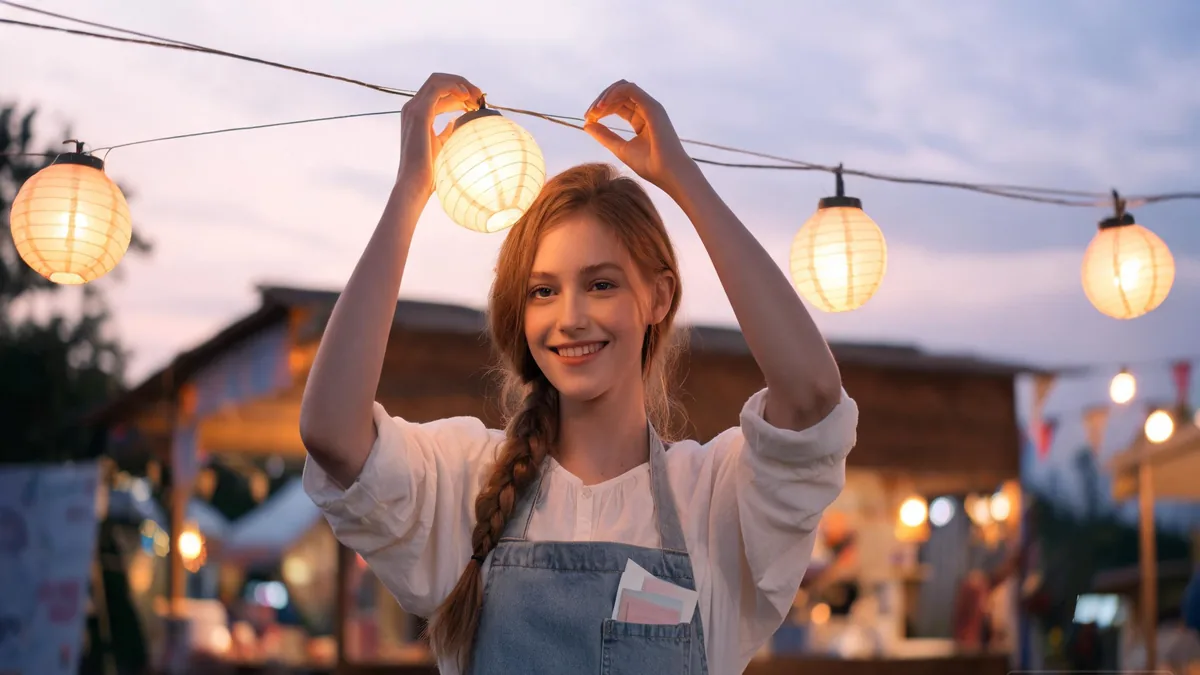
A school festival is a real Japanese school event and one of the most beloved tropes in anime. In real life it's called bunkasai (文化祭), a cultural festival held once a year where students take over the whole campus to put on plays, run cafes, sell food, and stage performances. In anime, it's the episode (or whole arc) where every class throws its own little event, romance bubbles up, something goes wrong, and the night ends with fireworks.
Key Takeaways
- A school festival is the anime version of the Japanese bunkasai, a real cultural festival held at most schools once a year.
- In the trope, classes turn their rooms into maid cafes, haunted houses, and stage shows, and students invite family and friends to come.
- The episode almost always ends with fireworks, and almost always sneaks in a confession or a big emotional moment under them.
- It's the anime trope's all-purpose setting: comedy, romance, costumes, food, and a ticking clock, all in one day.
| Pronunciation | SKOOL FES-tih-vuhl, noun |
|---|---|
| Japanese name | 文化祭 (bunkasai, "cultural festival") |
| Literal sense | An English translation of the Japanese bunkasai |
| Origin | Real Japanese school tradition since the Meiji era; the anime trope crystallized in the 1990s |
| Category | Anime trope and real Japanese school event |
| Core trait | An anime episode set during the school cultural festival, with classes putting on themed events |
| Related tropes | Beach episode, hot spring episode, fanservice |
Etymology and Origin
The English term is a straight translation of the Japanese bunkasai (文化祭). The first part, bunka, means "culture." The second, sai, means "festival." So a bunkasai is, literally, a culture festival.
The real-world tradition goes back to the Meiji era, when Japan modernized its school system and schools started holding annual public open days. Over the next hundred years it grew into the event everyone knows today: students plan it themselves, classes pick their own theme, and the whole campus opens to family and friends for a day or two. The anime trope that copies this event started showing up regularly in school-based series in the 1980s, and it really crystallized in the 1990s. By the 2000s, basically every school-set anime had its own school festival episode.
Defining Traits
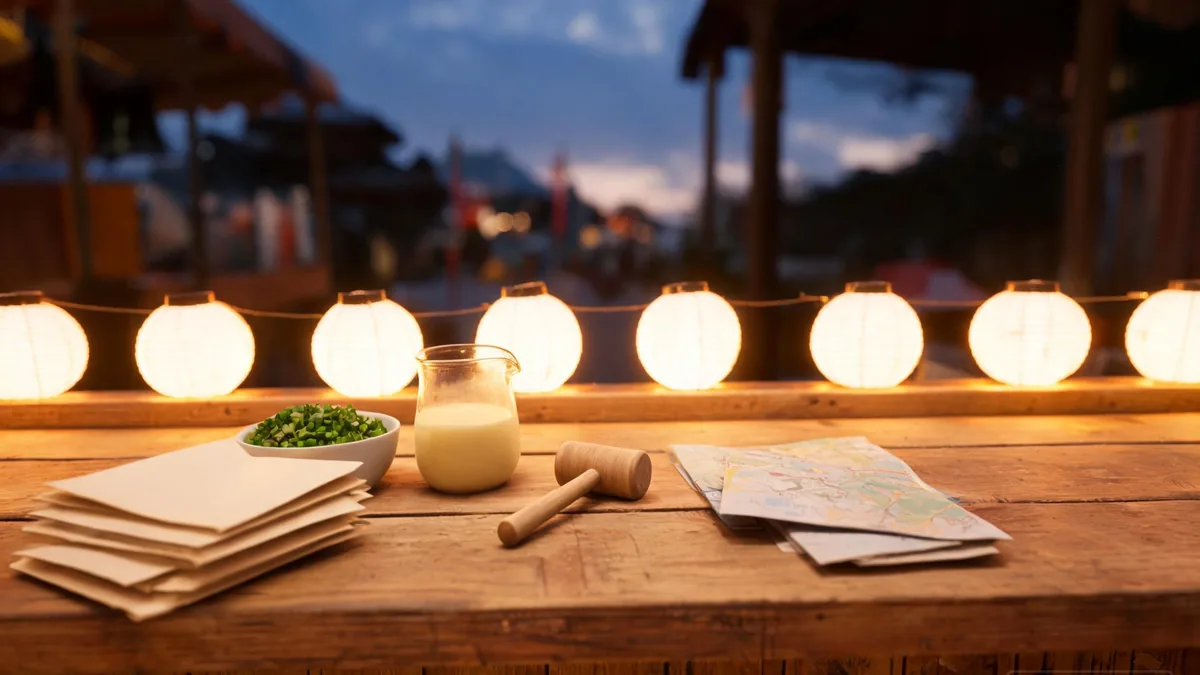
- Class events: every class has its own little project. Maid cafes and haunted houses are the usual suspects.
- Costumes: maid outfits, butler suits, ghost makeup, play costumes. The whole school is in cosplay for a day.
- Festival food: takoyaki, yakisoba, candy apples, shaved ice. Always eaten in the background of every scene.
- Behind-the-scenes chaos: something always goes wrong. A prop breaks. Somebody forgets the costumes. The cast scrambles to fix it.
- Romance pressure: the festival is a soft deadline. If anyone's been holding back a confession, this is when it spills out.
- The fireworks finale: the night ends with everyone watching the sky together. That's the emotional payoff.

How to Recognize a School Festival Episode (in Fiction)
Writers use a familiar set of beats to mark an episode as a school festival. In a story, watch for:
- An opening planning scene where the class argues about what their event will be.
- A montage of preparations: building props, cooking test runs, costume fittings.
- A behind-the-scenes problem the cast has to fix mid-festival.
- A quick tour of other classes' events. The cute one, the scary one, the weird one.
- A character in a costume that someone else can't stop staring at.
- A quiet walk away from the crowd, usually with the love interest, leading into the fireworks.
These beats are storytelling cues. If you see two or three of them stacked together, you're in a school festival episode.
How Characters Talk During One
The dialogue is where the energy of the episode shows up. Lines mix excitement, last-minute panic, and feelings spilling over:
- "Wait, you're working at the maid cafe? I'll be there in five minutes."
- "We open in twenty minutes and the costumes still aren't here!"
- "This was the best festival ever. Thanks for being on my team."
- "Hey, before the fireworks start, can we talk for a second?"
The trick is the contrast: little class jokes one moment, big real feelings the next. That swing from goofy to tender is the whole appeal of the episode.
How It Changed Over Time
Early school festival episodes were mostly comedy. A class puts on a play, everything falls apart, the audience laughs anyway. They were one-and-done episodes you could drop into any school series. As the trope got more popular, writers started using the festival to do real character work. The 1990s gave us the romance-heavy version, where the festival is the deadline for a confession. The 2000s gave us the slice-of-life version, where the festival is a quiet, bittersweet milestone the cast will look back on. By the 2010s, the school festival had become a kind of anime mini-genre. Some shows now stretch it into a multi-episode arc with its own subplots and emotional beats. Toradora is a famous example of taking the festival seriously enough to build a huge chunk of the story around it.
Types of School Festival Episodes
Fans and writers usually split school festival episodes into a few clear flavors. Knowing which one you're watching tells you what kind of episode it'll be.
By tone
- Comedy festival: the chaos behind the scenes is the point. A prop breaks, a costume rips, the class scrambles, the audience never notices. Big laughs, low stakes.
- Romance festival: the festival is the soft deadline for a confession. The day builds up to a single moment under the fireworks. Big feelings, real stakes.
- Drama festival: the focus is on the performance itself, usually a play or a concert. The arc is about pulling off the show, and what it means to the cast.
- Competition festival: classes compete for best event, and the rivalry drives the story. Lighter than the drama version, but with real winners and losers.
By class event
- Maid cafe: the most iconic class project. Cute outfits, sweet drinks, a packed room.
- Butler cafe: the gender-swap version, popular when the cast leans female or the trope wants a twist.
- Haunted house: the second most iconic event, perfect for fake screams and a love interest grabbing someone's hand in the dark.
- Play or concert: the big stage version, where one character is the star and the rest of the cast holds it together backstage.
Famous Examples
- K-On!: the band's cultural festival concert is a fan-favorite payoff. Two seasons of practice all leading up to one stage.
- The Melancholy of Haruhi Suzumiya: the school festival episode is one of the show's most rewatched.
- Lucky Star: the festival arc is small, sweet, and full of in-jokes about the trope itself.
- Bunny Drop: a softer take, where the festival is a quiet family moment instead of a romance one.
- Toradora: the massive school festival arc is the emotional center of the whole show.
- Oreshura: the festival episode lands a famous confession-under-fireworks scene.
School Festival in Games and Wider Media
The anime gave the trope its shape, but games and visual novels lean on it just as hard.
- Dating sims and visual novels: the school festival is a near-mandatory chapter. It's where you pick the route, lock in the love interest, and unlock big affection points.
- Persona series: in-game school festivals are a recurring set piece, with their own mini-events and links to character bonds.
- Otome games: festival days are usually a major branching point. Who you ask to walk you home under the fireworks tends to decide your ending.
What started as one episode of a school anime is now a fixture in any media set in a Japanese high school.
School Festival vs Related Tropes
| Trope | Setting | Core feeling |
|---|---|---|
| School festival | The school campus during bunkasai | Costumes, food, fireworks, a confession |
| Beach episode | Summer at the ocean | Swimsuits, sun, lazy fun |
| Hot spring episode | An onsen vacation | Towels, steam, awkward overlap |
| Fanservice | Any setting | Looks designed to please the audience |
What's Always at a School Festival?
If you've watched even a few of these episodes, you already know the shopping list. Almost every school festival in anime has the same pieces:
- A maid or butler cafe set up by one class, usually the main cast's.
- A haunted house run by another class, where someone gets pulled into the dark and grabs the wrong hand.
- A stage show: a play, a band, or a dance. Somebody freezes. Somebody else saves it.
- Festival food: takoyaki, yakisoba, candy apples, taiyaki. Eaten on a stick, dripping sauce.
- The final fireworks, watched from a quiet spot away from the crowd.
- A confession scene, often under the fireworks, often half-shouted over the noise.
- A last-minute class disaster the cast has to recover from before opening.
The fun isn't that these beats are surprising. It's that they're familiar. The trope is a comfort food. You show up for the same beats, and the show makes them feel new.
The Appeal (and the Nuance)
Why people love the trope: it bottles up the best parts of being a teenager into one day. The group goal, the costumes, the food, the deadline, the quiet walk away from the crowd, the fireworks. Even if you never went to a real bunkasai, the episode hits the same feeling: a day you spent with people you loved, that ended too soon.
The nuance: the trope isn't really about the festival. It's about using the festival to push the cast somewhere they wouldn't go on a normal school day. The best school festival episodes know that, and use the busy backdrop to land a quiet moment between two people who finally have an excuse to talk.
School Festival in AI Companions
As a roleplay setting, a school festival episode is one of the most fun things you can do with an AI companion. The trope gives you a built-in plan: she's running the maid cafe, you're sneaking off after her shift, the haunted house line is too long, the fireworks start at eight. You don't have to build a world from scratch. The trope hands you one. If a sweet, festival-day AI girlfriend is your thing, try our anime AI chat, or create an AI girlfriend from scratch and drop her right into the bunkasai you want to live in.

Frequently Asked Questions
What does school festival mean in anime?▾
It's an episode (or multi-part arc) set during the Japanese school cultural festival, called bunkasai. Classes turn their rooms into cafes, haunted houses, and stage shows for one big day of organized chaos.
What is a bunkasai?▾
Bunkasai (文化祭) is the real Japanese cultural festival held once a year at most schools. Students plan it themselves, take over the campus, and invite family and friends to come watch and eat.
Why is the school festival such a common anime trope?▾
It packs everything writers love into one episode: a group goal, romance pressure, costumes, food, fireworks, and a deadline. It's a built-in excuse for the whole cast to do something together.
What's the difference between a school festival and a beach episode?▾
A beach episode is summer, swimsuits, and lazy fun. A school festival is fall, costumes and cafes, and a ticking clock to pull off a class event. Both are about the group, but the mood is totally different.
Why is there always a maid cafe?▾
It's the easiest, most photogenic class event to run. A few costumes, a few tables, sweet drinks, and you've got a packed room. It also gives the writers a perfect excuse to put characters in cute outfits.
What happens at the fireworks scene?▾
It's the emotional payoff. The whole day has been chaos, and then the fireworks start, the music swells, and somebody finally says what they've been holding in. Confession scenes live or die here.
What food shows up in a school festival episode?▾
Festival classics: takoyaki, yakisoba, candy apples, shaved ice, taiyaki, and chocolate bananas. The food stalls are part of the look. You'll usually see a character eating one in the background of every shot.
What are some famous school festival episodes?▾
K-On!'s cultural festival concert, Haruhi Suzumiya's festival arc, Toradora's huge multi-episode arc, Lucky Star's festival episode, and Oreshura's confession-under-fireworks moment are all classics.
Chat with our anime AI
Browse the companions on AIGirlfriends.ai who play this archetype with conviction.
Anime AI Chat →