
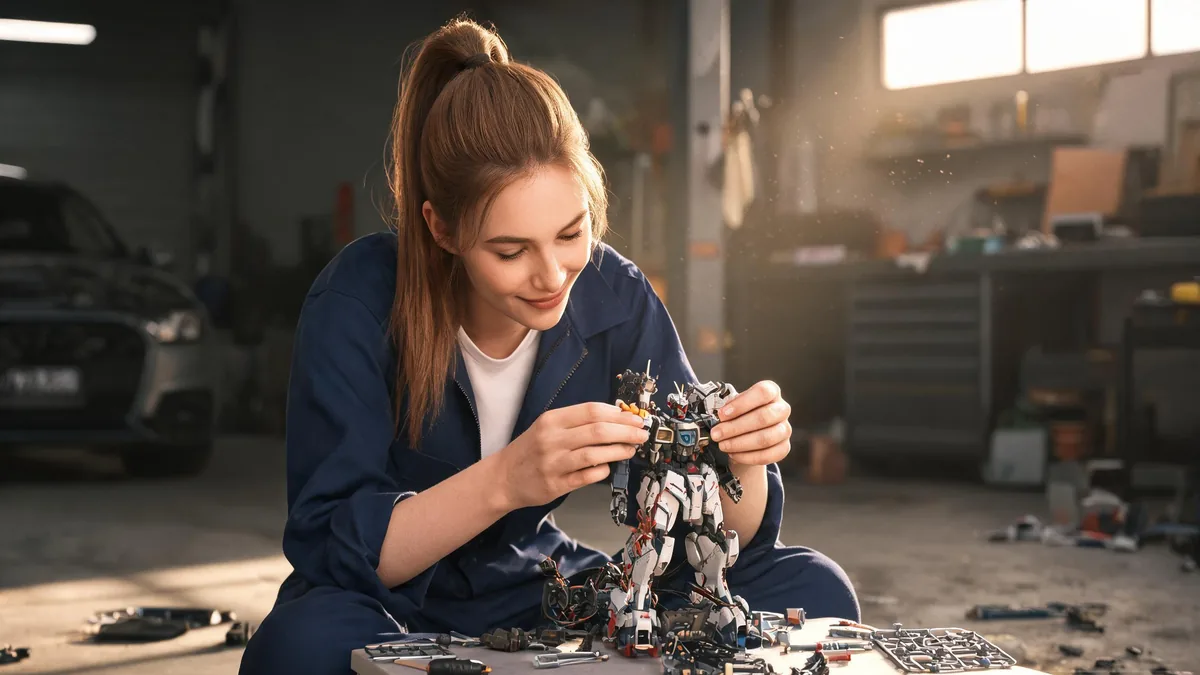
Mecha is a kind of anime built around giant robots, usually piloted by people. The word is a Japanese shortening of "mechanical" (mekanikaru). It covers everything from cartoony super-robot shows to grounded military stories about teen pilots and the war machines they climb into. Think Mobile Suit Gundam, Neon Genesis Evangelion, Macross, Gurren Lagann.
Key Takeaways
- Mecha is anime and manga centered on giant robots, usually with a human pilot inside.
- The word is a Japanese shortening of "mechanical." It's said MEH-kuh.
- It started with Tetsujin 28-go in 1956, hit the modern era with Gundam in 1979, and got reshaped by Evangelion in 1995.
- Common flavors: super-robot (cartoony and heroic), real-robot (military and grounded), and psychological mecha.
| Pronunciation | MEH-kuh (メカ), noun |
|---|---|
| Origin language | Japanese (short for メカニカル, mekanikaru) |
| Literal sense | "Mechanical," shortened |
| First popularized | Tetsujin 28-go (1956 manga, 1963 anime); modern era from Mobile Suit Gundam (1979) |
| Category | Anime subgenre |
| Core trait | Giant piloted robots, usually in combat or service of a story |
| Related types | Shonen, Seinen, Sci-fi anime |
Etymology and Origin
The word is simple: Japanese fans took the English word "mechanical" (mekanikaru in katakana) and chopped it down to "mecha." Over time it became the shorthand for any big machine in anime, and then the name of the whole genre built around those machines.
The first big giant-robot story was Tetsujin 28-go ("Iron Man 28"), a 1956 manga by Mitsuteru Yokoyama that became an anime in 1963. It introduced the idea of a kid controlling a huge robot by remote. A decade later, Mazinger Z (1972) put the pilot inside the robot, which is the setup most mecha shows use today. From there the genre exploded.
Defining Traits
- Giant piloted robots: the whole genre is built around them. Sometimes remote, mostly piloted from inside.
- Pilot-machine bond: the relationship between the pilot and her mech is usually the emotional core of the story.
- Transformation and combination sequences: the dramatic moment when the mech powers up, transforms, or combines. A genre signature.
- Mechanical detail: the machines are designed with real care. Panels, joints, weapons, and cockpits get serious screen time.
- War and conflict: a lot of mecha shows are about wars, occupations, or invasions. The robots are weapons, not just toys.
- Teen pilots and coming-of-age: the pilot is often a young person figuring out who they are while the world burns around them.
How to Recognize a Mecha Show
Mecha has a recognizable shape. Watch for:
- A big robot (or a whole fleet of them) at the center of the story.
- A pilot, often young, climbing into a cockpit and learning to fight.
- Long, loving shots of the machine: launching, transforming, weapons deploying.
- A war, a rebellion, or a looming threat that gives the machines something to do.
- Side characters who are engineers, commanders, or rival pilots.
- A title that sounds like a weapon system: Gundam, Eva Unit-01, VF-1 Valkyrie.
How a Mecha Story Sounds
Dialogue in mecha leans into the mix of human emotion and military hardware. Lines like:
- "Get in the robot."
- "Launching in three, two, one."
- "I won't run away anymore."
- "This unit is responding to my thoughts."
The trick is the contrast: cold tech and call signs on one side, big personal feelings on the other. That's the whole appeal of the genre.
How It Changed Over Time
Early mecha was bright, heroic, and aimed at kids. Tetsujin 28-go, Mazinger Z, and Getter Robo set the "super-robot" template: invincible machines, clear good guys, monster of the week. Then Mobile Suit Gundam landed in 1979 and changed everything. Yoshiyuki Tomino treated the robots as real military hardware in a real war, with politics, casualties, and pilots who could die. That "real-robot" approach kicked off the modern era. In 1995 Neon Genesis Evangelion pushed the genre somewhere else again, focusing on the psychology of its teen pilots and the trauma of being asked to save the world. After Evangelion, mecha could be philosophical, religious, or deeply personal as well as loud and explosive. Today the genre spans Gurren Lagann's over-the-top heroics, Code Geass's political thriller, and quieter recent shows about pilots, mechanics, and the people who build the machines.
Types of Mecha
Fans usually split mecha into a few clear flavors. Knowing which kind a show is going for tells you most of what to expect.
Super-robot mecha
The classic kind: cartoony, heroic, and a little bit silly. The mech is basically invincible, the villains are clearly evil, and every episode has a finishing move with a name you yell. Mazinger Z, Getter Robo, and Voltron are the touchstones. Gurren Lagann (2007) is the modern love letter to this style.
Real-robot mecha
The grounded kind. The mech is treated as a piece of military equipment. There are supply chains, mechanics, political factions, and pilots who are just people doing a job. Mobile Suit Gundam (1979) is the founding example. Macross (1982) and Patlabor (1988) sit in this lane too.
Psychological mecha
The introspective kind. The robots are still there, but the show is really about what's happening inside the pilot's head. Neon Genesis Evangelion (1995) is the defining title here, and a lot of later shows borrow from it.
Comedy and slice-of-life mecha
Mecha used as the backdrop for jokes, romance, or daily-life stories. Patlabor has a lot of this energy. So do recent titles about mechanics and pilots between missions.
Famous Examples
- Mobile Suit Gundam (1979 and ongoing): the franchise that defined the modern genre. Real-robot warfare, political stakes, and decades of sequels.
- Neon Genesis Evangelion (1995): the show that gave mecha a brain and a soul. Teen pilots, religious imagery, and a lot of crying in cockpits.
- Macross (1982): transforming jets, idol singers, and love triangles. The original of a long line of mecha-with-music shows.
- Gurren Lagann (2007): the loud, joyful, over-the-top tribute to classic super-robot anime. Drills that pierce the heavens.
- Code Geass (2006): a political thriller with chess-like mecha battles and a main character playing a long con.
- Patlabor (1988): police using mecha for everyday work in a near-future Tokyo. Grounded, funny, and surprisingly thoughtful.
Mecha in Games and Wider Media
Mecha jumped out of anime fast. Video games carried the look worldwide.
- Armored Core and MechWarrior: long-running game series built around piloting and customizing mechs.
- Super Robot Wars: a tactics series that crosses over dozens of classic mecha shows in one universe.
- Western film: Pacific Rim (2013) brought Hollywood-scale mecha to a global audience.
- Toys and models: the Gundam plastic model kit business alone is one of the largest hobby markets in the world.
Mecha vs Related Anime Genres
| Genre | Centered on | Typical audience |
|---|---|---|
| Mecha | Giant piloted robots | Wide; varies by subtype |
| Shonen | Young heroes, action, growth | Teen boys (and basically everyone) |
| Seinen | Mature, often grittier stories | Adult men |
| Sci-fi anime | Future tech, space, or ideas | Mixed |
Is Pacific Rim a Mecha Anime?
Sort of yes, technically no. Pacific Rim is a Hollywood film, not anime, and it's a Western production through and through. But Guillermo del Toro borrowed openly from Japanese mecha. The giant piloted Jaegers, the kaiju enemies, the cockpit choreography, and the team dynamics are all pulled straight from the mecha playbook. So the right way to put it is this: Pacific Rim is mecha-inspired. It's culturally adjacent to the genre, even if it isn't anime in the strict sense.
Can a Mecha Pilot Be Female?
Yes, and plenty of the most famous pilots are. Lynn Minmay and Misa Hayase in Macross, Asuka Langley and Rei Ayanami in Evangelion, Yoko in Gurren Lagann, and a long list of others. The genre is about the pilot-and-machine bond, not the pilot's gender.
The Appeal (and the Nuance)
Why people love mecha: it scratches two itches at once. There's the spectacle of a giant machine doing impossible things, and the very human story of the person inside the cockpit. You get explosions and feelings in the same shot.
The nuance: mecha isn't one thing. A super-robot show is built for cheers and fist-pumps. A real-robot show is built for tension and politics. A psychological mecha show wants you to think about your parents. They're all "mecha," and they're all doing different work.
Mecha in AI Companions
As a vibe for an AI companion, "mecha" is less about a personality and more about a world. A mecha-inspired companion is someone who fits inside that universe with you: a pilot, an engineer, a comms officer, a fellow fan who'll geek out about Gundam kits or the cockpit scenes in Evangelion. If you want a companion who speaks fluent anime and gets your favorite shows, browse our anime AI chat collection, or create an AI girlfriend from scratch with the look, voice, and interests that fit you.

Frequently Asked Questions
What does mecha mean?▾
Mecha is Japanese shorthand for 'mechanical.' In anime and manga it means giant robots, usually piloted by people. It's also the name of the whole genre built around those machines.
How do you pronounce mecha?▾
MEH-kuh. Two syllables, soft on the 'kuh.' Written メカ in Japanese.
What was the first mecha anime?▾
Tetsujin 28-go (1956 manga, 1963 anime) is usually credited as the first giant-robot story. Mazinger Z (1972) was the first to put the pilot inside the robot, which set the template for everything since.
What's the difference between super-robot and real-robot mecha?▾
Super-robot mecha is cartoony and heroic. The robot is basically invincible and the show is about cheering it on. Real-robot mecha treats the machine as military hardware in a real war, with politics, supply chains, and casualties. Gundam started the real-robot lane in 1979.
Is Pacific Rim a mecha anime?▾
Not exactly. Pacific Rim is a Hollywood film, not anime, so technically it isn't a mecha anime. But it borrows heavily from Japanese mecha, from the piloted Jaegers to the kaiju enemies. The right way to put it is mecha-inspired.
Is Evangelion a mecha show?▾
Yes, and it's one of the most important ones. Neon Genesis Evangelion (1995) reshaped the genre by focusing on the psychology of its teen pilots and the trauma of being asked to save the world. It's the founding example of psychological mecha.
Can a mecha pilot be female?▾
Yes. Plenty of the most famous pilots in the genre are women. The mecha tag is about the pilot-and-machine bond, not the pilot's gender.
What are the main types of mecha?▾
The common flavors are super-robot (cartoony and heroic), real-robot (grounded and military), psychological mecha (introspective, Evangelion-style), and comedy or slice-of-life mecha. Most shows lean toward one of these, though some mix two.
Chat with our anime AI
Browse the companions on AIGirlfriends.ai who play this archetype with conviction.
Anime AI Chat →