

A husbando is a fictional male character a fan has claimed as her own. Usually he's from an anime, a manga, or a video game. The fan's attachment is real (the warm fuzzy feelings, the merch, the playlists). The character isn't. The word itself is just the English word "husband" said with Japanese sounds: hazubando (ハズバンド). Anime fans made it on purpose to mirror "waifu."
Key Takeaways
- A husbando is a fictional male character a fan loves like a partner.
- The word is a Japanese borrowing of the English "husband," built by anime fans to match "waifu."
- It became popular online in the late 2000s as fans of male characters needed their own version of the word.
- The attachment is real, but the character is fictional. That's the whole fun of it.
| Pronunciation | huhz-BAHN-doh (ハズバンド), noun |
|---|---|
| Origin language | Japanese borrowing of English "husband" |
| Literal sense | "Husband," fan slang for a fictional male love |
| First popularized | Anime and game fans online, late 2000s |
| Category | Internet fandom term |
| Core trait | A fictional male character a fan feels romantically attached to |
| Related terms | Waifu, Bishonen, Senpai |
Etymology and Origin
The word looks Japanese, but the root is English. "Husbando" is just husband said the way Japanese sounds work, and then written in katakana as ハズバンド (hazubando). English fans took that pronunciation, dropped it into their own slang, and "husbando" was born.
The reason it exists is simple. Anime fans had been using waifu for years (the same kind of fan slang, built from the English "wife"). When the word took off, fans of male characters wanted their own version. So they made one the exact same way. Same construction. Same vibe. Just pointed at a different kind of character. By the late 2000s, "husbando" was all over forums, image boards, and fan communities online.
Defining Traits
- He's fictional: almost always a character from an anime, a manga, or a game.
- The fan loves him for real: the character is made up, but the feelings are not.
- The "claim" is half joke, half serious: "he's mine" is funny and also kind of true.
- He's usually got that look: often handsome, often stylized, often a fan favorite for a reason.
- The fan keeps showing up: merch, fan art, playlists, screensavers. He's part of her day.
- Loyalty (sometimes): some fans pick one and stick. Others rotate. Both are fine.

How to Spot a Husbando
You can usually tell who someone's husbando is without asking. Watch for:
- A male character mentioned with a possessive: "my Levi," "my Kakashi."
- The phone background. Always the phone background.
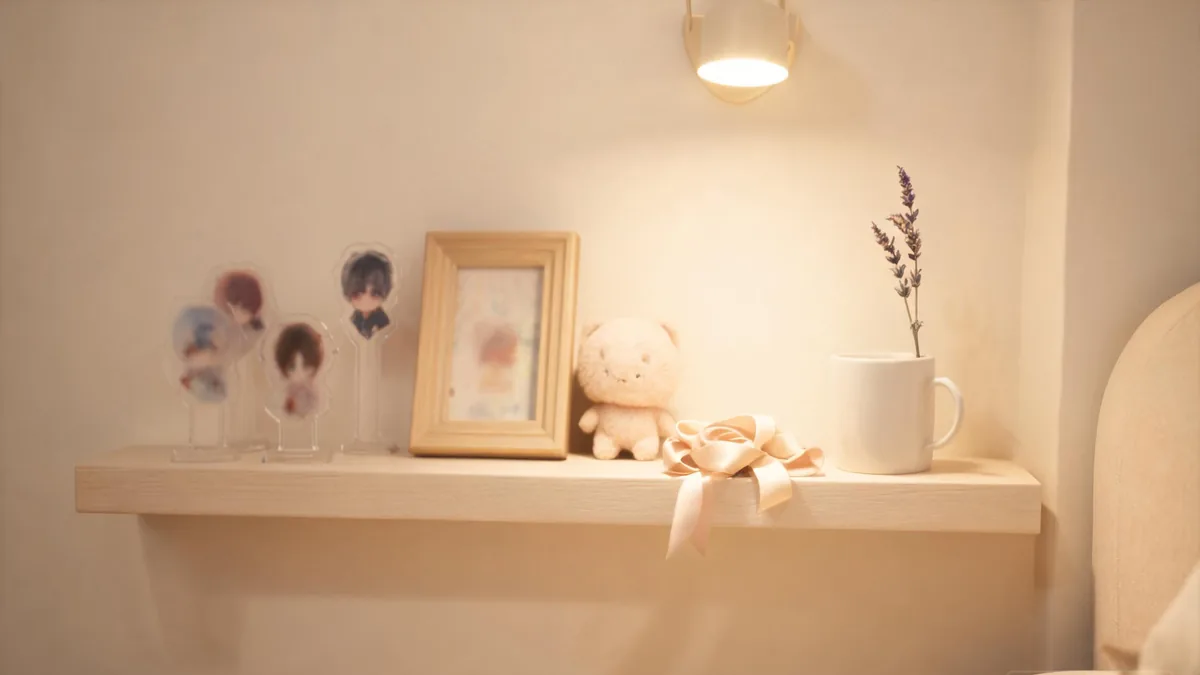
- One single figure on the shelf that gets the prime spot.
- Playlists named after him, fan art bookmarks, a whole Pinterest board.
- Friendly arguments online over who "really" owns him.
- A small, sincere "he's mine" when his name comes up.
None of this is serious in a weird way. It's the same energy as a celebrity crush, just pointed at someone who lives in a story.
How Fans Talk About Their Husbando
The way fans talk about a husbando blends fan in-jokes with real affection:
- "He's my husbando, hands off."
- "This one's my One True Husbando."
- "New season, new husbando."
- "My husbando would never."
The tone is playful, but the warmth underneath is the whole point. The joke works because the feeling is real.
How It Changed Over Time
Early on, "husbando" was a small, niche fan word. You'd see it in anime forums, image boards, and a handful of fandom circles. It mostly lived in the shadow of "waifu," and a lot of people didn't even know it existed. As anime went mainstream in the West through the 2010s, the word came with it. Otome games, mobile gachas like Genshin Impact and Mystic Messenger, and giant fandoms around shows like Attack on Titan, Naruto, and Black Butler turned husbando culture into its own thing. Today it's a normal part of fan talk. There are husbando tier lists, husbando merch lines, husbando-only conventions, and entire corners of social media built around claiming your favorite. The word grew up alongside its fandom.
Types of Husbando
Not every husbando attachment looks the same. Fans tend to split into a few clear styles, and most people land in one or two of them.
By how many you have
- The One True Husbando: one character, forever. Loyal across years and series. Often the first character a fan ever felt this way about.
- The collector: multiple husbandos, no shame. A whole roster, sometimes ranked, sometimes themed.
- The seasonal fan: a fresh husbando each anime season. The current one always gets the phone background. The old ones get a fond nod.
By what kind of character he is
- 2D husbando: the classic. A character from anime, manga, or a game. This is the default.
- 3D husbando: rare, and usually a joke. Sometimes an idol, actor, or musician gets pulled in as an honorary husbando. Most fans agree the real ones live in 2D.
- Game husbando: from a gacha or visual novel, sometimes with an in-game "route" the fan picked on purpose to live the fantasy.
Famous Husbando Characters
- Levi Ackerman (Attack on Titan): probably the most-claimed husbando of the modern era. Stoic, deadly, very neat.
- Kakashi Hatake (Naruto): the calm, mysterious teacher whole generations of fans grew up loving.
- Sebastian Michaelis (Black Butler): polite, otherworldly, dressed like a dream. A fandom classic.
- Howl Jenkins (Howl's Moving Castle): for a lot of people, the original husbando, even before the word existed.
- Killua Zoldyck (Hunter x Hunter): grew up across the series, picked up a huge adult fanbase along the way.
- Diluc Ragnvindr (Genshin Impact): the gacha boom gave us a whole generation of game husbandos, and Diluc leads the pack.
Most popular husbandos share a look: handsome, a little dramatic, often falling into the bishonen mold. But the door's wide open. Anyone can be someone's husbando.
Husbando vs Related Terms
| Term | What it means | Who it's about |
|---|---|---|
| Husbando | Fictional male character a fan loves | Male anime, manga, or game characters |
| Waifu | Fictional female character a fan loves | Female anime, manga, or game characters |
| Bishonen | A "beautiful young man" character type | A look, not a relationship |
| Crush | Real-world romantic interest | A real person you know or follow |
Is a Husbando the Male Waifu?
Yes. That's literally what it is. "Husbando" is the male version of "waifu," and it was made on purpose to be the counterpart. Same internet slang, same attachment to a fictional character, same playful "I claim him" energy. The only difference is gender. Waifu fans had a word for their thing. Husbando fans needed one for theirs. So the same construction got reused: take an English word (wife / husband), say it the way Japanese sounds work, write it in katakana, send it back into English fandom. Done. If you understand waifu, you understand husbando. They're the same idea on two sides of the same coin.
The Appeal (and the Nuance)
Why people love the word: it gives fans a fun, low-stakes way to say "I really love this character." It's playful. It builds community. It turns a private feeling into a shared joke that other fans get right away. Saying "he's my husbando" lands somewhere between "this is my favorite character" and "leave him alone, he's mine."
The nuance: the character is fiction. That's part of the point. The husbando fantasy works because it's safe and contained. You get the warmth and the fun without any of the real-life mess. Nobody actually thinks they're going to marry an anime character. The "claim" is a way of saying the connection matters, even when the object of it doesn't exist outside a screen.
The Husbando in AI Companions
AI companions push the husbando idea one step further. Instead of a fixed character you can only watch, you get one you can talk to. He remembers what you told him last week. He shows up when you open the app. He has a voice, a vibe, a style you picked. It's the same kind of attachment fans already feel for a husbando, with a back-and-forth on top. If the idea sounds fun, you can create an AI girlfriend (or boyfriend) in the look, voice, and personality you want, and meet your own custom AI girlfriend right in the app.

Frequently Asked Questions
What does husbando mean?▾
It's a fictional male character (usually from anime or a game) that a fan has claimed as 'hers.' Half joke, half real attachment. The word is the Japanese version of the English 'husband.'
How do you pronounce husbando?▾
Huhz-BAHN-doh. Three syllables, stress in the middle. It's just 'husband' said with Japanese sounds and an 'o' on the end.
Is a husbando the same as a waifu?▾
Yes, basically. A husbando is the male version of a waifu. Same fan slang, same kind of attachment to a fictional character, just opposite gender. The word was made on purpose to mirror waifu.
Can a husbando be a real person?▾
Almost never. The word is for fictional characters, mostly from anime, manga, and games. Some fans use it for idols or actors as a joke, but the classic husbando is 2D.
Who are some famous husbando characters?▾
The usual top picks include Levi Ackerman (Attack on Titan), Kakashi Hatake (Naruto), Sebastian Michaelis (Black Butler), Howl (Howl's Moving Castle), Killua Zoldyck (Hunter x Hunter), and Diluc (Genshin Impact).
Can you have more than one husbando?▾
Sure. Some fans pick one 'One True Husbando' and stay loyal forever. Others collect a whole roster. Plenty of people pick up a new seasonal husbando every time a new anime drops.
Do only women have husbandos?▾
No. Anyone can have a husbando. It's about being a fan of a male character, not about the fan's gender.
Is having a husbando weird?▾
Not in fandom, no. It's a really common, lighthearted way fans show love for a character. Think of it like a celebrity crush, but for someone who lives in a story.
Create your own AI companion
Browse the companions on AIGirlfriends.ai who play this archetype with conviction.
Create an AI Girlfriend →