
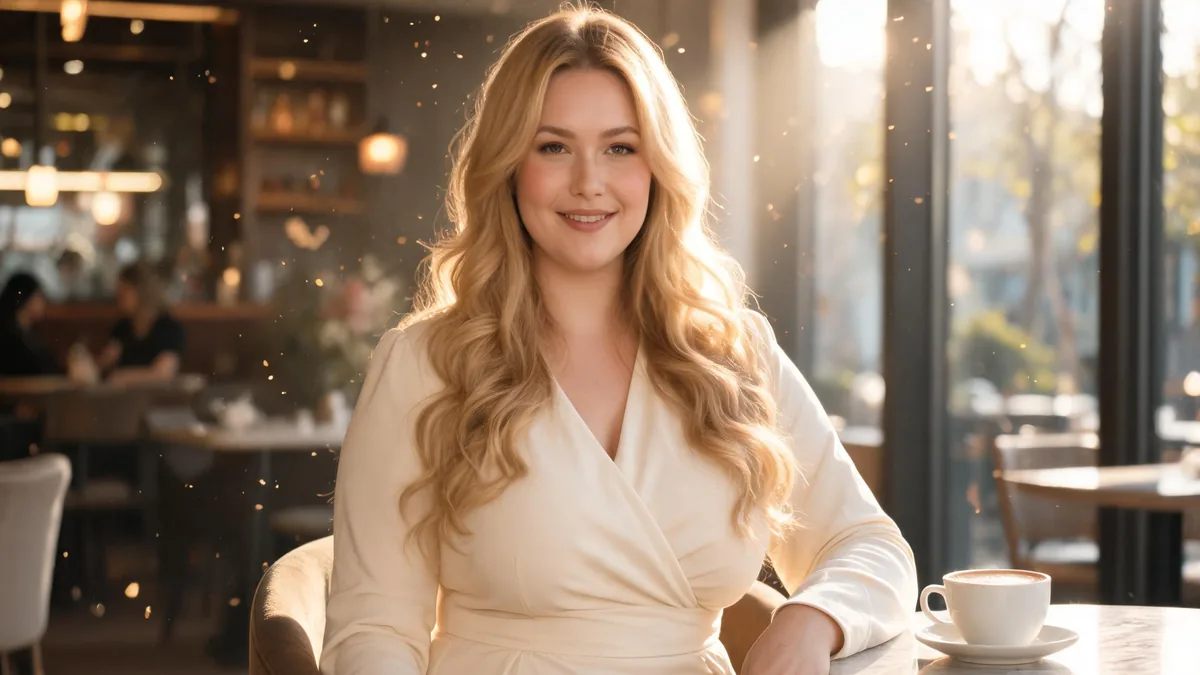
Curvy means a body with pronounced curves: usually a fuller bust and hips with a defined waist. It's a description of shape, not size. A size 0 woman can be curvy, and so can a size 22 woman. The word puts the focus on how the body is shaped, not on a number on a scale or a tag.
Key Takeaways
- Curvy is about shape: defined waist with a fuller bust and hips.
- It is not size-specific. Any clothing size can be curvy.
- It is not the same as plus-size. Plus-size is a fashion-industry size range; curvy is a silhouette.
- It became a popular, body-positive descriptor in the late 1990s and 2000s.
| Pronunciation | KUR-vee, adjective |
|---|---|
| Origin language | English, from Latin curvus ("bent, curved") |
| Literal sense | "Having curves," a body with pronounced, rounded shapes |
| First popularized | Late 1990s onward, in fashion and dating contexts |
| Category | Body type descriptor |
| Core trait | Defined waist with fuller bust and hips |
| Related types | Plus-size, BBW, Hourglass, Thick |
Etymology and Origin
The word comes from curve, which traces back to the Latin curvus, meaning "bent" or "curved." English has used "curvy" to describe shapes for a long time, but the use we're talking about here, as a kind word for a woman's body, is much more recent.
Through most of the 20th century, fashion language for fuller-shaped women was clinical or unflattering. That started to shift in the late 1990s and really took off in the 2000s, as fashion brands, magazines, and dating culture looked for a friendlier word. "Curvy" filled that gap. It put the focus on shape and confidence instead of weight. By the late 2000s, it was a common, body-positive descriptor you'd see in clothing lines, dating profiles, and casting calls.

Defining Traits
- Pronounced shape: the body has clear curves, not a straight line from shoulders to hips.
- Defined waist: the waist is visibly narrower than the bust and hips.
- Fuller bust and hips: these are the parts that give the silhouette its rounded look.
- Not size-specific: "curvy" applies to small, medium, and larger sizes alike.
- Shape over weight: the word is about proportions, not pounds.
- A confident feel: it's used as a positive, flattering word, not a clinical one.
How to Recognize a Curvy Figure
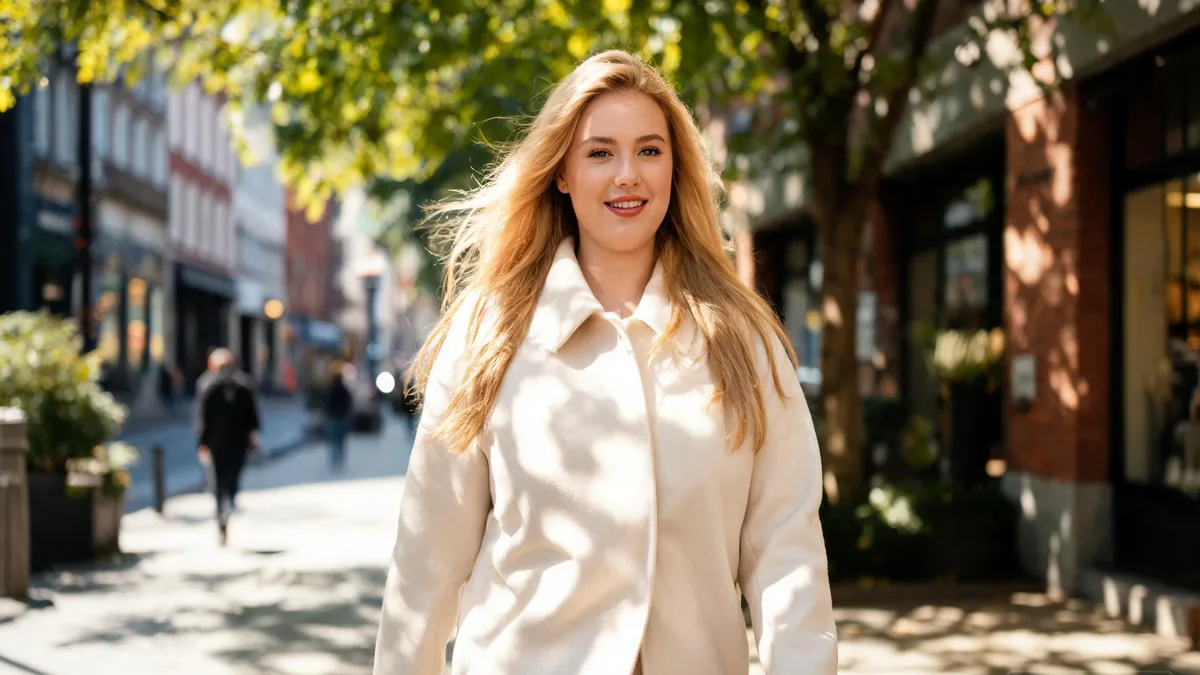
You can usually spot a curvy figure from a few quick visual cues. In photos, in real life, or in fashion, watch for:
- A waist that's clearly narrower than the bust and hips.
- Hips that round out from the waist instead of going straight down.
- A bust line that adds shape to the top of the silhouette.
- Clothes that "find a waist" naturally, without needing a belt.
- An overall S-shape or hourglass look in profile.
These cues are about shape only. A curvy figure can come in any size, any height, and any background.
How People Talk About a Curvy Figure
Language matters a lot here, because the wrong word can sound rude even when it isn't meant that way. Kind, common phrases include:
- "She has a great hourglass shape."
- "That dress really shows off her curves."
- "She's curvy in all the right places."
- "That cut is so flattering on a curvy figure."
The shared idea is celebrating shape. Body-positive media tends to keep the focus on confidence, posture, and clothes that fit well, rather than on size or weight.
How It Changed Over Time
For most of the 20th century, fashion's ideal swung between very thin (the 1960s Twiggy look, the 1990s heroin chic) and softer, more shapely figures (the 1950s hourglass, the early 2000s and 2010s). "Curvy" as a friendly, everyday word didn't really exist until the late 1990s. Once it caught on, it gave shoppers and writers a kinder way to talk about fuller-shaped bodies.
The 2010s gave the word a real push. Body-positive social media, plus-size and "curve model" lines on the runway, and lingerie campaigns like Aerie's "Real" pushed unretouched curvy bodies into the mainstream. At the same time, Kim Kardashian's huge cultural reach made the curvy silhouette a beauty norm in its own right. Today, "curvy" is a common, positive word in fashion, dating, and casual conversation, and it's used for women of every size whose bodies have that defined-waist, fuller-bust-and-hips shape.
Types of Curvy Figures
"Curvy" is a single word, but it covers a few different silhouettes. Knowing them helps with everything from picking a flattering outfit to describing the kind of look you like.
- Hourglass: a clearly defined waist with a bust and hips that are roughly the same width. This is the classic curvy shape.
- Pear: a smaller bust with fuller hips and thighs. Curves sit mainly below the waist.
- Apple: a fuller midsection with a less defined waist. The shape can still read as curvy, with the bust often a standout feature.
- Athletic curvy: a body that combines curves with muscle tone. Strong shoulders or legs paired with a defined waist and hips.
None of these is "better" than the others. They're just different ways the word "curvy" shows up in real bodies.
Famous Examples
- Marilyn Monroe: the classic 1950s curvy icon. Defined waist, soft hourglass shape.
- Sophia Loren: an enduring symbol of an elegant, confident curvy figure.
- Salma Hayek: a modern Hollywood star often pointed to as a curvy beauty standard.
- Beyoncé: her hourglass shape has shaped modern pop culture's image of curvy.
- Kim Kardashian: probably the single biggest influence on how the curvy silhouette is talked about today.
- Body-positive models: curve models like Ashley Graham and Paloma Elsesser have brought a wider range of curvy bodies into mainstream fashion.
Curvy in Fashion and Wider Media
The fashion world has done a lot to shape (and reshape) what "curvy" means. The big places you'll see the word today:
- Fashion magazines: dedicated curvy style guides and "curve" editorials are now a regular feature in mainstream magazines.
- Body-positive social media: Instagram and TikTok creators have made curvy a celebrated, normal part of beauty culture.
- Lingerie campaigns: Aerie's "Real" campaign, and others like it, helped normalize unretouched curvy bodies in advertising.
- Dating sites: "curvy" is one of the most common body-type tags on dating profiles, often picked specifically for being warm and positive.
- Kim Kardashian's influence: her look has been a huge driver of modern beauty norms around a defined waist and fuller hips.
What used to be a niche, semi-clinical word is now a mainstream description used in fashion, ads, dating, and casual conversation around the world.
Curvy vs Related Body Words
| Word | About | What it really means |
|---|---|---|
| Curvy | Shape | Defined waist with fuller bust and hips, any size |
| Plus-size | Size | A fashion-industry size range, usually US 14 and up |
| BBW | Size and feel | "Big beautiful woman," a body-positive word for fuller-figured women |
| Hourglass | Shape | A specific curvy shape with bust and hips roughly equal and a small waist |
What's the Difference Between Curvy and Plus-Size?
They overlap, but they're different words for different things. Curvy is about shape: a defined waist with a fuller bust and hips. Plus-size is about size: a fashion-industry term, usually US size 14 and up, no matter what the body shape is.
That means a size 0 woman with a clear hourglass shape can be curvy. A size 22 woman with the same hourglass shape is also curvy, and she's plus-size too. A plus-size woman with a straighter, less defined silhouette might not be called curvy at all. Most plus-size women are curvy, but not all curvy women are plus-size. Once you separate "shape" from "size," the two words stop feeling like rivals and just become two useful labels that sometimes overlap.
The Appeal (and the Nuance)
Why the word lands: "curvy" is one of the few body words that almost everyone hears as positive. It celebrates a silhouette instead of measuring it. It feels confident, warm, and feminine, without sounding clinical or harsh.
The nuance: "curvy" is a description, not a competition. It doesn't say one body shape is better than another. Slim, athletic, plus-size, and curvy bodies are all great in their own ways. The word is at its best when it's used to celebrate variety, not to rank it.
The Curvy Figure in AI Companions
As an AI companion look, a curvy partner is a body-positive choice for a warm, confident, fuller-shaped girlfriend. Defined waist, fuller bust and hips, and the kind of soft, body-positive vibe that goes with the word. With AI, you get to pick the look, personality, and voice that fit you, all in a safe, private space. If a confident, body-positive partner sounds like your thing, browse our Curvy AI girlfriend collection, or create an AI girlfriend from scratch with the exact look and personality you want.

Frequently Asked Questions
What does curvy mean?▾
Curvy describes a body with pronounced curves: a defined waist with a fuller bust and hips. It's a description of shape, not size, so it can apply to any clothing size.
Is curvy the same as plus-size?▾
No. Curvy is about shape (defined waist, fuller bust and hips). Plus-size is about size (a fashion-industry range, usually US 14 and up). The two overlap a lot, but they're not the same word.
Is curvy a polite word?▾
Yes. It's one of the most positive, friendly words used for fuller-shaped bodies. It puts the focus on shape and confidence instead of weight, and most people hear it as a compliment.
What's an hourglass figure?▾
An hourglass figure is a specific kind of curvy shape: a clearly defined waist with a bust and hips that are roughly the same width. It's the classic curvy silhouette.
Why is curvy popular?▾
It's a positive, body-positive word that celebrates shape without focusing on weight. Fashion campaigns, social media creators, and pop-culture stars like Beyoncé and Kim Kardashian have made the curvy silhouette a mainstream beauty norm.
Can a thin person be curvy?▾
Yes. Curvy is about proportions, not pounds. A slim woman with a defined waist and a fuller bust and hips is curvy too.
What's the difference between curvy and thick?▾
They overlap. 'Curvy' usually puts the focus on the hourglass-style waist-hip-bust shape. 'Thick' usually puts the focus on fuller hips, thighs, and glutes, often with a softer, less hourglass feel.
Are curvy models real?▾
Yes. 'Curve models' are a major part of modern fashion. Names like Ashley Graham and Paloma Elsesser have brought a wider range of curvy bodies into mainstream campaigns, runways, and magazines.
Meet our curvy AI girlfriends
Browse the companions on AIGirlfriends.ai who play this archetype with conviction.
Curvy AI Girlfriend →