
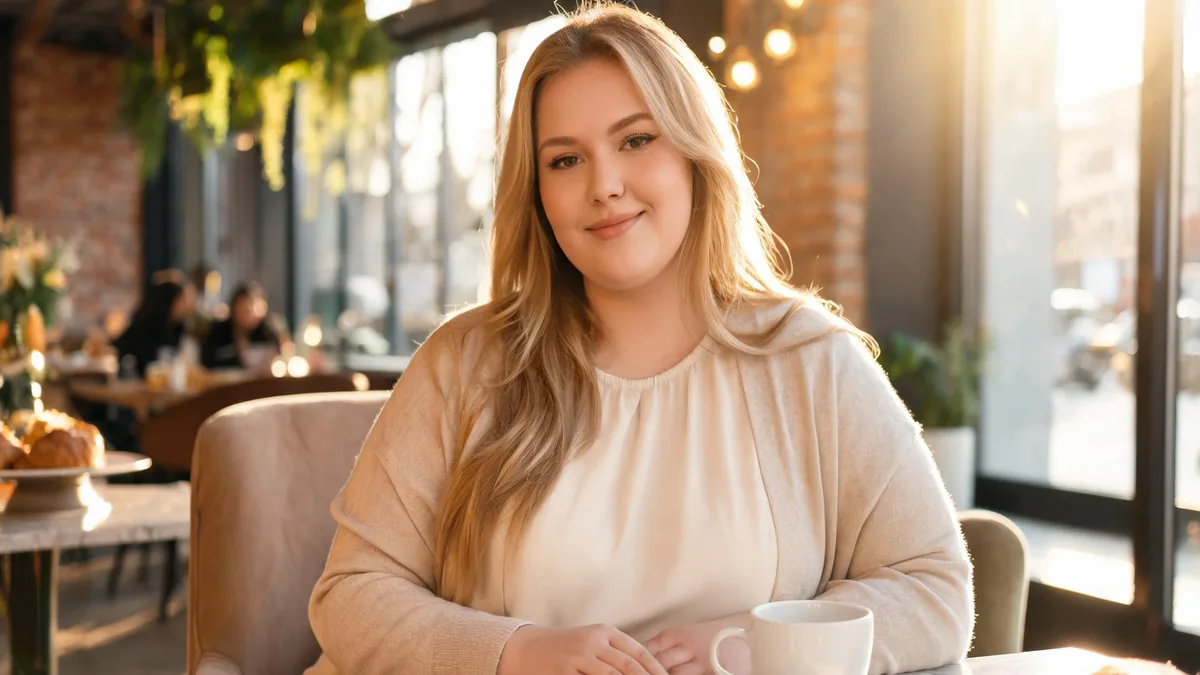
BBW stands for "Big Beautiful Woman." It's a body-positive term that celebrates larger-bodied women, putting both words to work: "big" and "beautiful." It was coined in 1979 by Carole Shaw, who launched BBW Magazine to give fuller-figured women the kind of positive representation fashion media wasn't giving them at the time. The term grew with the body-positivity movement and is now used widely in fashion, dating, and online communities.
Key Takeaways
- BBW is an acronym for "Big Beautiful Woman." It's a body-positive label that celebrates larger-bodied women.
- Carole Shaw coined the term in 1979 when she founded BBW Magazine.
- Many women self-identify as BBW. It's often a label women claim for themselves, not one put on them.
- It overlaps with "plus-size," but it's more personal. Plus-size is about the clothes; BBW is about the person.
| Pronunciation | bee-bee-double-yoo (initialism) |
|---|---|
| Stands for | Big Beautiful Woman |
| Coined by | Carole Shaw, founder of BBW Magazine |
| First popularized | 1979, mainstream from the 1990s onward |
| Category | Body-positive acronym and term |
| Core trait | Celebrates the beauty and presence of larger-bodied women |
| Related terms | Plus-size, curvy, body-positive |
Etymology and Origin
BBW is simply the acronym for Big Beautiful Woman. What makes it special is that both halves matter equally. "Big" names a body type that fashion media used to leave out. "Beautiful" pushes right back on that and says these women are beautiful, full stop.
The term was coined in 1979 by Carole Shaw, who launched BBW Magazine that same year. At the time, mainstream fashion and beauty media were almost entirely thin-focused, and there was very little positive representation of larger-bodied women anywhere on the newsstand. Shaw's magazine gave readers fashion editorials, role models, and a name to call themselves with pride. The term grew steadily through the 1980s, spread online in the 1990s and 2000s, and went mainstream alongside the body-positivity movement of the 2010s.
Defining Traits (as a Term)
- Both words matter: "big" and "beautiful." The whole point is that they belong together.
- Often self-identified: many women claim the label for themselves rather than having it assigned to them.
- Used across contexts: in fashion, dating, media, and online communities.
- Sometimes a category: dating apps and adult sites use it as a preference label.
- Tied to body positivity: grew up alongside the wider movement to expand what "beautiful" means.
- A pushback on thin-only beauty: a direct answer to the old fashion-magazine idea that beauty has one size.
How It Changed Over Time
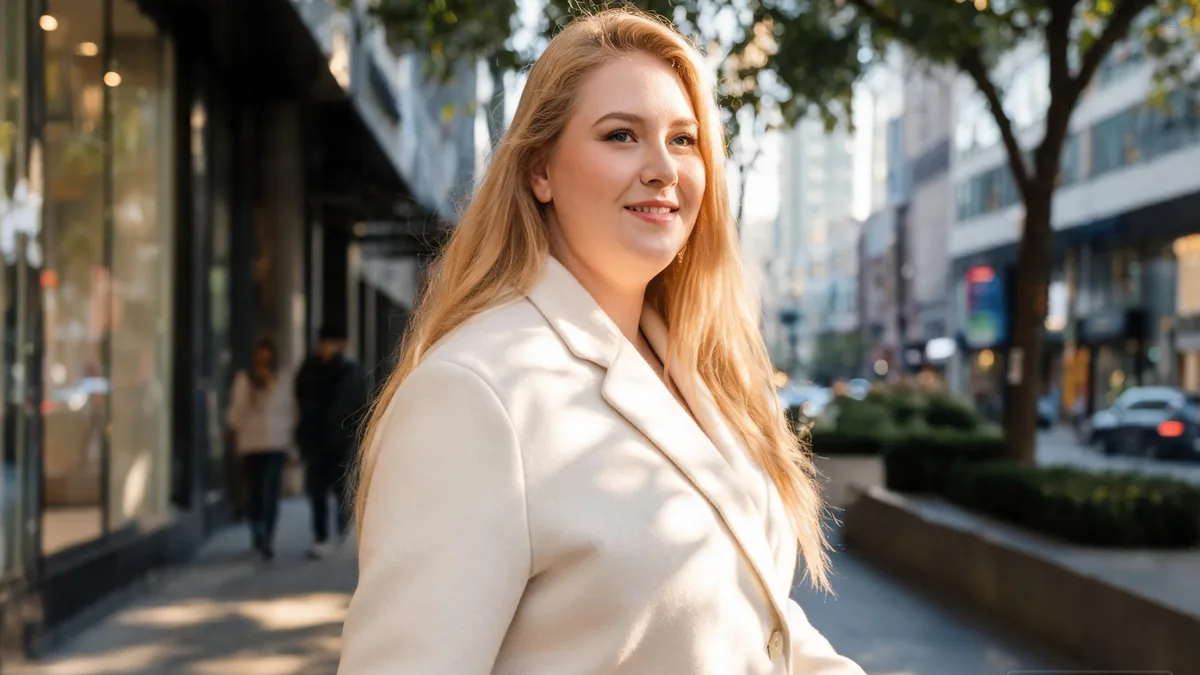
BBW started as a defiantly proud label in the late 1970s, when fashion media was especially thin-focused and larger-bodied women had very few public role models. Through the 1990s and 2000s, the term spread online, helped along by message boards, early blogs, and communities of women who wanted a name they could use with pride. In the 2010s and 2020s, body positivity went mainstream. Plus-size fashion brands grew, dating apps added body-type filters, and pop stars like Lizzo and Adele helped reshape what beauty looked like on a magazine cover. BBW became a common, widely understood term across dating, fashion, and pop culture.
Famous Examples
These are real-world figures who helped define or champion BBW culture, either by claiming the label themselves or by widening the picture of what beauty can look like.
- Carole Shaw: founded BBW Magazine in 1979 and coined the term.
- Mo'Nique: actress and longtime body-positive voice in film and TV.
- Queen Latifah: a body-positive icon since the 1990s in music, film, and fashion.
- Lizzo (born 1988): modern body-positivity superstar whose music and stage presence put fuller-figured beauty front and center.
- Adele: famously redefined beauty norms across the 2010s in pop music and on magazine covers.
- Tess Holliday and Ashley Graham: plus-size models who broke through to mainstream fashion magazines and runways.
Types of BBW
BBW gets used in a few different settings, and people often split it into a couple of useful groupings. Knowing which one you're looking at helps the term make more sense in context.
By context
- BBW in body positivity: a self-claimed label and a source of pride. The original meaning.
- BBW in dating and fashion: used by dating sites for preferences, and by plus-size fashion brands to talk to their audience.
- BBW in social media: a hashtag and a community. A way for women to find each other and share style.
- BBW in adult media: used as a category label. Best treated with respect and as a body type, not a fetish.
By body type emphasis
- Curvy BBW: hourglass shape, fuller bust and hips.
- Soft BBW: a more rounded shape. The "soft" body-positive ideal.
- Athletic BBW: a bigger build with strong muscle. Not just curve, but real strength too.
Wider Cultural Moments
BBW didn't grow in a vacuum. A handful of bigger cultural moments helped take it from niche label to everyday term.
- BBW Magazine (1979 to 1990s): the original outlet, and the source of the term.
- Dove's "Real Beauty" campaign (2004): a mainstream body-positive moment that shifted what big brands felt comfortable showing.
- Lizzo and Adele in pop music: a cultural shift toward fuller-figured women being celebrated, not sidelined.
- Plus-size fashion brands going mainstream: Universal Standard, Torrid, and others growing the category at scale.
- Modern dating apps: body-type filters and preferences making it easier for people to find partners they actually fancy.
BBW vs Related Terms
| Term | Source | Use |
|---|---|---|
| BBW | 1979, Carole Shaw / BBW Magazine | Acronym, often self-identified, celebrates larger women |
| Plus-size | Fashion industry term | Used by fashion brands, usually size 14 US and up |
| Curvy | English adjective | A looser term, includes shape with curves at any size |
| SSBBW | Subset of BBW | "Super-sized" version, more specific |
What's the Difference Between BBW and Plus-Size?
They overlap, but they're not identical. Plus-size is the fashion industry's word. It usually means clothing in sizes 14 US and up, and it talks about what fits, not who's wearing it. BBW is more personal and identity-based. It's a woman saying, "I am a big beautiful woman," not just naming her clothing size. Plus-size is about the clothes. BBW is about the person.
That's also why you'll often see the two terms together. A brand might call itself plus-size, while a customer might call herself BBW. Both can be true at once. They're just doing different jobs.
BBW in AI Companions
As an AI companion type, a BBW partner is a warm, confident, fuller-figured woman with a body-positive personality to match. She's comfortable in her own skin, easy to talk to, and built to celebrate the kind of beauty that mainstream media spent a long time leaving out. With AI, you get to spend time with the kind of partner you actually fancy, in a tasteful, private space that you control. If a confident, fuller-figured companion sounds like your thing, browse our BBW AI girlfriend collection, or create an AI girlfriend from scratch with the look, voice, and personality you have in mind.
Frequently Asked Questions
What does BBW stand for?▾
BBW stands for 'Big Beautiful Woman.' It's a body-positive term for larger-bodied women, and it puts both words to work equally: 'big' and 'beautiful.'
Where does the term BBW come from?▾
It was coined in 1979 by Carole Shaw, who launched BBW Magazine that same year. The magazine focused on positive representation of larger-bodied women at a time when fashion media largely excluded them.
Is BBW the same as plus-size?▾
They overlap, but they're not identical. Plus-size is a fashion industry term about clothing, usually size 14 US and up. BBW is more personal and identity-based. Plus-size is about the clothes; BBW is about the person.
Is BBW a positive term?▾
Yes. It was built to be positive from day one. The 'beautiful' in the name is the whole point. Many women self-identify as BBW with pride.
Who coined the term BBW?▾
Carole Shaw coined it in 1979 when she founded BBW Magazine. The magazine helped popularize the term and shape the early body-positive culture around it.
What does SSBBW mean?▾
SSBBW stands for 'Super-Sized Big Beautiful Woman.' It's a more specific subset of BBW used to describe larger body sizes within the same body-positive idea.
Why is BBW popular as a dating preference?▾
Lots of people genuinely prefer fuller-figured partners, and BBW gives that preference a clear name. Dating apps and sites use it as a filter so people can find partners they actually fancy.
Is BBW an offensive term?▾
No. It was created as a body-positive label and is widely used that way today, including by women who self-identify with it. Like any term, the tone depends on who's using it and how, but the word itself is meant as a celebration.
Meet our BBW AI girlfriends
Browse the companions on AIGirlfriends.ai who play this archetype with conviction.
BBW AI Girlfriend →