
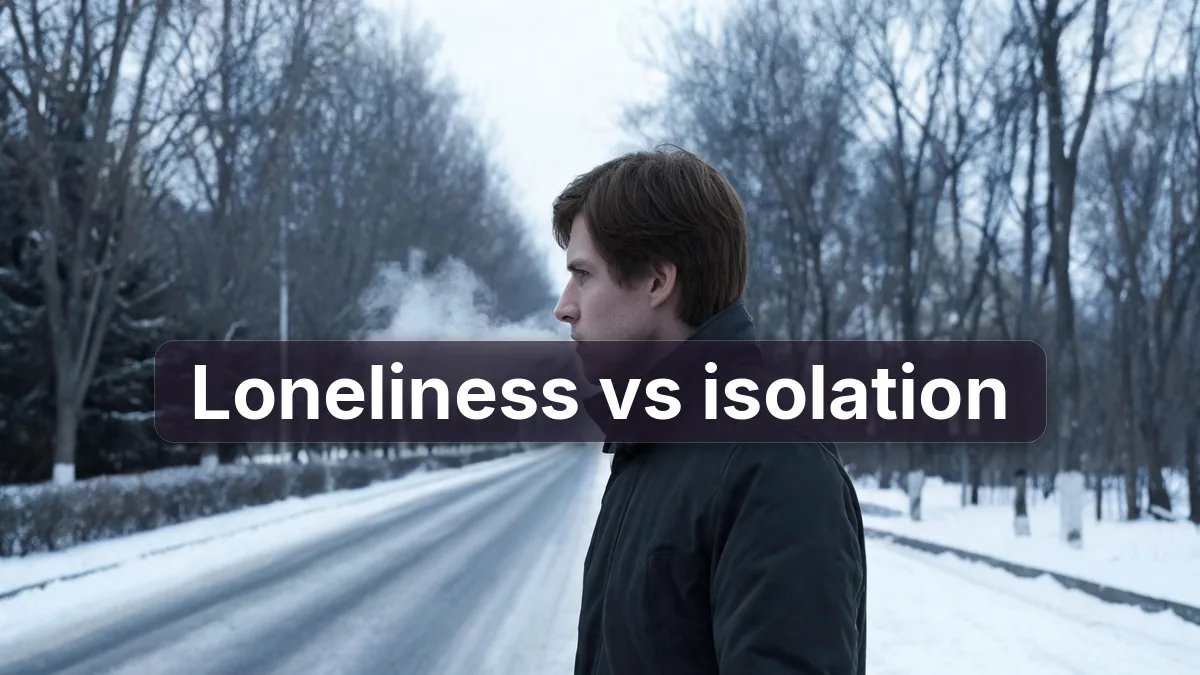
The distinction between loneliness and social isolation is one of the most clinically significant and most frequently confused in mental health discourse. Getting it right matters because the interventions are different. Loneliness is subjective, it is the felt discrepancy between desired and actual social connection. Social isolation is objective, it is the measurable absence of social contact. You can be isolated without being lonely (the satisfied hermit), and you can be profoundly lonely in a room full of people. Treating them as the same leads to solutions that address one but not the other.
Feeling alone doesn’t always mean you’re physically by yourself. Sometimes, you can be surrounded by people, at a party, in a busy office, or even with friends, and still feel disconnected. This is where the terms loneliness and isolation often get confused.
While they’re related, they’re not the same. Loneliness is an emotional state, while isolation is more about the physical separation from others. Understanding this difference can help you recognize what you’re experiencing and take the right steps to feel more supported and connected.
Key Takeaways
- Loneliness and isolation are different, loneliness is an emotional state, while isolation is the physical separation from others.
- Quality of relationships matters more than quantity, you can feel lonely in a crowd but fulfilled with just a few deep connections.
- Both affect health, loneliness raises risks of depression and anxiety, while isolation can harm sleep, immunity, and heart health.
- Causes are varied, from life changes and technology use to mental health struggles and cultural barriers.
- Coping is possible, building meaningful connections, practicing self-care, and seeking help can ease loneliness and isolation.
Understanding Loneliness vs Isolation
Let’s start by clarifying what loneliness and isolation actually mean, and why it’s important to tell them apart.
Clear definition of both terms
- Loneliness: The feeling of being disconnected, unseen, or lacking meaningful relationships, even if you’re not physically alone.
- Isolation: The physical state of being separated from others, either by choice (solitude) or circumstance (such as illness, distance, or lack of opportunities).
Why people often confuse them and why the distinction matters
It’s easy to mix up loneliness and isolation because both involve being apart from others. The key difference is that loneliness is about how you feel, while isolation is about your physical environment. Knowing which one you’re experiencing matters because the way you cope with each can be very different.
What Is Loneliness?
John Cacioppo, whose decades of loneliness research at the University of Chicago remains the field's most cited body of work, defined loneliness as perceived social isolation, the subjective sense that one is more alone than one wants to be. Crucially, he found that loneliness has a self-reinforcing quality: it activates a hypervigilance to social threat that makes isolated people more likely to interpret ambiguous social signals negatively, which in turn makes connection harder to form. The trap is neurologically built in.

Loneliness is a deeply personal emotional experience that happens when our social needs are not being met.
After starting a new job, I was constantly in meetings and surrounded by colleagues, yet I felt strangely invisible. It wasn’t the lack of people around me that created the loneliness, but the absence of meaningful connection. That experience showed me that loneliness is more about emotional closeness than physical presence.
Definition of Loneliness
Loneliness is the emotional gap between the connections you desire and the ones you actually have.
How Loneliness Feels (emotional and psychological signs)
Here are some common signs that you may be experiencing loneliness in your daily life.
- Feeling sad or empty even when around others
- Craving a deeper, more meaningful connection
- Losing motivation or interest in activities you used to enjoy
- Feeling misunderstood or like you don’t belong
Short-Term vs Chronic Loneliness
It’s helpful to know whether loneliness is temporary or persistent, because the impact and coping strategies can differ.
What Is Social Isolation?

Isolation refers to being physically separated from others, but it doesn’t always come with feelings of loneliness.
Definition of Isolation
Isolation is the objective lack of social interaction, which may be chosen or forced by external circumstances.
Voluntary Isolation vs Involuntary Isolation
There’s a big difference between choosing time alone and being cut off from others against your will.
- Voluntary isolation: Intentional alone time for rest, reflection, or creativity
- Involuntary isolation: Being cut off by illness, distance, or social barriers
Physical vs Emotional Isolation
Isolation can be about the body or the heart, and each affects well-being differently.
- Physical isolation: Limited or no face-to-face contact with people
- Emotional isolation: Feeling lonely even in the company of others
Key Differences Between Loneliness and Isolation
The clinical difference is measurability and subjectivity. Isolation can be observed from outside: count the contacts, measure the interactions, document the absence of connection. Loneliness can only be self-reported, the same number of social contacts feels adequate to one person and devastatingly insufficient to another. This is why population surveys consistently find that loneliness rates do not track neatly with living-alone rates or other objective measures of social isolation.
Although they overlap, loneliness and isolation differ in important ways that affect how we experience and cope with them.
Internal vs External Experience
Loneliness is felt inside, while isolation describes being physically apart from others.
Quality vs Quantity of Connections
The number of people around you matters less than the quality of the relationships you share.
Impact on Mental & Physical Health
Both states affect your well-being, but in slightly different ways.
- Loneliness: Can increase risks of depression, anxiety, and low self-esteem
- Isolation: Can harm sleep, immunity, and cardiovascular health
The Overlap Between Loneliness and Isolation

Sometimes, loneliness and isolation occur together, but other times they can feel very different.
When Isolation Leads to Loneliness
Prolonged physical distance from others can eventually lead to deep feelings of loneliness.
When Being Alone Doesn’t Mean Feeling Lonely
Not all solitude is harmful, many people find peace and creativity in spending time alone.
Examples from Everyday Life
Loneliness and isolation can show up in everyday situations that many people will recognize.
For example, you might feel lonely at a crowded party when no one seems to understand or connect with you, making you feel invisible despite being surrounded by people.
On the other hand, you may enjoy a quiet evening alone, reading or painting, which can feel peaceful rather than lonely, highlighting the difference between solitude and isolation.
Another common example is being homebound due to illness, which can lead to feelings of isolation because you are physically cut off from social interactions and support.
Causes of Loneliness and Isolation
There are many reasons why someone might feel lonely or isolated, often involving both personal and social factors. Understanding the common causes of loneliness can help us address the root issues more effectively.
Life Transitions (moving, breakups, retirement)
Major life changes can disrupt social networks and create feelings of distance. When people move to new places, end relationships, or retire, they often lose daily contact with familiar friends and routines, making it harder to stay connected.
Technology & Social Media
Digital connections can’t always replace the depth of face-to-face interactions. While technology helps people stay in touch, it can sometimes increase feelings of loneliness if those connections feel shallow or if online interactions replace meaningful, real-life relationships.
Mental Health Factors (anxiety, depression, low self-esteem)
Emotional struggles can make it harder to reach out, deepening both loneliness and isolation. When someone feels anxious or depressed, they might avoid social situations, which can create a cycle where loneliness worsens these feelings and makes it even harder to connect.
Societal & Cultural Influences
Cultural norms and systemic barriers can leave people excluded or disconnected. Factors like discrimination, language barriers, or social expectations may prevent some people from fully participating in community life, increasing their sense of isolation.
Effects on Mental and Physical Health

Both loneliness and isolation have real consequences for our emotional well-being and physical health.
Emotional Impact (stress, sadness, lack of belonging)
- Loneliness can increase feelings of stress and anxiety.
- It often causes sadness and a deep sense of emptiness.
- People may feel like they don’t belong or aren’t understood by others.
Physical Health Risks (sleep, immunity, heart health)
- Being isolated can make it harder to get good sleep.
- It can weaken your immune system, making you more likely to get sick.
- Loneliness is linked to higher risks of heart problems and high blood pressure.
Long-Term Consequences of Chronic Loneliness/Isolation
- Long-term loneliness can lead to depression and worsen existing mental health issues.
- It may cause problems with memory and thinking skills as the brain ages.
- Chronic isolation can increase the risk of early death due to its effects on overall health.
Statistics on Loneliness and Isolation
Research highlights just how serious the health risks are when loneliness and isolation persist.
- A meta-analysis found that loneliness increases the risk of early death by 26%, while social isolation raises it by 29% (Holt-Lunstad et al., 2015)
- The World Health Organization (2023) has identified loneliness as a global public health concern, with an estimated 1 in 4 older adults experiencing social isolation.
- Studies also show that chronic loneliness is as harmful to health as smoking 15 cigarettes a day.
Coping with Loneliness and Isolation

The good news is that there are healthy ways to cope with and even prevent loneliness and isolation.
Building Meaningful Connections
This means focusing on strong, supportive relationships that help reduce feelings of loneliness. Reconnecting with friends and family can restore a sense of belonging.
Joining clubs, classes, or online communities offers the chance to meet new people with shared interests. Volunteering is another way to connect with others while contributing to your community.
Balancing Alone Time with Social Interaction
Spending time with others helps you feel connected, but enjoying personal solitude is necessary for rest and self-reflection. Finding the right balance supports both your emotional well-being and social health.
Practical Self-Care Strategies
Self-care strategies include simple daily habits that help you feel more connected and cared for. Practicing mindfulness or meditation can calm your mind and improve awareness. Exercising regularly boosts mood and energy.
Spending time outdoors refreshes your senses and reduces stress. Exploring creative hobbies offers a positive outlet and can lead to new social opportunities.
There are many effective ways to cope with loneliness, including approaches detailed in this guide on dealing with loneliness.
Seeking Professional Help
If loneliness or isolation becomes overwhelming, reaching out for professional support can make a big difference.
Could AI Companionship Help?
For some people, exploring AI companionship offers a new form of social interaction and emotional support.
Learn more about AI girlfriend options and how they can provide connection through technology. If you’re curious about this innovative approach, find out more about it in this guide, What is an AI girlfriend?
How to Support Someone Who Feels Lonely or Isolated
Supporting someone who feels alone doesn’t require big gestures, small acts of kindness matter.
Listening Without Judgment
Being a compassionate listener can help them feel heard and understood.
Encouraging Social Engagement
Gently invite them to connect with others or join activities without pressuring them.
Connecting Them to Resources
Sometimes, the best way to help is by pointing them toward community groups or professional support.
When Being Alone Is Healthy: The Value of Solitude

Not all alone time is negative, in fact, solitude can be deeply nourishing when embraced intentionally.
Solitude for Creativity and Self-Reflection
Quiet moments can spark creativity and help you process your thoughts more clearly.
How to Enjoy Time Alone Without Feeling Lonely
With the right mindset, solitude can be fulfilling, try hobbies, journaling, or mindful breaks.
Finding Balance: Moving Beyond Loneliness and Isolation
Loneliness and isolation affect many, but they are not the same. One is an emotional experience, the other a physical state. Knowing the difference guides better ways to heal and connect.
Building meaningful relationships, balancing social time with solitude, and trying new supports like AI companionship can restore a sense of belonging. Small steps toward connection have the power to transform your life. For those looking for a safe space to connect and feel less alone, an AI girlfriend can offer compassionate conversation anytime.
Key Questions on Loneliness vs Isolation
Which is worse, loneliness or isolation?
Both carry significant health risks, but chronic loneliness has been studied more extensively as a mortality risk factor. Holt-Lunstad's 2015 meta-analysis found that social isolation, loneliness, and living alone all increased the odds of premature mortality by roughly 26 to 32 percent, comparable effects to each other, and all comparable to obesity. The question of which is worse is less useful than recognizing that both require attention: isolation creates the conditions for loneliness, and loneliness creates the psychological barriers that make isolation harder to escape.
Can you be socially isolated but not lonely?
Yes, and this is not rare. Research on intentional solitude finds that people with introverted personality structures, strong intrapersonal resources, and chosen rather than imposed isolation frequently report high life satisfaction and low loneliness despite objectively minimal social contact. The key variable is agency: chosen isolation experienced as restorative is categorically different from imposed isolation experienced as loss. The same external circumstances produce very different internal states depending on whether the person feels in control of them.
What is the loneliness epidemic?
The loneliness epidemic refers to the decades-long trend of declining social connection in Western societies: more people living alone, smaller social networks, less frequent contact with neighbors and community members, and rising rates of self-reported loneliness across all age groups. The US Surgeon General designated it a public health crisis in 2023. The drivers are structural, urbanization, digital substitution of in-person contact, workplace cultures that undermine social bonds, rather than individual failures.
Is social isolation the same as being introverted?
No. Introversion is a personality trait describing where you gain versus lose energy, introverts recharge through solitude and find sustained social interaction draining. Social isolation is a circumstance, not a trait. Introverts can and do experience pathological loneliness; they simply prefer to manage their social contact differently than extroverts. Confusing introversion with isolation leads to underdiagnosing loneliness in people who appear self-sufficient but are experiencing genuine disconnection.
How does social isolation affect the brain?
Prolonged social isolation produces measurable neurological changes. Animal studies and human neuroimaging data show reduced activity in the prefrontal cortex (involved in emotional regulation), increased amygdala reactivity (the threat-detection system), and elevated baseline cortisol, the stress hormone. Long-term isolation is also associated with accelerated cognitive decline in older adults, independent of other health variables. The brain is wired for social contact as a baseline requirement, not a luxury.
Disclaimer
This article is for informational purposes only and should not be considered a substitute for professional medical advice. If loneliness or isolation is affecting your mental or physical health, please consult a qualified healthcare provider for guidance and support.