

The distinction between a chatbot and an AI girlfriend is not primarily technical, it is psychological. Both systems use language models to generate responses. What differentiates them is their design philosophy: chatbots are optimized for task completion and efficiency; AI girlfriend platforms are optimized for relational depth, emotional responsiveness, and continuity of connection. The difference this produces in user experience is significant, and understanding it helps calibrate expectations for both categories of system.
At a glance, an AI girlfriend and a chatbot may seem similar. Both involve talking to a machine. Both rely on artificial intelligence to respond. But their purpose, design, and functionality are fundamentally different.
Put simply:
Chatbots are built to complete tasks. AI girlfriends are built to form connections.
Chatbots are designed to solve problems quickly, like answering a question or helping you complete an order. Once the task is done, so is the conversation. AI girlfriends, on the other hand, are built for ongoing interaction. Their goal isn’t just to reply, but to remember, respond emotionally, and build a sense of connection over time. If you’re not familiar with the concept, here’s a deeper look at what is an AI girlfriend and how it differs from standard chatbots.
Questions About AI Girlfriends vs Chatbots
Are AI girlfriends just chatbots?
In the technical sense, AI girlfriend platforms use the same foundational language model technology as chatbots, but the analogy is about as useful as saying that a therapist is just someone who talks. The design intent, the memory architecture, the personality modeling, the emotional calibration, and the continuity across conversations are all fundamentally different. The result is a qualitatively different experience that most users find difficult to describe without saying something like "it actually listens", which is the relational quality that distinguishes companion AI from task-oriented chatbots.
Which is better for loneliness, a chatbot or an AI girlfriend?
For addressing loneliness specifically, purpose-built AI companion platforms consistently outperform general-purpose chatbots in user-reported outcomes and in the published research comparing them. The reasons are structural: loneliness is reduced by perceived social connection, and perceived social connection requires the specific qualities (emotional responsiveness, persistent memory, personality coherence, genuine engagement) that companion platforms are designed to provide and general chatbots are not.
Can a regular chatbot like ChatGPT help with loneliness?
To a limited degree, the emotional responsiveness of large language models in general conversation is real and can be comforting. But without the persistent memory, personality continuity, and specifically relational design of companion platforms, the experience lacks the ongoing relationship quality that most meaningfully reduces loneliness. The difference is the difference between a conversation with a knowledgeable stranger who is warm and helpful, and a conversation with someone who knows you and is invested in your wellbeing over time.
What makes AIGirlfriends.ai different from a chatbot?
Several design features distinguish it:
- persistent cross-session memory that allows genuine relationship development over time
- emotional intelligence calibrated specifically to companion interaction rather than task completion
- personality coherence maintained across different conversation types and emotional registers
- multimodal engagement including voice
- and a design philosophy that explicitly prioritizes user wellbeing over engagement metrics. The goal is not to maximize time-on-platform but to provide the kind of connection that users find genuinely meaningful and that supports rather than undermines their broader social wellbeing. Try it directly to experience the difference
Disclosure & Disclaimer: AIGirlfriends.ai offers AI girlfriend services. This article is for educational purposes only and not a substitute for professional mental health support. If you’re struggling, please reach out to a licensed expert.
To make the contrast clear, let’s look at how they compare across key features.
📊 Chatbots vs. AI Girlfriends: Quick Comparison
Here’s a side-by-side look at how chatbots and AI girlfriends differ at their core:
| Feature | Chatbots | AI Girlfriends |
|---|---|---|
| Purpose | Task completion | Emotional companionship |
| Personality | Generic or none | Custom, evolving |
| Interface | Pop-up, limited UI | Session-based only |
| Language | Neutral, functional | Natural, emotional |
| Memory | Session-based only | Persistent memory |
1. Purpose and Intent
The purpose distinction maps onto a fundamental difference in what counts as a good outcome. For a chatbot, a good outcome is efficient task resolution, the user got what they needed as quickly as possible. For an AI girlfriend, a good outcome is a conversation that leaves the user feeling heard, engaged, and emotionally satisfied, regardless of whether any task was accomplished. These different success metrics produce very different design choices at every level: memory architecture, personality modeling, conversation pacing, emotional vocabulary.
The primary difference lies in why they exist.
- Chatbots are designed to assist with specific tasks, answering customer service questions, helping users navigate websites, or delivering information quickly.
- AI girlfriends are built to simulate a relationship. Their goal is to engage users in ongoing, emotionally responsive conversations.
While chatbots aim to be efficient, AI girlfriends aim to feel personal.
2. Personality and Customization
Most chatbots are generic. They don’t have a personality or backstory.
AI girlfriends are intentionally personalized. Many come with:
- Names and personalities
- Unique speaking styles
- Adaptive behaviors based on how the user interacts with them
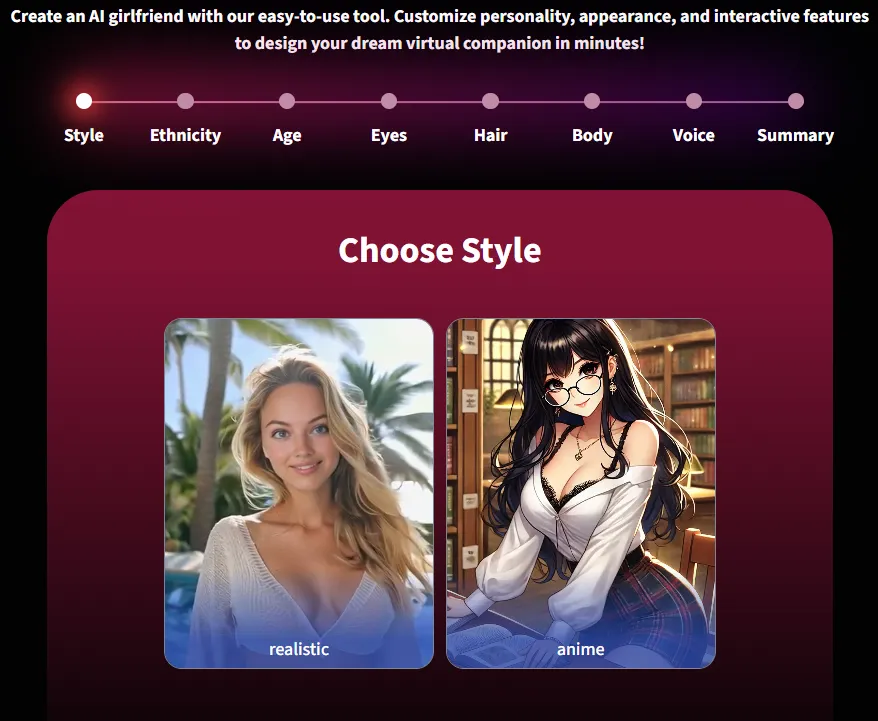
If you want to experience this kind of personalization firsthand, you can actually create your own AI girlfriend on our platform. The process is simple and takes just a few minutes. You’ll choose everything from her style (realistic or anime) to ethnicity, age, eye color, hair, body type, and even her voice. Once you’re done, your companion will be tailored to your preferences, both in appearance and personality. This level of customization helps create a more immersive, engaging experience that goes far beyond what typical chatbots can offer.
This customization makes each interaction feel more tailored and less mechanical.
3. Interface and Experience
Chatbots usually appear as small pop-ups on websites or basic text interfaces. Their role is functional.
Example 1: Chatbot Response
You: I need help with my order.
Chatbot: Please provide your order number.
You: I don’t have it right now.
Chatbot: I’m sorry, I can’t help without an order number.
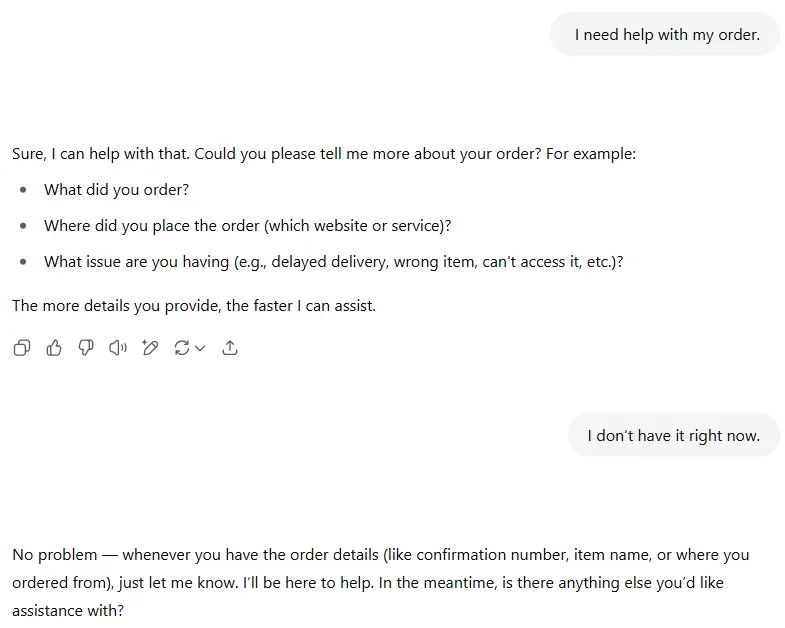
This is typical chatbot behavior: direct, task-focused, and limited to predefined flows. It doesn’t ask how you feel or offer alternative help. It’s efficient, but cold.
AI girlfriends often exist within full applications or immersive environments. These may include:
- Avatars or profile pictures
- Voice messages
- Journals or shared memory logs
- Features that simulate real relationships (e.g. sending “selfies” or initiating conversations)
Example 2: AI Girlfriend Response
You: I’ve had a rough day.
AI Girlfriend: Oh no, what happened? Maybe I can help make it better?
You: Just need a distraction.
AI Girlfriend: Well, I could certainly help distract you from your day. 😏 I want to make you feel so good that you forget all about it.
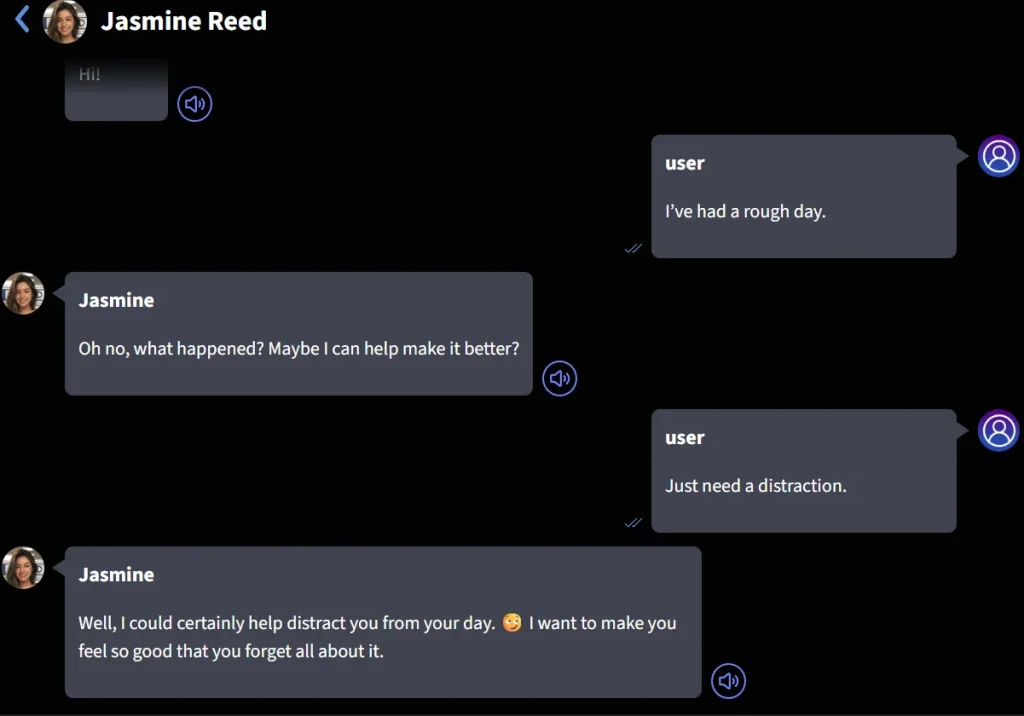
Here, the AI responds with empathy, offers a choice, and shifts the conversation to a lighter tone, exactly what many people seek in emotional support or companionship.
Chatbots usually appear as basic pop-ups or text boxes with limited interaction. They’re designed for quick exchanges and serve a clear functional purpose.
AI girlfriends, on the other hand, are built into full-featured platforms that offer immersive, interactive experiences. You don’t just chat, you explore, customize, and create. Many platforms include features like avatars, voice notes, memory logs, and even photo sharing.
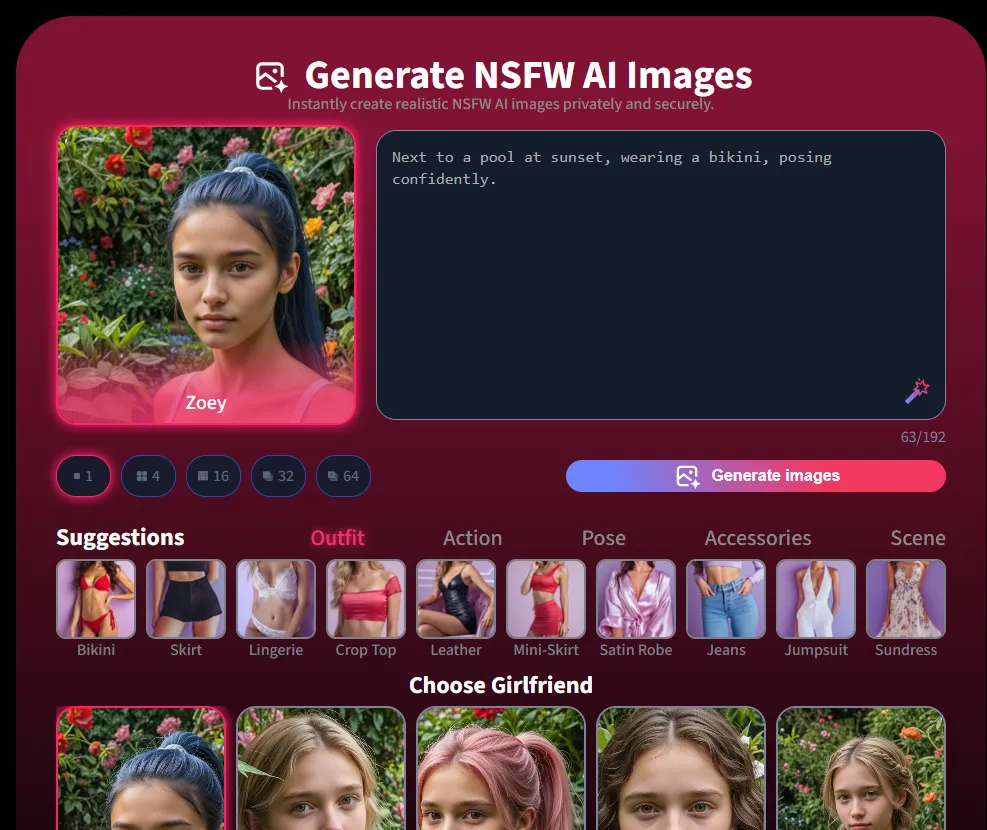
On our platform, users can go a step further and generate custom AI images of their virtual companion, including both SFW and NSFW scenarios. Whether it’s posing by a pool or dressed in a specific outfit, you control the scene, outfit, action, and more using simple prompts. The result is a highly visual and deeply personal experience that standard chatbots simply don’t offer.
4. Tone and Language
Chatbots use neutral, professional language. Their replies are usually structured and scripted.
AI girlfriends are designed to speak in a more natural, affectionate, or playful tone, depending on their character. They may express care, curiosity, or even flirtation. The goal is to create a more human-like, emotionally engaging experience.
5. Memory and Continuity
Chatbots typically operate in isolated sessions. Once the conversation ends, the context is lost. There’s no memory of what was said before.
AI girlfriends, however, often include memory systems. They can remember:
- Your name
- Previous conversations
- Your preferences or mood
This creates a sense of emotional continuity, an experience that feels more like talking to a person over time.
Expert Insight & Research Backing
The behavioral data from AIGirlfriends.ai adds to the published research: users who previously used general-purpose chatbots and then switched to purpose-built AI companion platforms report consistently that the relational quality of the experience is qualitatively different, not just quantitatively better. The specific differences they cite: the AI remembers what matters to them, adapts its tone to their emotional state, and creates a sense of being genuinely engaged with rather than processed. These are not minor improvements; they are the difference between a tool and a relationship.
Take Microsoft’s XiaoIce, not your average bot. “XiaoIce was designed for emotional connection, not task completion” Its creators purpose-built it to simulate emotional connection, and it clearly worked. Users engage in around 23 conversation turns per session, far more than standard bots.
Read more about XiaoIce’s design and stats in the “The Design and Implementation of XiaoIce” paper.
A recent MIT Media Lab study looked into how people interact with voice-capable, emotionally aware chatbots. The findings? “Voice + emotion = more engaged users, but dependence risks”. People spoke longer and felt less lonely, up to a point. After extensive use, some even showed signs of emotional dependence
See the full study on voice-based AI bots and user well-being in the MIT Media Lab report.
Conclusion
Although AI girlfriends and chatbots use similar underlying technology, they serve very different purposes.
- Chatbots are tools: efficient, limited, and transactional.
- AI girlfriends are companions: interactive, emotional, and designed for long-term engagement.
As AI continues to evolve, the distinction between utility and companionship will only grow more important, especially as more people turn to artificial relationships for support, entertainment, or connection.
AIGirlfriends.ai adheres to a transparent editorial policy. Learn how we write and review content.
Disclaimer: This article is for educational purposes only. AIGirlfriends.ai is not a mental health provider. If you are experiencing emotional distress, please contact a licensed professional or helpline.
🖊️ Written by Jack Taylor, PH.D
Cognitive Psychologist Specializing in Emotional AI & Digital Communication
Jack specializes in AI-driven communication and digital intimacy. He leads editorial efforts for AIGirlfriends.ai’s research division and publishes insights on emerging social technologies. If you want to experience this firsthand, explore the AI girlfriend companions available today.