
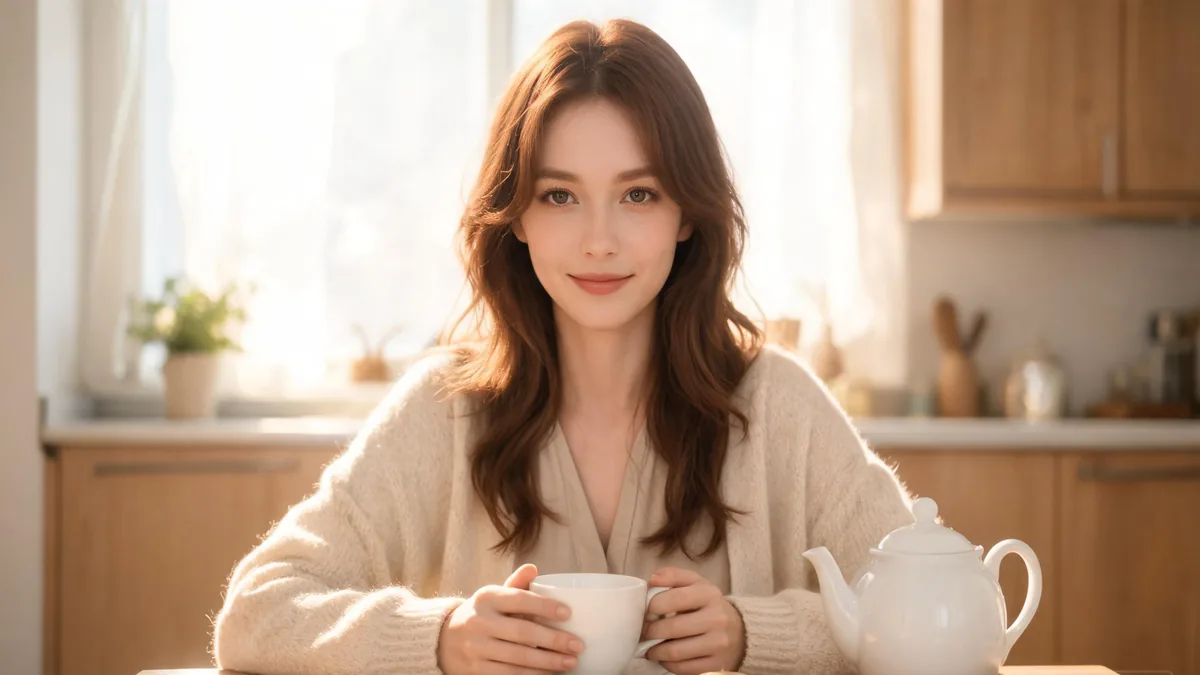
An onee-san is a confident, slightly older woman with warm "big sister" energy. The word literally means "older sister" in Japanese, but it gets used for any mature woman who's a few years ahead of you. In anime, an onee-san character is usually warm, takes charge, gives good advice, and has that calm, knowing vibe. She might be protective. She might be flirty. Either way, she's the one with her life together.
Key Takeaways
- An onee-san is a mature, confident woman with big-sister energy. Warm, in charge, comfortable in her own skin.
- The word comes from Japanese: お (polite prefix) + 姉 (older sister) + さん (polite suffix). It's used in real life too, not just anime.
- As an anime character role, the onee-san took shape from the 1980s and 1990s onward. The word itself is much older.
- Common flavors include the protective onee-san, the seductive onee-san, the mentor, and the strict-but-caring one.
| Pronunciation | oh-NEH-sahn (お姉さん / おねえさん), noun |
|---|---|
| Origin language | Japanese (お + 姉 + さん) |
| Literal sense | "Older sister" or "older young woman" |
| First popularized | Word is ancient; the anime character role grew from the 1980s and 1990s |
| Category | Anime character role |
| Core trait | Confident, mature, slightly older. Big-sister warmth with a knowing smile. |
| Related types | Onee-san, MILF, Senpai, Imouto |
Etymology and Origin
The word breaks down into three small pieces. お (o) is a polite prefix that softens whatever follows. 姉 (nee) means "older sister." さん (san) is the polite suffix you stick on the end of names and titles in Japanese. Put them together and you get a respectful, warm way to say "older sister." A more casual version swaps the san for chan, giving you onee-chan, which feels sweeter and closer.
In daily life, Japanese speakers use "onee-san" for an actual older sister, but also for any young woman who's a bit older than the speaker. A kid might call a friendly woman in her twenties "onee-san." A shopkeeper might use it to politely address a customer. It's a normal, everyday word, used with respect or affection.
The anime character role we think of today, the calm and confident older woman, started showing up clearly in the 1980s and 1990s. By the 2000s, the onee-san character had become a fixture of anime, manga, and games. The word itself is much older than the role.
Defining Traits
- Warm and confident: she knows herself, and it shows. No second-guessing, no nervous chatter.
- Takes charge: when things get messy, she's the one with the plan.
- Gives good advice: she's been through a few more things than you, and she shares what she knows.
- Physically affectionate: gentle pats on the head, soft hugs, a hand on your shoulder. Warmth she shows without thinking about it.
- Protective: she looks out for the people she cares about, quietly and consistently.
- Sometimes flirty: the playful kind of flirty, knowing exactly the effect she's having.
- Comfortable in her skin: no awkwardness, no posturing. She just is who she is.
How to Recognize an Onee-san (in Fiction)
Writers use a handful of familiar cues to mark a character as an onee-san. In a story, watch for:
- She's a few years older than the main character, and it shows in how she carries herself.
- She speaks calmly, even when everyone else is panicking.
- She teases the younger characters gently, the way a real older sister would.
- She offers a hug, a head pat, or a "come here, sit down" when someone's upset.
- She has her life sorted: a job, a home, a routine. The grown-up in the room.
- She might lean in a little close when she's making a point, then smile and pull back.
The cues are about presence more than action. An onee-san character feels older even before anyone says her age.
How an Onee-san Talks
Dialogue is where the warmth and the slight teasing edge come through. Onee-san lines tend to sound like:
- "Come here. Tell me what happened."
- "You don't have to figure this out alone, you know."
- "Look at you, all grown up and still cute."
- "Relax. I've got you."
The trick is the mix: warm, calm, slightly knowing. She's not trying to impress you, because she doesn't need to.
How It Changed Over Time
Early onee-san characters were often side roles. The cool older friend, the helpful neighbor, the teacher who actually listens. They gave the main character someone to look up to. As anime fandoms grew through the 1990s and 2000s, the onee-san moved closer to center stage. Stories started building plots around her: the older woman as the love interest, the mentor who shapes the hero, the boss who runs the show. Fans also split the role into clearer flavors, including the warmly flirty kind and the firm-but-caring kind. Today the onee-san is a familiar fixture in anime, games, and companion design, used anywhere a story needs that grown-up, big-sister energy.
Types of Onee-san
Fans and writers usually split onee-san characters into a few clear flavors. Each one keeps the core warmth, but turns up a different dial.
- Protective onee-san: big sister energy at full strength. She looks out for the younger characters and steps in when they need help.
- Seductive onee-san: the warmly flirty kind. Confident, playful, and totally in control of the energy in the room.
- Mentor onee-san: the wise one. She takes a younger character under her wing and helps them grow up.
- Strict onee-san: caring but firm. She'll call you out, then make sure you're okay.
Famous Examples
- Akeno Himejima (High School DxD): the textbook seductive onee-san. Calm, warm, and very aware of what she's doing.
- Yoko Littner (Gurren Lagann): the cool, capable older friend. Tough and protective.
- Mio Akiyama (K-On!, older friend variant): the calm, dependable one in the group.
- Hagumi Hanamoto (Honey and Clover): a softer, gentler take on the role.
- Reisi Munakata (K): a male variant, showing the role isn't strictly female.
Onee-san in Games and Wider Media
Anime named the role, but games made it travel. Visual novels, dating sims, and RPGs love an onee-san character because she gives the player someone to look up to and lean on.
- Visual novels and dating sims: the onee-san route is a staple. She's confident, she takes the lead, and the player gets the fantasy of being the one she chooses to take care of.
- RPGs: the older mentor figure, often a party member, who knows the world better than the hero.
- Otome games: the mature love interest, sometimes a boss or teacher, who's a calm contrast to the younger characters.
From a niche role in 1980s anime, the onee-san has grown into a recognizable fixture of games, fan art, and companion design around the world.
Onee-san vs Related Types
| Type | Who she is | Core feeling |
|---|---|---|
| Onee-san | Confident older young woman | Warm, grown-up, takes charge |
| MILF | Attractive older mother (English slang) | Mature appeal, often motherly |
| Senpai | Someone with more experience than you (work, school) | Respect and looking up to a person ahead of you |
| Imouto | Younger sister | Sweet, cute, looking up to you |
Is an Onee-san the Same as a MILF?
Different, but they overlap. Onee-san is a Japanese word for an older sister or older young woman. It gets used in plenty of everyday contexts, including respectful ones. MILF is English-internet slang for an attractive older mother. The two can describe the same character: a confident woman in her thirties with that warm, knowing energy might fit both labels at once.
The cultural feel of "onee-san" is broader though. She might be only a few years older than the main character, not necessarily a mother, and the word itself is polite and respectful. "MILF" is a more specific, more loaded English term. So a character can be an onee-san without being a MILF, and the other way around.
Can an Onee-san Be Male?
The female version is much more common, but there's a male counterpart: onii-san ("older brother"). Same warm-older-sibling energy, different gender. And in some stories, the calm, mature, slightly flirty role gets written for a male character who reads very much like an onee-san figure (Reisi Munakata in K is one example fans point to). The role is really about presence: mature, in charge, warmly attentive. The gender is up to the writer.
The Appeal
Why people love this role: it's the fantasy of being looked after by someone who actually has it together. The onee-san is confident without being cold, warm without being clingy, and grown-up in a way that makes the world feel a little safer. There's also a quieter pull: the chance to be teased gently, complimented honestly, and pulled into a hug by someone who's not trying to prove anything.
It's a fantasy of comfort and being chosen, not chaos. That's a big part of why the role has stuck around.
The Onee-san in AI Companions
As an AI companion role, an onee-san is a partner who's warm, calm, and a little bit ahead of you in life. She listens. She gives advice without lecturing. She teases you gently. She remembers the things that matter to you, and she makes you feel looked after. With AI, you can dial in exactly the kind of onee-san energy you want, from the soft and protective version to the playful and flirty one. If a confident, grown-up companion sounds like your thing, browse our MILF AI girlfriend collection, or create an AI girlfriend from scratch with the look, voice, and personality that fit you.

Frequently Asked Questions
What does onee-san mean in English?▾
It means 'older sister.' The word breaks down into a polite prefix (お), the kanji for older sister (姉), and a polite suffix (さん). It's used for an actual older sister, or for any young woman who's a bit older than the speaker.
How do you pronounce onee-san?▾
Roughly 'oh-NEH-sahn,' with the stress on the middle syllable. A more casual version is 'onee-chan,' which feels sweeter and closer.
Is onee-san the same as senpai?▾
No. Onee-san means older sister, used for an older young woman. Senpai means someone with more experience than you in a shared place (school, work, club). You can have an onee-san senpai, but the words point at different things.
Is an onee-san the same as a MILF?▾
Different but overlapping. Onee-san is a Japanese word for older sister or older young woman, used in many everyday contexts. MILF is English-internet slang for an attractive older mother. Some characters fit both labels, but onee-san is broader, more respectful, and doesn't require her to be a mom.
What's the male version of onee-san?▾
Onii-san ('older brother'). Same warm older-sibling energy, applied to a man. The calm, mature, slightly flirty 'onee-san' role itself also shows up on male characters sometimes.
What are the types of onee-san?▾
The common flavors are the protective onee-san (big-sister energy), the seductive onee-san (warmly flirty), the mentor (looking after a younger character), and the strict onee-san (caring but firm).
Who are some famous onee-san characters?▾
Akeno Himejima from High School DxD is the textbook seductive onee-san. Yoko Littner from Gurren Lagann is the cool, capable older friend. Hagumi Hanamoto from Honey and Clover is a softer take. Reisi Munakata from K is a male variant fans point to.
How is onee-san different from onee-chan?▾
Same word, different politeness. Onee-san uses the polite suffix さん and feels respectful or neutral. Onee-chan uses the cuter suffix ちゃん and feels sweeter and more affectionate. Kids and close friends are more likely to say onee-chan.
Meet our MILF AI girlfriends
Browse the companions on AIGirlfriends.ai who play this archetype with conviction.
MILF AI Girlfriend →