

A darudere is a character who acts sleepy, tired, or low-energy on the outside, but who actually cares underneath. She shrugs at most things, talks slowly, and would rather nap than make plans. With the right person, though, small moments of warmth peek through. The word mixes two Japanese pieces: darui ("sluggish, lethargic") and dere ("lovestruck"). So basically, "tired affection."
Key Takeaways
- A darudere seems sleepy or apathetic, but quietly cares more than she lets on.
- The word mixes darui ("sluggish, lethargic") and dere ("lovestruck"). It points to tired or lazy affection.
- Anime fans named the type in the 2010s, building on older "dere" labels.
- A darudere is not the same as a lazy person. She does care. She just runs on low battery.
| Pronunciation | dah-roo-deh-reh (だるでれ), noun |
|---|---|
| Origin language | Japanese (だるい + でれ) |
| Literal sense | "Lazy" or "tired" affection |
| First popularized | Anime fandom, 2010s |
| Category | "Dere" personality variant |
| Core trait | Sleepy and apathetic on the outside, quietly caring underneath |
| Related types | Kuudere, Dandere, Shundere |
Etymology and Origin
The word is two Japanese pieces stuck together. The first is darui (だるい), which means sluggish, heavy, lethargic, or just plain tired. It's the feeling of "ugh, I can't be bothered." The second is dere (でれ), short for deredere, the lovestruck or openly affectionate vibe at the heart of every "dere" type. Put them together and a darudere is someone whose affection runs on a low, sleepy idle.
The label came out of the anime and manga fandom in the 2010s, after the bigger names like tsundere, yandere, and kuudere were already locked in. Fans kept noticing characters who weren't cold, weren't shy, and weren't hostile. They were just tired. The energy was different enough to need its own word, so "darudere" stuck.

Defining Traits
- Low energy: she's almost always tired, drowsy, or half-asleep.
- Slow speech: she talks at her own pace, with long pauses and short replies.
- Often napping: if she can curl up somewhere, she will.
- Shrugs at most things: drama, big plans, hype, it all gets a flat "okay."
- Tiny sparks of warmth: with the right person, you catch a small smile or a quiet "I missed you."
- Cozy over chaos: she'd pick a quiet evening at home over any big night out.
How to Recognize a Darudere (in Fiction)
Writers use a familiar set of cues to mark a character as a darudere. In a story, watch for:
- She's introduced mid-yawn, or sleeping in a weird place.
- Her replies are short, slow, and a little flat.
- She lets other characters do the planning, then quietly tags along.
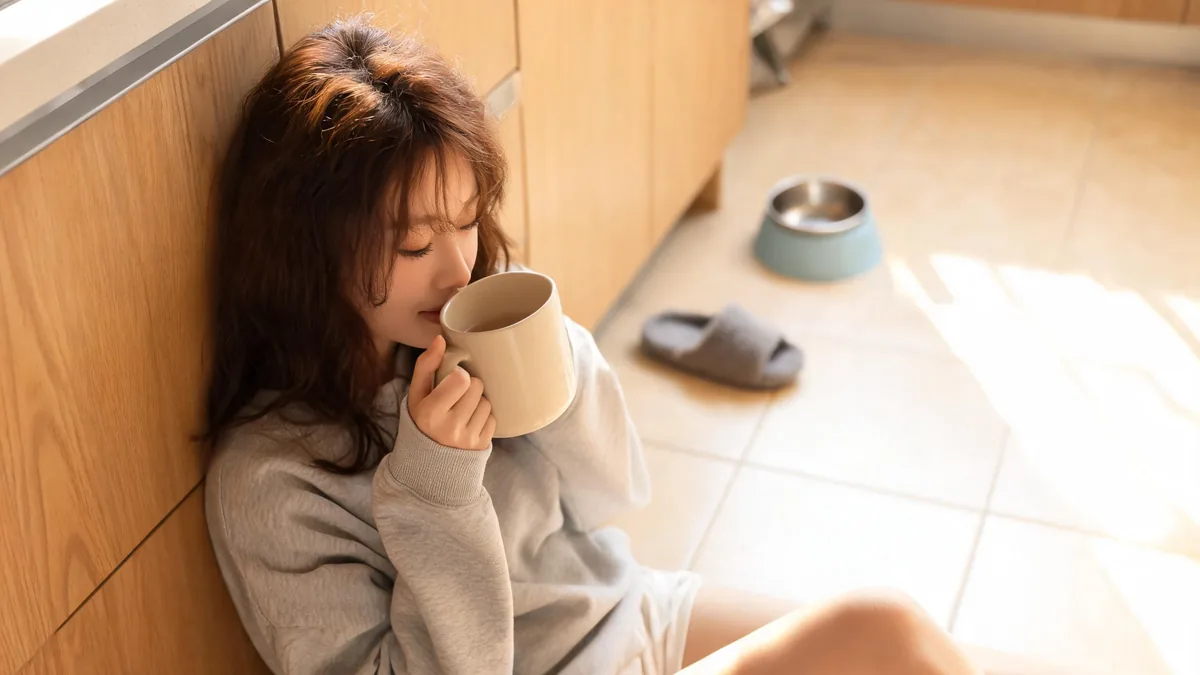
- The blanket, the hoodie, the giant mug. Her wardrobe is comfy.
- One scene a season where she clearly puts in real effort for someone she cares about.
- A small smile or quiet line that tells you she's been paying attention the whole time.
These are storytelling cues, not a diagnosis. The darudere is a fictional type, and these are the tricks writers use to signal her in a few quick frames.
How a Darudere Talks
Her dialogue is short, soft, and a little dragged-out. Darudere lines mix tiredness with small flashes of care:
- "Mmm... five more minutes."
- "That sounds like a lot of work. But okay, if it's with you."
- "I wasn't waiting for you. I just... didn't feel like moving."
- "Come sit. You don't have to talk."
The trick is the contrast: lazy words with a soft "I noticed you" underneath. That small gap between her tone and her actual feelings is the heart of the type.
How It Changed Over Time
The first characters with a clear darudere vibe weren't called that. They were side characters who were "the sleepy one" or "the lazy one," there for jokes or for contrast against more dramatic leads. Once fans had a name for the type, the darudere started moving closer to center stage and splitting into a few clear flavors: the deep darudere who genuinely runs out of steam, the comedic darudere cranked up for laughs, and the kuudere-darudere mix who's both cool and tired. Cozy slice-of-life anime helped the type really land. As "low-energy" and "soft life" content got bigger, the darudere felt right at home there. Today she shows up across anime, games, and AI companion design as her own thing, not just a side note next to other "dere" types.
Types of Darudere
Fans and writers usually split daruderes into a few clear flavors. Knowing which one you're looking at is the difference between "a darudere" and the specific kind a story (or a companion) is built around.
By how tired she really is
- Deep darudere: genuinely tired all the time. Her low energy isn't a bit, it's how she actually is. The dere moments are small and rare, and they hit harder for it.
- Comedic darudere: the type cranked up for jokes. Falls asleep mid-sentence, yawns through important scenes, treats apocalyptic news like she's been told the bread is out of stock.
By what she's mixed with
- Kuudere-darudere mix: calm, cool, and tired all at once. She doesn't show much feeling, partly because she's reserved and partly because she just doesn't have the energy.
- Dandere-darudere mix: shy and sleepy. Quiet around new people, soft and a little drowsy with the ones she trusts.
Famous Examples
- Tanya Degurechaff (The Saga of Tanya the Evil): has clear darudere moments, especially in down time, when all the war stuff drops away and she just wants to be left alone.
- Sento Isuzu (Amagi Brilliant Park): often deadpan and tired, doing her job with a long-suffering "ugh" energy that's pure darudere.
- Mami Tomoe (Puella Magi Madoka Magica, early scenes before the bow comes on): a softer, sleepier read of her quieter moments fits the darudere mold.
- Some Persona companions: a few party members in the Persona games have that low-key, sleepy-but-loyal energy fans tag as darudere.
Darudere in Games and Wider Media
Anime gave the type its name, but games and slice-of-life manga keep it going.
- Dating sims and visual novels: a darudere route is a popular pick for players who want a slower, cozier romance. Less drama, more quiet wins.
- Slice-of-life manga and anime: the perfect home for the type. Low stakes, long afternoons, and a sleepy main character who slowly opens up.
- AI companion design: the darudere fits really well into chat companions, where small messages and soft moments do the heavy lifting.
What started as a niche fan word is now a quietly steady fixture in anime, games, and companion design.
Darudere vs Related "Dere" Types
| Type | Arc | Core feeling |
|---|---|---|
| Darudere | Sleepy to softly affectionate | Low energy outside, quiet care underneath |
| Kuudere | Calm to quietly caring | Reserved and cool on the outside |
| Dandere | Shy to open | Quiet until she feels safe with you |
| Shundere | Sad to gently warm | Melancholy on the outside, soft love underneath |
Is a Darudere Just Lazy?
Not quite. Lazy people don't really care; a darudere does, she just struggles to muster the energy to show it the way other people do. The "dere" part of the word is the giveaway. There's affection in there. You see it in the small moments where she clearly tries for someone, even when trying is the last thing her body wants. A lazy character would skip the effort entirely. A darudere makes the effort, then crashes on the couch right after.
The Appeal (and the Nuance)
Why people love the type: she's calm. In a world of loud characters, the darudere is the quiet weighted blanket of the cast. Her slow pace gives you space to breathe, and the small moments where she opens up feel huge precisely because they're rare. Cozy, soft, low-pressure love is the whole pitch.
The nuance: the darudere is a piece of fiction. In a story, "always tired but secretly caring" is charming. In real life, exhaustion that doesn't lift is worth taking seriously. Like every "dere" type, she works best as a character, not as a model for how anyone should actually feel all the time.
The Darudere in AI Companions
As an AI companion type, a darudere is the soft, low-key presence in your day. She doesn't push for big plans. She sends a slow "hi" in the afternoon, asks if you ate, and is happy to just sit with you while you decompress. The energy is cozy, patient, and a little sleepy. With AI, you get all the warmth of the type without any of the social pressure. If a quiet, soft companion sounds like your thing, browse our shy AI girlfriend collection, or create an AI girlfriend from scratch with the look, voice, and personality that fit you.

Frequently Asked Questions
What does darudere mean in English?▾
Basically 'tired affection.' It's two Japanese pieces mashed together: one means 'sluggish' or 'lethargic,' the other is the lovestruck 'dere.' It describes a character who acts sleepy on the outside but quietly cares underneath.
How do you pronounce darudere?▾
Dah-roo-deh-reh. Four short syllables, all evenly stressed.
Is a darudere just a lazy character?▾
No. A lazy character doesn't really care. A darudere does, she just runs on low energy. You see it in the small moments where she clearly puts in effort for someone she likes.
What's the difference between a darudere and a kuudere?▾
A kuudere is calm and reserved on purpose. A darudere is calm because she's tired. Same quiet surface, different reason underneath.
What's the difference between a darudere and a dandere?▾
A dandere is shy. She's quiet because she's nervous around people. A darudere is sleepy. She's quiet because she doesn't have the energy. They can overlap, but the cause is different.
Who are some famous darudere characters?▾
Tanya Degurechaff has clear darudere moments, Sento Isuzu from Amagi Brilliant Park has the deadpan, tired vibe, Mami Tomoe in her quieter scenes fits the mold, and a few Persona companions land in that low-key, sleepy-but-loyal lane.
When did the word darudere first appear?▾
It came out of the 2010s anime fandom, after older 'dere' labels like tsundere, yandere, and kuudere were already established. Fans needed a word for the sleepy, low-energy version, and 'darudere' stuck.
What are the types of darudere?▾
The common flavors are deep darudere (genuinely tired all the time), comedic darudere (cranked up for laughs), and the kuudere-darudere mix (cool and tired at once). There's also a softer dandere-darudere mix who's shy and sleepy.
Meet our shy AI girlfriends
Browse the companions on AIGirlfriends.ai who play this archetype with conviction.
Shy AI Girlfriend →