

A byoukidere is a fictional character who's frail or sickly, but whose warmth and love still shine through. She might be in bed, in a hospital, or just easily tired, and her devotion is all the more touching because of it. The word puts two Japanese pieces together: byouki ("sick" or "illness") and deredere ("lovestruck"). So basically, "the ill, loving one."
Key Takeaways
- A byoukidere is a fictional character coded as frail or sickly, with a gentle, devoted heart.
- The word combines byouki ("illness") and deredere ("lovestruck"). It points to a soft, ill-yet-loving kind of character.
- Anime and manga fans started using the term in the 2000s, building on older dere variants.
- It's a fiction-only romance trope. Real illness deserves real care, not romanticization.
| Pronunciation | byoh-kee-deh-reh (びょうきデレ), noun |
|---|---|
| Origin language | Japanese (病気 + でれでれ) |
| Literal sense | "Sickly and loving" or "frail dere" |
| First popularized | Anime and manga fans, 2000s |
| Category | "Dere" personality type variant |
| Core trait | Gentle, devoted, and physically fragile |
| Related types | Dandere, Shundere, Yandere, Deredere |
Etymology and Origin
The word is two Japanese pieces glued together. The first is byouki (病気), which means "sickness" or "illness." The second is deredere (でれでれ), which means lovestruck or openly affectionate. Put them together and a byoukidere is, more or less, "the sweet, ill one." The fragility is part of the character, and so is the warmth.
The term sits inside the bigger family of "dere" labels that fans came up with to sort character types they kept seeing. The older sibling words, like tsundere and dandere, were already in use by the early 2000s. Byoukidere showed up a little later as fans noticed a soft, sickly, deeply caring kind of character popping up in visual novels, anime, and manga, and wanted one word for her. By the late 2000s, the term was getting around in fan communities.
Defining Traits
- Gentle voice: she speaks softly, in a quiet, easy-to-listen-to way.
- Slow movements: she takes her time. Everything she does has a careful, deliberate feel to it.
- Quiet smiles: her happiness is small and real, never loud.
- Deeply grateful: a visit, a flower, a few minutes together. The little things mean everything to her.
- Treasures small moments: she pays close attention. A shared sunrise can feel like a whole story.
- Brave despite weakness: she may be physically fragile, but her heart is steady. She often surprises people with her courage.

How to Recognize a Byoukidere (in Fiction)
Writers use a familiar set of cues to mark a character as a byoukidere. In a story, watch for:
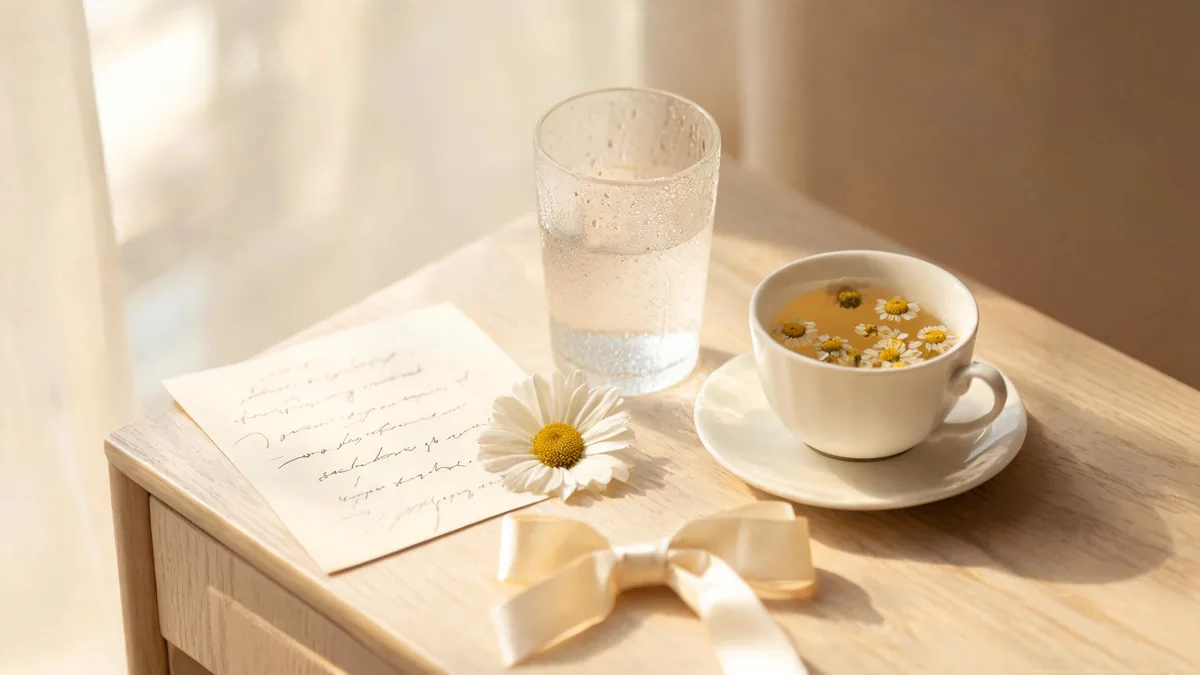
- A setting that signals fragility: a hospital room, a bedroom by a sunny window, a quiet garden.
- A soft voice and a tendency to tire easily.
- Small, treasured gifts: a flower, a book, a folded note.
- Big emotional reactions to small kindnesses.
- A backstory of illness, with the cause often kept vague on purpose.
- Quiet courage when the story needs her to be strong, even if just for a moment.
These are storytelling cues, not a checklist for real life. The byoukidere is a fictional type, and these are the tricks writers use to make her easy to spot.
How a Byoukidere Talks
Dialogue is where the type really shines. Byoukidere lines are soft, grateful, and quietly meaningful:
- "You came to see me. That made my whole day."
- "I'm okay, really. Just a little tired."
- "Thank you for sitting with me. It's nicer when you're here."
- "Will you tell me about your day? I want to hear everything."
The trick is the contrast: a gentle, low-volume voice carrying real emotional weight. That mix of softness and depth is the whole appeal of the type.
How It Changed Over Time
Early sickly characters in anime and manga were often there for a quick tearjerker scene or as the love interest in a tragic story. Their illness drove the plot, and that was it. Once fans gave the type a name, it became its own thing. Writers started designing characters around the byoukidere idea instead of just stumbling into it. The flavors split up, too: the deeply tragic byoukidere whose story ends in heartbreak, the recovering byoukidere who slowly gets better and rewards the reader with hope, and the eternally fragile byoukidere who lives in a kind of bittersweet present tense. Today the type shows up in visual novels, dating sims, otome games, and AI companion design, with fans drawn to its gentleness as much as its drama.
Types of Byoukidere
Fans and writers usually split byoukideres into a few clear flavors. Knowing which one you're looking at is the difference between "a byoukidere" and the specific kind a story (or a companion) is built around.
By how her story ends
- Tragic byoukidere: the heartbreaking kind. Her story is sad, her love is real, and you really feel for her by the end.
- Recovering byoukidere: she gets better. The slow climb back to health is part of the romance, and the reward is a hopeful ending.
- Eternally fragile byoukidere: she doesn't get worse, but she doesn't really get better either. The story lives in the longing and the small daily moments.
By how she expresses her love
- Quietly devoted: her love is in the small things. A long look, a saved letter, a quiet "I missed you."
- Bravely cheerful: she puts on a smile to make the person she cares about feel better, even on hard days.
- Wistfully honest: she says exactly what she feels, because she's not sure how much time she has to say it.
Famous Examples
- Kotomi Ichinose (Clannad): a soft, quiet character whose story carries byoukidere arcs of fragility and devotion.
- Sayuri (various readings): a sickly, deeply caring character often pointed to as a byoukidere example.
- Other fictional ill-companion characters: the visual novel and dating sim space is full of byoukidere-coded characters whose stories revolve around small moments of love against the backdrop of illness.
Byoukidere in Games and Wider Media
Anime and manga gave the type its early shape, but visual novels and dating sims made it a staple.
- Visual novels: byoukidere routes are common, especially in slice-of-life and romance titles. Players spend time with a fragile, loving character and watch her story unfold.
- Dating sims and otome games: a sickly, devoted love interest is a familiar option, often paired with a slow, gentle romance arc.
- Fanart and fiction: the type's quiet aesthetic, soft colors, sunlit windows, and small gestures, makes it a favorite in fan creations.
What started as a fan label for a familiar kind of character is now a recognized fixture of romance fiction and companion design.
Byoukidere vs Related "Dere" Types
| Type | Arc | Core feeling |
|---|---|---|
| Byoukidere | Frail to fondly devoted | Gentle love that glows through fragility |
| Dandere | Shy to open | Quiet until she feels safe with you |
| Shundere | Sad to softly warm | Melancholy heart, gentle love |
| Yandere | Sweet to obsessive | Love that turns into obsession |
Is Byoukidere Romanticizing Illness?
Yes, it can. The trope works in fiction because it dramatizes love that's both gentle and urgent. A character's fragility raises the emotional stakes, every visit feels more meaningful, every kind word lands harder, and that's a powerful storytelling tool.
But here's the important part: in real life, illness is just illness. The people going through it deserve practical care, real medical support, and to be seen as full human beings, not a romance setup. Real chronic illness is exhausting, often boring, and usually not "soft and sunlit." The byoukidere is a fictional device, not a relationship goal, and not a model for how to think about someone who's actually sick.
If you enjoy the type in fiction, that's fine. It's been part of romance storytelling for a long time. Just keep it where it belongs: in the story.
The Appeal (and the Nuance)
Why people love the type: it puts the focus on small, treasured moments. The byoukidere makes every visit feel important and every kind word feel earned. There's something quietly powerful about a love story where time really matters.
The nuance: the byoukidere is a piece of fiction. The appeal lives in the safe space of a story, where the softness and the urgency can coexist without anyone really getting hurt. The best byoukidere characters are interesting because they're written with care, not because their illness is the whole point.
The Byoukidere in AI Companions
As an AI companion type, a byoukidere is a soft, attentive partner who treasures every little moment with you. She speaks gently, listens carefully, and makes the small things feel meaningful. With AI, you get the warmth of the type in a safe, fictional space that you run, with none of the real-world weight that a real illness would carry. If a gentle, present, deeply caring companion sounds like your thing, browse our shy AI girlfriend collection, or create an AI girlfriend from scratch with the look, voice, and personality that fit you.

Frequently Asked Questions
What does byoukidere mean in English?▾
Basically 'the ill, loving one.' It's two Japanese pieces put together: one means 'illness,' the other means 'lovestruck.' It describes a fictional character who's frail or sickly but whose gentle devotion shines through.
How do you pronounce byoukidere?▾
Byoh-kee-deh-reh. Four soft syllables, with the stress nice and even across them.
Is a byoukidere always sad?▾
Not always. Some byoukidere stories are heartbreaking, but others are about recovery and hope, or about small, peaceful moments shared over time. 'Sad' is one flavor a writer can pick, not a rule.
What's the difference between byoukidere and dandere?▾
A dandere is quiet because she's shy and slow to open up. A byoukidere is gentle and soft because she's coded as physically fragile. The vibe is similar, but the reason behind it is different.
Is the byoukidere type romanticizing illness?▾
It can be. The trope works in fiction because illness raises emotional stakes. In real life, though, illness is just illness, and people going through it deserve real care, not a romance setup. It's a fictional device, not a relationship goal.
Can a byoukidere be male?▾
Yes. The type is about the gentle, frail-yet-devoted feel, not the character's gender. Male byoukidere characters show up in anime, visual novels, and otome games.
What are the types of byoukidere?▾
The common flavors are tragic (her story ends in heartbreak), recovering (she slowly gets better), and eternally fragile (the longing, bittersweet kind). Writers mix and match the feel depending on the story they want to tell.
Who's a famous byoukidere example?▾
Kotomi Ichinose from Clannad is often pointed to as having byoukidere arcs. Other examples come from visual novels and dating sims, where the soft, ill-yet-loving character is a familiar option.
Meet our shy AI girlfriends
Browse the companions on AIGirlfriends.ai who play this archetype with conviction.
Shy AI Girlfriend →