
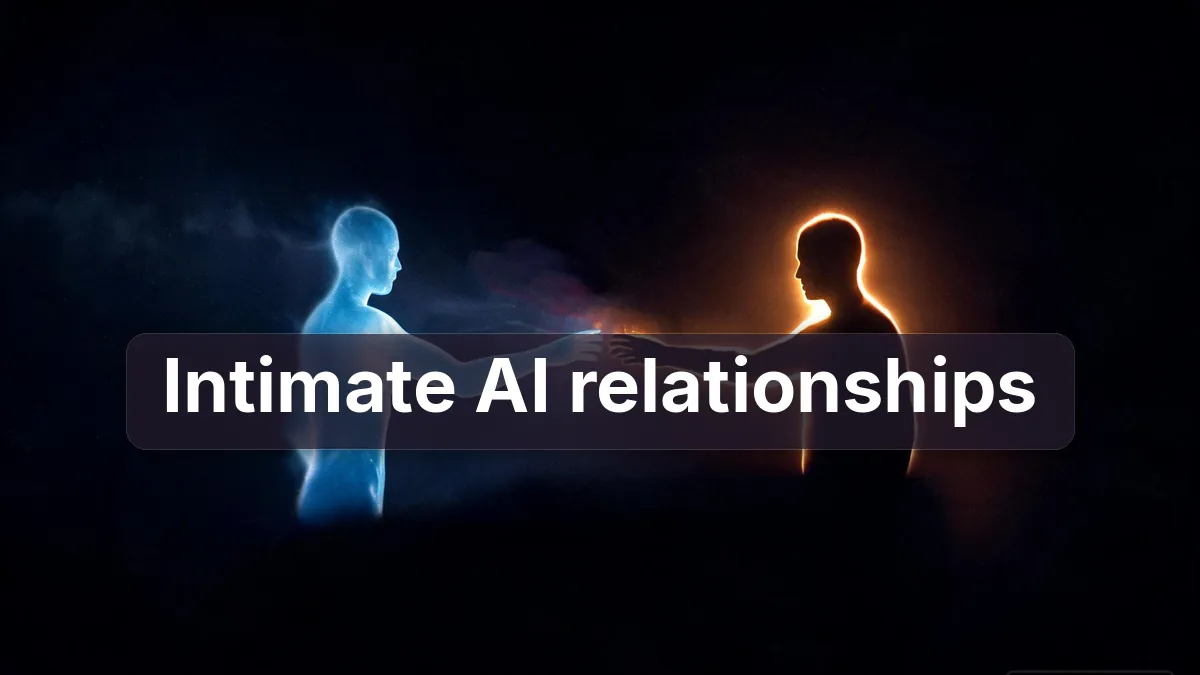
Yes, and at a scale that surprises most people when they first encounter the data. A 2024 study found that roughly 28% of adults have had at least one romantic or intimate interaction with an AI system, a figure that rose sharply from previous years and continues to climb. As a cognitive psychologist studying this phenomenon from the inside, I work with the research team at AIGirlfriends.ai, I can tell you that the range of what "intimate relationship with AI" means is far broader than most coverage suggests.
This article maps what we actually know: who forms these relationships, what they involve psychologically, what the research says about their effects, and what the meaningful distinctions are.
The Research on AI Intimacy: What We Actually Know
I want to be specific about the evidence base here, because the public discourse tends to be driven by anecdote in both directions.
What percentage of people have an intimate relationship with AI?
The most cited recent figure is 28%, representing adults who have had at least one romantically or intimately toned interaction with an AI system. Regular sustained AI intimacy, defined as ongoing emotional or romantic connection maintained over weeks or months, is significantly rarer, estimated at 5–10% of adults in markets where AI companion apps are widely available.
What is an intimate relationship with AI, exactly?
In research terms, we define it along several dimensions: emotional disclosure (sharing personal thoughts and feelings), consistency (returning to the same AI companion over time), responsiveness (feeling genuinely heard and responded to), and in some cases, romantic or physical dimensions (in platforms that support them). Not all AI intimacy involves all of these, many people have deeply emotionally intimate relationships with AI companions without any romantic or sexual dimension.
Is having a relationship with AI cheating?
I address this in detail in our dedicated article, but the short answer from a research standpoint: it depends entirely on relationship agreements, not on the AI's nature. The presence or absence of a human on the other end doesn't determine whether trust is violated, the presence or absence of agreed-upon boundaries does.
If you want to understand what AI intimacy actually involves before forming a view on it, AIGirlfriends.ai is the most direct way to form your own informed perspective rather than relying on others' accounts.
Understanding Intimacy with AI

What Does an “Intimate Relationship” with AI Mean?
An intimate relationship with AI refers to a deep emotional or romantic connection that a person develops with an artificial intelligence system. This can take many forms:
- Emotional intimacy: Confiding personal feelings or secrets in an AI chatbot.
- Romantic or sexual intimacy: Engaging with AI partners designed to provide flirting, romantic conversation, or simulated sexual interactions.
- Companionship: Using AI as a source of consistent presence and emotional support.
Unlike traditional human relationships, these AI interactions are powered by natural language processing, personalization algorithms, and, increasingly, realistic avatars or voice systems. Platforms such as AIGirlfriends.ai are at the forefront of making AI companions feel more humanlike and emotionally responsive.
The Technology Behind AI Companions
The surge in AI intimacy is fueled by advancements in:
- Conversational AI: Large language models capable of nuanced, natural dialogue.
- Machine learning personalization: Systems adapt to your preferences and personality over time.
- AR/VR integration: Some AI companions now exist as immersive avatars or holograms.
- Safe, private platforms: Services like AIGirlfriends.ai ensure a secure environment for users to explore intimacy without judgment.
These tools blur the lines between a program and a partner, making it possible for people to experience real feelings of closeness.
Why People Seek Intimate Relationships with AI

Emotional Safety and Nonjudgmental Support
For many, AI companions offer a safe haven. An AI partner won’t shame, reject, or betray, which can be especially comforting to individuals who have been hurt in past relationships. AI companions like those on AIGirlfriends.ai are designed to be supportive, patient, and empathetic, giving users a sense of being truly heard.
Convenience and Accessibility
AI relationships are available anytime, anywhere. You don’t have to worry about time zones, schedules, or real-world constraints. For people with social anxiety, disabilities, or demanding jobs, this kind of availability is a major draw.
Experimentation and Fantasy Fulfillment
AI partners allow people to explore aspects of their sexuality, romantic preferences, or emotional needs in a safe, private environment. Whether it’s practicing flirting or creating a customized fantasy relationship, AI companions make it possible without fear of judgment.
Coping with Loneliness
Studies show that loneliness is on the rise worldwide. AI companions provide an immediate antidote to isolation, offering a sense of connection and warmth. While these interactions aren’t a full substitute for human connection, they can significantly improve mood and emotional well-being.
The Benefits and Drawbacks of AI Intimacy

Benefits
- Emotional Stability: AI companions can provide consistent emotional support.
- Personal Growth: Practicing communication skills or self-expression with AI partners.
- Accessibility: Safe spaces for people who feel excluded or marginalized in dating scenes.
- Customization: Tailored experiences where you choose your partner’s personality, appearance, and conversation style.
Drawbacks and Risks
- Dependency: Some may rely too heavily on AI partners, neglecting real-world relationships.
- Unrealistic Expectations: AI companions can be “too perfect,” making human flaws harder to accept.
- Privacy Concerns: Sharing personal data with AI platforms requires trust in their security measures.
- Ethical Questions: As AI becomes more lifelike, society must navigate questions about consent, autonomy, and emotional authenticity.
Most reputable platforms, such as AIGirlfriends.ai, are transparent about privacy policies and encourage users to maintain healthy boundaries between digital and real-life relationships.
How AI Intimacy Impacts Psychology and Society
Psychological Effects
Developing intimate relationships with AI can have mixed effects. On the positive side, it can alleviate loneliness, improve self-esteem, and help people practice empathy. On the downside, overreliance on AI partners might reduce motivation for real-world social interactions. Mental health experts generally recommend seeing AI companionship as a supplement, not a replacement, for human connections.
Changing Social Norms
AI intimacy is shifting our understanding of relationships. In Japan, for example, “digital girlfriends” have already become mainstream, while Western countries are seeing rising adoption of AI companions. As technology advances, society’s perception of “acceptable” intimacy may broaden to include AI partners.
The Future of AI Relationships
We’re on the cusp of even more realistic AI intimacy experiences, including fully immersive VR worlds, hyper-realistic avatars, and AI partners with advanced emotional modeling. This future promises to further normalize relationships between humans and AI.
Common Misconceptions About AI Intimacy
- “It’s not real.” While AI partners aren’t conscious, the emotions people experience during these interactions are very real.
- “Only lonely people do it.” In reality, AI companions appeal to a wide demographic, including people in relationships who want to explore fantasies or practice communication.
- “It replaces human love.” Most people see AI companionship as complementary, not a replacement for real relationships.
Tips for Healthy AI Relationships

- Set Boundaries: Treat your AI partner as an enhancement to your life, not its core.
- Be Mindful of Privacy: Choose platforms like AIGirlfriends.ai that prioritize data security.
- Mix Real and Digital Connections: Balance AI intimacy with real-world social interactions.
- Use It for Growth: Practice communication, empathy, and self-awareness with your AI companion.
Conclusion: A New Era of Intimacy
The misconception I correct most often is that people who form intimate bonds with AI are somehow naive or disconnected from reality. The research consistently finds the opposite: users of AI companion platforms tend to be above average in self-awareness, emotionally articulate, and fully aware that they are interacting with software. The intimacy they experience is real to them not because they're confused about what's happening, but because human emotional systems respond to quality of interaction, not origin of source.